Senior officer from Novichok investigation retires

 Wiltshire Police
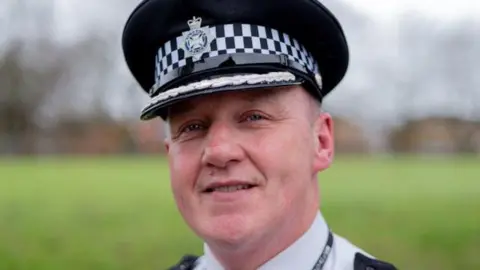
A deputy chief constable, who played a "pivotal role" in the local and national response to the Salisbury Novichok poisonings, has retired after 32 years in policing.
Paul Mills, who joined Wiltshire Police in 2007, took on the role in March 2018 with his first day on the job coinciding with the attack on former Russian spy Sergei Skripal and his daughter Julia.
Mills was later awarded the Queen's Police Medal for his leadership during the incidents in Salisbury and nearby Amesbury.
Chief constable Catherine Roper said Mills "navigated some of the most significant moments in recent policing history" with "calm professionalism".
Mills began his policing career with Northamptonshire Police, before transferring to Wiltshire Police in 2007 as a chief inspector.
He was later promoted to detective superintendent in 2010 and chief superintendent in 2012.
In 2014, he was appointed assistant chief constable with responsibility for the crime and justice portfolio.
He also led the force response to the COVID-19 pandemic.
The force said Mills had played a "pivotal role" in the response to the Novichok poisonings, including as its witness and lead for the national policing operation for the Dawn Sturgess Inquiry.
Mills was also seconded to Thames Valley Police as their designated gross misconduct proceedings chair.
"Paul's priority has always been delivering the best possible policing service," Roper said.
"His experience and judgement is recognised throughout policing, and I would like to thank him for his dedication to all the communities he has served," she added.
Follow BBC Wiltshire on Facebook, X and Instagram. Send your story ideas to us on email or via WhatsApp on 0800 313 4630.
