More homes are lying empty – so what can be done?

 BBC
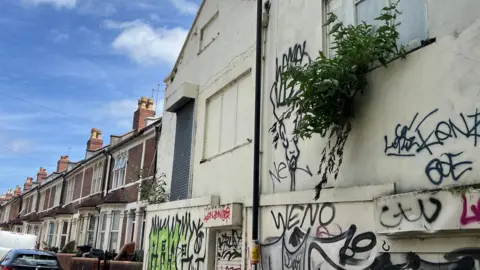
BBCAt a time of intense demand for housing, the number of long-term empty homes in Bristol and surrounding areas is on the rise.
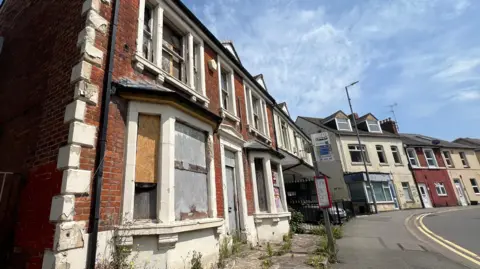
Empty homes can create eyesores on our streets and encourage vandalism, meanwhile, councils are spending a fortune to house homeless families in temporary accommodation.
For every homeless family in temporary accommodation in England, there are two homes that have been sitting empty for six months or more, according to government data.
The issue has been known about for years, but what's behind the rise and what actions are needed from city halls and Westminster?
How many empty homes are there?
The number of long-term empty homes (LTEHs) in Bristol rose by 25% last year to 2,071, while a similar spike was seen in North Somerset, where the figure jumped to 750, data from the Ministry of Housing, Communities and Local Government showed.
The wider trend is that the number of empty homes in England has risen by a third since 2016. Before that, the numbers were falling.
In Bath and North East Somerset in 2025, there was a 17% year-on-year increase to 974 LTEHs.
The number fell in South Gloucestershire by 16.5% to 631, but this is still nearly double the amount there were in 2016.
Why do properties stay empty for years?
In some cases, landlords buy properties and sit on them without renting them out.
In others, homeowners go into care homes, have health problems, or die – and it then might take a long time for a house to be sold.
In cases of owners dying, the timescale is made worse by delays over probate, the legal right to deal with someone's property.
There has also been a rise in second homes, especially in the South West.
Chris Bailey, from campaign group Action on Empty Homes, said a slowing housing market could also be to blame, as homeowners and developers are waiting until they can get the price they want.
And sometimes, the owner or the person who has inherited a property can't afford to refurbish it.
A national Empty Homes Programme was introduced in 2012 by the coalition government for this reason.
As part of the programme, councils and housing authorities provided loans and grants for the refurbishment of homes, in return for the right to rent them to social tenants.
Only 10,000 homes were renovated under the programme before the funding was scrapped in 2015, which is when the falling number of empty homes began to rise.
Which council approaches appear to be working?
Local councils do have powers to bring homes back into use, but it can be expensive and time-consuming to identify properties, engage with owners and go through the court system.
Empty Dwelling Management Orders (EDMOs) allow councils to take over the management of a property when it is being neglected.
But it was revealed by online publication The Lead last year that not a single council did this in 2023 or 2024.
Bristol City Council said it had brought 465 long-term empty homes back into use in 2025/26 by negotiating with owners, offering financial incentives, charging council tax premiums and taking enforcement action.
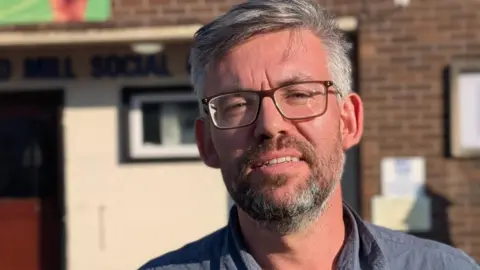
Councillor Barry Parsons, the council's housing chief, said this range of options was more effective than EDMOs.
He also noted that refurbishing homes was far less resource-intensive than building houses.
"By bringing empty homes back into use, we can tackle both the housing crisis and the climate emergency," he said.
A recent example of the authority's success is a home that is now being rented to refugees after the owner applied to the council's loan scheme. Refurbishment was carried out by the company We Care.
Another example is a long-term empty property that is due to be sold at auction after the council secured an enforced sale.
The council said it had exhausted all other options on the three-bedroom house, which has been vacant since 2011.
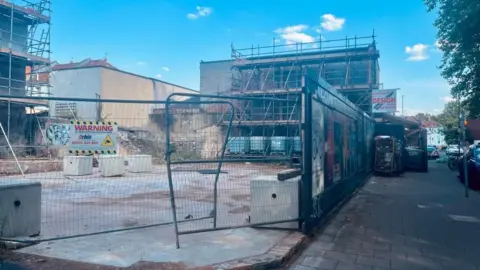
And in St Werburghs, the council demolished the former Kernow Audio and Sound building in 2025, after the owner left it empty for years and repeatedly failed to make it safe.
A recent example of council action in North Somerset resulted in a £1.5m beachfront home in Clevedon being put on the market after sitting empty for more than 20 years.
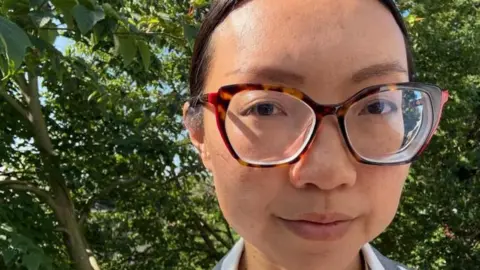
North Somerset Council's Jenna Ho Marris, cabinet member for homes and health, said empty homes have "an outsized impact on how people feel in their neighbourhoods".
She said she would be making empty homes one of her priorities for the next year, and hopes to create a "much more pro-active approach" with cross-party support.
 Provided
Greater Manchester Combined Authority recently launched a scheme giving £11.7m to local councils to bring 400 empty homes back into use, so they can be used by homeless families.
Ho Marris, who sits on the West of England Combined Authority (Weca) Strategic Place Partnership board, said it was "frustrating" that it had recently decided a similar scheme wouldn't be worth pursuing.
Weca said the board agreed in March that it would keep the issue under review.
What changes are campaigners and councils still calling for?
The government has promised reforms to give councils extra powers, but the details remain vague.
North Somerset Council said it wants extra powers to force the sale of problematic properties, and wants court processes to be streamlined.
A coalition of 25 housing organisations wrote an open letter to Housing Minister Matthew Pennycook in February demanding a National Empty Homes Strategy.
Proposals include a funded local authority duty to act on long-term empty home complaints, a national loan scheme and acquisition fund, and ringfencing of council tax premium income for housing initiatives.
Bailey, of Action on Empty Homes, said that council tax penalties introduced in the last few years for empty homes "don't seem to be working".
"Effective powers and investment, that is what we're calling for," he said, pointing to a 2024 plan by housing charity Shelter to turn 10,500 empty homes into social rent homes, which is greener and cheaper than building homes.
A spokesperson from the Ministry of Housing, Communities and Local Government did not provide any extra detail on plans to give councils more powers.
Follow BBC Bristol on Facebook, X and Instagram. Send your story ideas to us on email or via WhatsApp on 0800 313 4630.
