Are hardback books things of 'great beauty' or a dying art?

 Getty Images
For hundreds of years, hardbacks have been published as the first edition of a book. They have been hailed by some as things of "great beauty" that help to keep the publishing industry alive financially. However, others believe the hardback has had its day and should be scrapped.
Earlier this month, newspaper columnist Larry Ryan declared hardbacks should be ditched.
"The simple fact is that hardbacks are too expensive," he said, arguing that, when you know a cheaper version of the book will arrive in a matter of months, it is easy to postpone purchasing it.
"Yet this seems like an unnecessary pause for everyone involved," he wrote. "Given how difficult it is for any piece of culture, let alone books, to get more than fleeting attention, it seems baffling that publishers first offer up the least accessible version."
So how about you? When did you last buy a hardback and what was it – a cookbook, a coffee table book or fiction? Maybe you do all your reading on a Kindle or tablet.
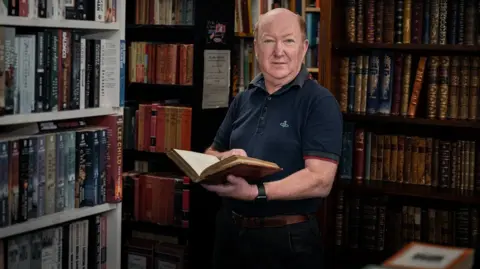
One man who has handled a lot of books is Christopher Moss, a book-lover who turned his passion into a lifelong mission.
He runs Moss Books in Cheltenham, which has more than 30,000 used books in stock.
"With fiction here, most people buy paperbacks, the only market for hardback fiction is first editions," he said.
"Hardback fiction is a hard sell, maybe it's easier to read a paperback on a deck chair or something.
"I'd say hardbacks recently have become more popular. One of the reasons, I think, is that people might read on a tablet and then they'll want to show it to their friends – so they'll buy a nice hardback copy to put on their shelf and display."
 @kim.dungduong
Another reason Moss thinks hardbacks are becoming more popular is a trend for vintage items.
"Kids want vintage books and vinyl," he added.
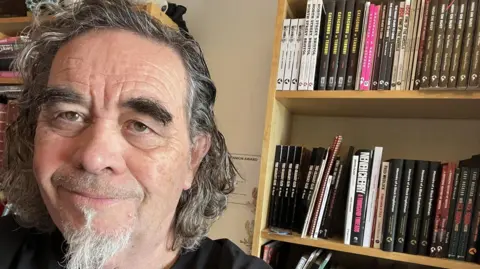
Richard Jones, co-founder and publisher for Tangent Books in Bristol, said hardback brings huge financial value to the industry.
"It's very easy to say you don't like hardback books because they're heavy," he said.
"Hardback books tend to be things of great beauty, there's a lot of skill that goes into producing them.
"They're also the way, particularly small independent publishers, save business. You're able to command a bigger margin than just with paperback," he added.
Jones explained a publisher can charge about £30 for a hardback but "can't really charge more than £15 for a paperback".
"It's not exactly a dying art, but it's a very specialist form of print that as publishers we encourage," he said.
 Richard Jones
Interest in sustainability and e-readers have affected the print industry and its profits.
Jones said the top 5% of readers are those who use digital devices such as Kindles or listen to audiobooks to save money, bookshelf space and the planet.
"Then you get the occasional people out of that group who will buy the book in its hardback form to have on their shelf or give to someone," he said.
He explained that publishers often release hardbacks before paperbacks to see if there is appetite for the book.
If it does well, the publisher will then produce a run of paperbacks.
"If the hardback doesn't sell then it wouldn't go to paperback, it's as simple as that," Jones added.
The accessibility argument
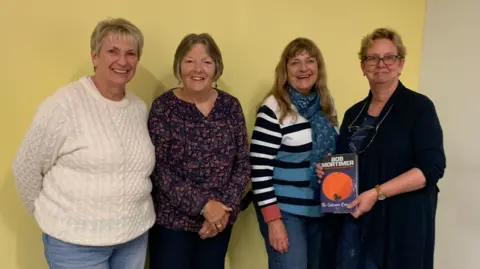
Eileen Welby, 73, runs the Taunton Dean Divas and the Taunton Early Birds book groups for the Women's Institute.
Members of the groups tend to be older – and, due to factors such as poor eyesight, this often influences their format choice in terms of practicality, Welby said.
"Some of our members use Kindle and Audible and the rest will have paperback, unless it was a gift then it would be a hardback, but that's rare unless it's come from a library or a charity shop," she said.
"Some of our members have arthritis. I can't hold a heavy book and my eyesight is not great, on a Kindle I can choose my font.
"But I love the smell of a new book and holding them. I love the colours, some of the covers are just so beautiful, I buy those as paperbacks."
 Eileen Welby
Vicky Fraser is a bibliographic services manager with LibrariesWest, an organisation in charge of stocking and running public libraries in Bristol, Somerset and South Gloucestershire.
She said their libraries mainly buy paperbacks due to the lower cost.
"It helps the money go further to meet demand," she said.
Despite this, Fraser said they will still buy hardbacks because the first print of a book is in that format.
"Then we'll buy the paperback when it comes out," she added.
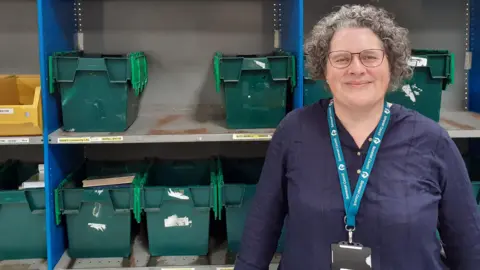 Vicky Fraser
Fraser believes the argument against hardbacks because of their weight is inaccurate.
"The production of hardback books has come a long way over the years. The boards for them are now much lighter," she added.
