Government approves plan to extend city boundary

 BBC
BBCLeicester's political boundary is to be expanded to absorb neighbouring towns and villages on the edge of the city.
A long-awaited decision on the future shape of councils in Leicester, Leicestershire and Rutland was confirmed on Thursday.
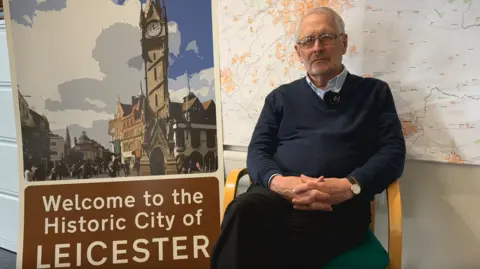
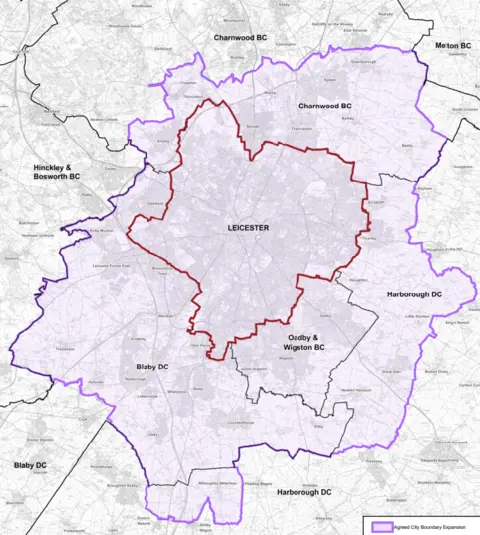
Ministers have backed a plan, proposed by Labour mayor of Leicester Sir Peter Soulsby, to extend Leicester City Council's current border in all directions into areas currently served by Reform-run Leicestershire County Council as well as neighbouring district authorities.
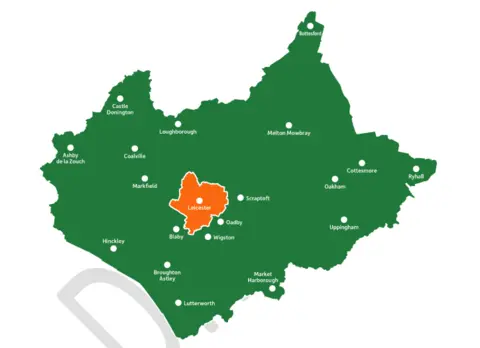
The rest of the county will be served by a single unitary Leicestershire authority including Rutland.
"I'm pleased the government has recognised our proposal is the one that ticks all the boxes," Soulsby told the BBC.
"It makes sense for providing land needed for housing for the city's growing population, it makes sense for the economy of the area and the sustainability of councils in the future."
Areas that will be absorbed by the expanded city include Great Glen, Oadby, Wigston, Blaby, Enderby, Braunstone Town, Glenfield, Anstey, Birstall and Syston.
 Leicester City Council
However, expanding the city has proved controversial with Reform, Conservative, Liberal Democrat and Green politicians in the county, who have argued the government is forcing unwanted and unnecessary upheaval on residents.
Conservative MP for Harborough, Oadby and Wigston, Neil O'Brien, said he was furious.
"People will hate this," he added. "They don't want to be part of an expanded city.
"Nobody wanted this change, nobody asked for it. It's a naked land-grab to dump housing on us.
"This is total arrogance by ministers who have thrown these changes out there on the last day of Parliament and in their last day as ministers."
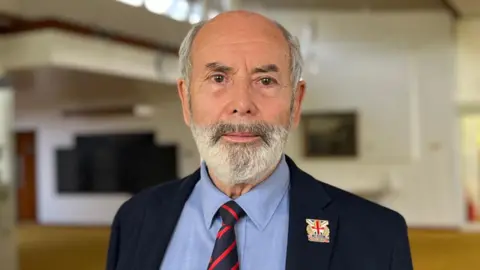
Reform county council leader Dan Harrison said: "I'm furious, shocked and bitterly disappointed.
"We've always been clear that an expanded city would be costly and disruptive.
"Financially and strategically, this is madness and it's not the right decision for Leicestershire.
"This is a disastrous day for democracy. No-one wanted this.
"No professional oversight has been given to the effect on Leicestershire residents of the city's land-grab and our residents haven't been listened to."
 Leicestershire County Council
However, Soulsby said the move was not a "land-grab" and that the expanded city boundary was long overdue.
"It's something that happened in the 1970s in other cities and Leicester missed out," he added.
"Expanding the boundary gives people who are already effectively part of its suburbs a stake and a vote on how it is run. They have not had that in the past."
Leicester currently has a population of about 372,000 but that would grow to 623,000 under the approved plan.
The expansion will provide space for the city's estimated future housing need of 30,000 new homes by 2046, the city council said.
The authority has also calculated the move would allow £46m of annual efficiency savings for councils across Leicestershire by reducing duplication of services, saving back office costs and allowing the money to be redirected to front-line services.
 Leicestershire districts & Rutland County Council
Michael Mullaney, who leads the Liberal Democrat group on the county council, said the decision was disgraceful.
"It's the worst of all worlds," Mullaney said. "It is a calamity for the people of Leicestershire.
"Hundreds of thousands of people will be forced into Leicester city against their will.
"The remaining people, including residents in Hinckley and Bosworth, will be lumped into one large remote unitary authority where decision-making will be taken further from the people."
Green Party county councillor Naomi Bottomley said: "This is an outrageous decision that completely ignores local people.
"Residents were asked for their views time and time again, and every time they said no to expanding the city boundary.
"The government has ignored them and gone ahead anyway."
Liberal Democrat leader of Rutland County Council Christine Wise said: "Becoming
part of a much larger authority represents a major change, and I know residents will
want reassurance about what this means for our communities.
"While this is not the proposal Rutland County Council initially supported, we
respect the government's decision and will work just as hard and constructively with partners to secure the best possible outcome for Rutland residents."
Rejected proposals
Two other proposed visions for the future political map of Leicestershire have been rejected by the government.
Leicestershire County Council also believed there should be two unitary councils covering Leicester, Leicestershire and Rutland.
However, it was opposed to losing any political territory to an expansion of the city council.
Reform-led County Hall said its preferred business case would have preserved historic borders and created one large council around the city, serving some 800,000 residents.
The county's existing seven district authorities, and Rutland County Council, also wanted the current city boundary to remain unchanged.
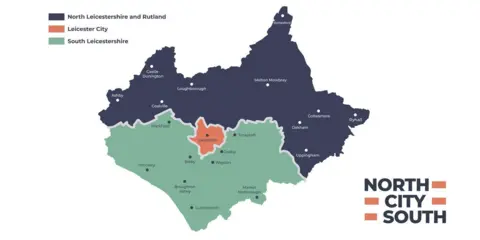
They proposed three unitary councils across Leicester, Leicestershire and Rutland and their preferred option was called North, City, South.
A North Leicestershire and Rutland council would have served the area currently covered by Charnwood borough, north west Leicestershire district, Melton borough and Rutland County Council.
In this scenario, a separate South Leicestershire council would have covered the areas of Blaby district, Harborough district, Hinckley and Bosworth borough and Oadby and Wigston borough councils.
What happens next?
Councillors will need to be elected to the new authorities.
These will be called "shadow elections" and are scheduled to take place in May 2027.
The new councils are due to be up and running by the beginning of April 2028.
Between the elections and the launch day, there will be a transition period where services and staff will transfer to the new authorities while services continue to be provided by the existing local authorities.
Analysis
By Dan Martin, Leicester political reporter
It takes a lot to unite local politicians in Leicestershire but the government's decision to move parts of the county, now on the edge of the city, within its boundaries appears to have done just that.
Reform UK, the Tories, the Lib Dems and Labour councillors in the county all seem in step in their opposition to an enlarged Greater Leicester.
The confirmation of a new political map for Leicester, Leicestershire and Rutland is sure to be the source of heated arguments in council chambers for months to come.
But while the debates rage between politicians, what change can residents and voters expect to see in the immediate future?
In short, not a lot.
It will be business as usual at the 10 existing councils for now as they continue to provide key public services.
But behind the scenes, the hard and complex work of dissolving councils and creating entirely new authorities will begin.
Listen to BBC Radio Leicester on Sounds and follow BBC Leicester on Facebook, on X, or on Instagram. Send your story ideas to eastmidsnews@bbc.co.uk or via WhatsApp on 0808 100 2210.
