'I felt angry after Parkinson's diagnosis at 50'

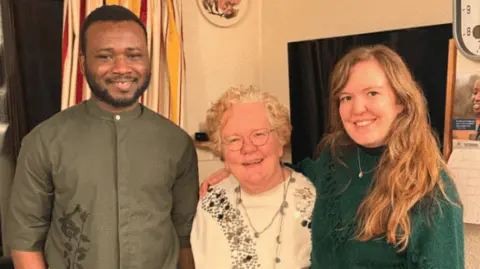 Alison Butt
Hearing the words, 'you have Parkinson's disease' at the age of just 50, Alison Butt felt angry, finding the diagnosis hard to fathom.
But nine years on, she said she has learnt how to manage her symptoms and accepts her condition, and wants to help others with the disease do the same.
Speaking to the BBC ahead of World Parkinson's Day, Alison, from Leigh, Greater Manchester, said the lack of understanding of the disease could make it harder for people to access diagnoses and treatment.
"People often say to me 'oh you're young to get it', but I know that I'm not particularly," she said.
"It is thought of as a disease of older people but there are a lot of younger people in their 40s and 50s, with Parkinson's."
Parkinson's is a progressive neurological condition caused by a lack of the chemical dopamine in their brain. It causes symptoms including a tremor, slow movement and stiff and inflexible muscles.
It can also cause other symptoms like depression and anxiety, balance problems, loss of a sense of smell, insomnia and memory problems.
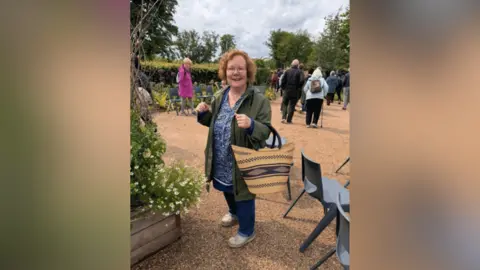 Alison Butt
Alison said she first noticed symptoms when her handwriting began to shrink as well as feeling stiffness in her hands and having difficulty cleaning her teeth.
When she developed a tremor too, she went to see a doctor, who referred her to a consultant.
She said because her dad had been severely disabled by the disease, and because she had worked with a lot of people with Parkinson's through her former job as a neurology nurse, she had a "skewed view".
"When I got my diagnosis I just felt really angry," Alison said.
"I remember the consultant gave me some leaflets, but I just threw them in the bin because I didn't want to know at that point."
But she said her symptoms had actually improved since her diagnosis, thanks to a number of treatments, as well as other things like keeping active by doing ballet for people with Parkinson's.
She said the most important thing had been finding a local support group.
"I think people who've just been diagnosed do get worried about that because they're worried about seeing other people a lot worse and can find that distressing," she said.
"But actually, once you get to know people and you make that effort, it's really really helpful and it's quite empowering."
A new challenge
Alison took ill-health retirement around two years after her diagnosis.
But she said having newly-found spare time has allowed her to take on a new challenge - starting her own online business selling free-trade Bolga baskets imported from Ghana.
She said she was inspired to start the business following a trip to the country with her daughter and son-in-law.
"I also go to markets to sell baskets, and I love chatting with people and telling them about our business," she said.
"It's really rewarding to have a purposeful business that empowers people and helps them pay for the things they need."
Alison said it was "important to have hope" for the future.
"It would mean a lot to me if there were better treatments and a cure for Parkinson's," she said.
"I attend meetings and learn about new treatments being developed, and it gives me hope."
Listen to the best of BBC Radio Manchester on Sounds and follow BBC Manchester on Facebook, X, and Instagram. You can also send story ideas via Whatsapp to 0808 100 2230.
