Turbulent years revealed at secret wartime base

 Trent Park Museum Trust
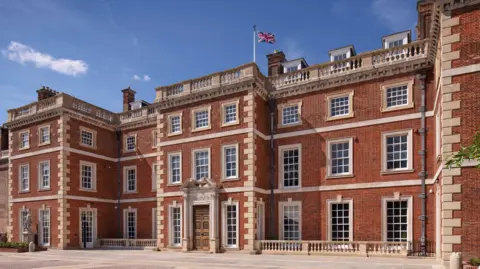
A new museum inside a north London country house that housed secret intelligence operations during World War Two will open to the public on Tuesday.
Trent Park House of Secrets, based in Trent Park country house in Enfield, tells the story of espionage, courage and creative deception.
The house played a key role in Britain's intelligence battle with Germany and is comparable in importance to Bletchley Park, the trust which has restored the property said.
"After a decade of fundraising and restoration works, we are thrilled that these extraordinary stories can finally be revealed," it added.
 Trent Park Museum Trust
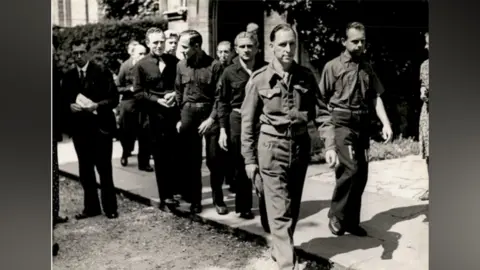
During the war, senior German officers, including 59 generals, were held captive in Trent Park, unaware that their conversations were being recorded by miniature bugging devices hidden in walls, light fittings, plant pots, the billiard table, and even the garden benches.
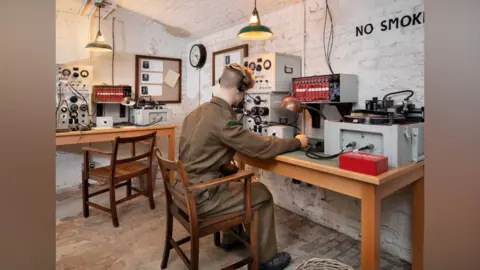
Beneath the state rooms, teams of secret listeners, many of them German-speaking Jewish refugees, worked in concealed basement rooms, recording conversations between the captured officers.
 Trent Park Museum Trust
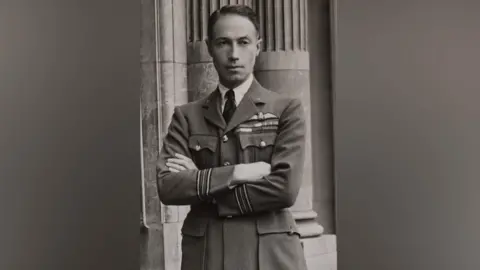
Before the war, the property was owned by Sir Philip Sassoon, a close friend of the future Edward VIII and of Winston Churchill, who served as a Conservative MP and as under-secretary of state for Air.
His friends, including members of the Royal Family, were entertained at weekends where they mixed with artists and entertainers such as Noel Coward, Charlie Chaplin and Fred Astaire.
Sassoon died in 1939 and the house was requisitioned by the government as a centre for intelligence operations.
 Trent Park Museum Trust
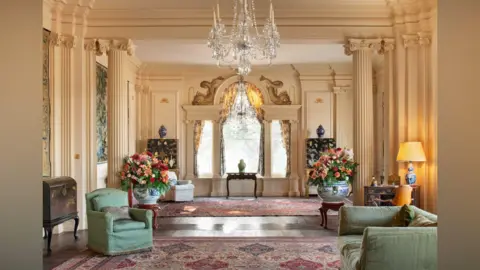
The state rooms on the ground floor of Trent Park have been restored to their 1930s appearance, with artwork and furnishings belonging to Sassoon returning for the first time since 1939.
In the basement the listening stations, offices and working rooms of the secret listeners, have been recreated.
 Trent Park Museum Trust
Dr Giuseppe Albano, director of the Trent Park House of Secrets, said most people will visit Trent Park "to discover the covert intelligence operation that took place here during the Second World War.
"What I hope will surprise them is that there is so much more to discover.
"Before the war, these rooms played host to conversations between politicians, royalty, writers and artists at a moment when Europe stood on the brink of conflict."
He said the team had taken "great care to reveal the full significance of the house, weaving together stories from some of the most colourful and turbulent years of 20th Century British history".
Listen to the best of BBC Radio London on Sounds and follow BBC London on Facebook, X and Instagram. Send your story ideas to hello.bbclondon@bbc.co.uk
