Amateur historian explores county's forgotten forts

 John Devine/BBC
An amateur historian who uncovers lost buildings and landmarks in a county said people were often surprised to discover what once stood in their neighbourhoods.
Stephen Mudie, from Peterborough, recently shared on social media the story of three forts that were built in the 1600s, including one sconce in March, Cambridgeshire.
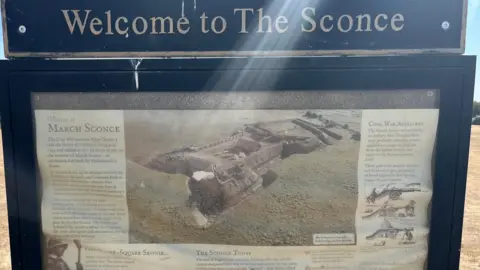
"A sconce is a type of fort built of earth and timber. A great number were built during the English Civil War and the one in March dates from around 1643," Mudie said.
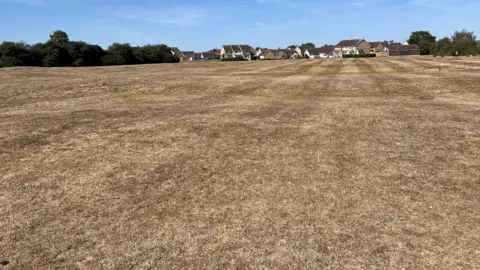
Although little of the forts remain visible except for undulations where earthworks were carried out, Mudie said uncovering stories helped people understand the history of the places where they live.
"People are often amazed when they find out what used to be on their doorstep," he said.
 John Devine/BBC
The March sconce was one of several defensive positions constructed during a period of conflict between the Parliamentarians led by Oliver Cromwell and Royalist forces in the mid-17th Century.
More from Cambridgeshire:
The sconce, which would now sit between two residential estates in March, once housed a 60m (200ft) long wooden fort.
Mudie said the sconce would have had four corners to position a cannon to try to cover all possible angles of attack.
 SUPPLIED
Mudie's social media posts regularly feature photographs, maps and historical records showing how parts of Cambridgeshire have changed over time.
"Other similar forts were housed on sites locally in Stanground and Earith," he said
"It's fascinating to see how interested people are in local history," he said, "there's always something new to uncover."
Do you have a story suggestion for Cambridgeshire? Contact us below.
Follow Cambridgeshire news on BBC Sounds, Facebook, Instagram and X.
