The 'prince of pop art who was forgotten by his home' city finally gets exhibition

 Courtesy of the Phillips family
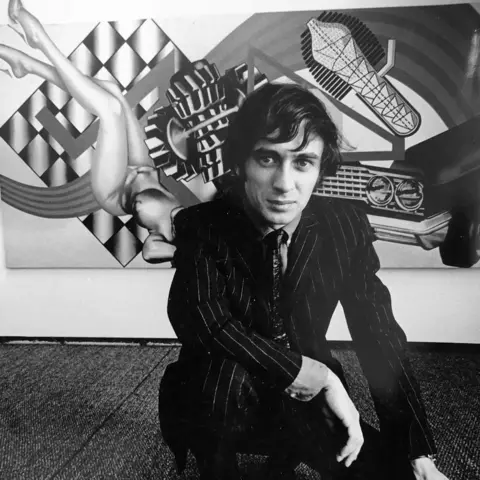
He was a pop art pioneer, but he ended up being one of his home city of Birmingham's "most overlooked creative figures".
But now Peter Philips, a key figure in the international pop art movement who died in June 2025, is to be celebrated with an exhibition to showcase his work.
Phillips ranked alongside artists including David Hockney, Pauline Boty, Peter Blake, and later Andy Warhol and Roy Lichtenstein.
The outdoor exhibition Pop Goes Brum! will reflect the artist's "pioneering achievements" and also celebrate his deep‑rooted connection to Birmingham, said art historian and author Ruth Millington.
Although he lived and worked across London, New York, Zurich, and Australia, his work was influenced by the city where he was born and he retained his "distinct Brummie humour," she said.
 Courtesy of the Phillips family
Born in Bournville in 1939, he enrolled at Moseley School of Art aged 13, later studying at Birmingham School of Art.
He would go on to teach there, as well as Coventry College of Art in the 1960s.
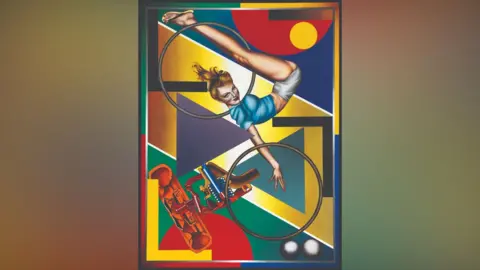
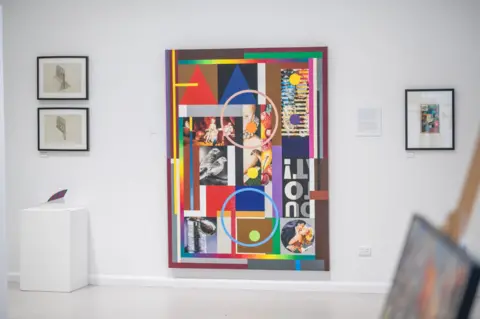
"He was quite clear that his imagery and style both come from Birmingham where he learned an airbrush technique which you see in his paintings for his whole career," Millington explained.
"And then too it was growing up in that industrial city, surrounded by car manufacturing, that inspired his imagery of car parts, which he took apart and reassembled in the paintings."
 Courtesy of the Phillips family
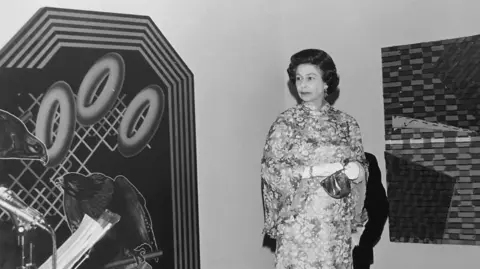
After moving to London to study at the Royal College of Art, his peers included Sir Peter Blake, Pauline Boty and David Hockney.
"Of all the British pop artists, he was the closest to the Americans like Andy Warhol and Roy Lichtenstein," she said.
"He exhibited with them in New York and when he moved there in '64, Lichtenstein became his friend... so he was very much in the inner circle."
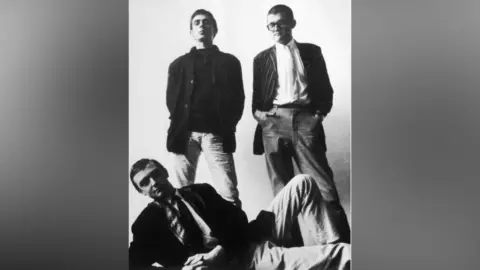
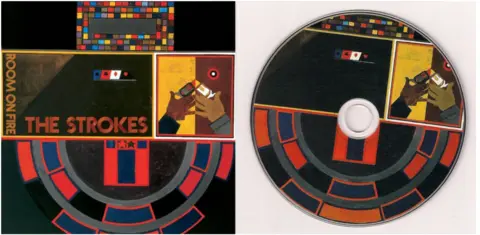
He was one of four artists portrayed in Ken Russell's 1962 film Pop Goes the Easel, also creating idents for the BBC Four Goes Pop series.
 Geoff Reeve/Courtesy of the Phillips family
As well as being "one of the most important pop artists," she explained, he was also a "bit of an organiser", being behind an exhibition in 1961 which launched British pop art.
"So he was a real mover and shaker of the movement".
Having early success meant he could "go and do what he wanted and didn't feel the need to stay in London and court the art press", she explained.
"So he was, I think, this Brummie outsider until the end of his life."
 Courtesy of the Phillips family
Millington, who is curating the exhibition, said she felt Birmingham had forgotten "this prince of pop art".
"His story has not been told and I really wanted him to be remembered in a significant way, given that his work is all about popular culture, everyday life," she said.
 Courtesy of the Phillips family
The free outdoor exhibition in Snow Hill Square will run from 9 to 30 June, developed in partnership with Birmingham School of Art and funded by Birmingham's Colmore BID.
"I thought a street art exhibition would be the perfect way to remember him, as anybody can see it, it's free and part of popular culture today," added Millington.
It will also feature contemporary works by current city art students.
"This exhibition not only honours his legacy but also reconnects Birmingham with one of its most significant cultural trailblazers," said Melanie Williams, from Colmore.
 Courtesy of the Phillips family
In his memory, the artist's family has established The Peter Phillips Foundation to support new artists.
Follow BBC Birmingham on Facebook, X and Instagram. Send your story ideas to: newsonline.westmidlands@bbc.co.uk
