The lake which flooded an entire valley of villages and farmland

 Bristol Water
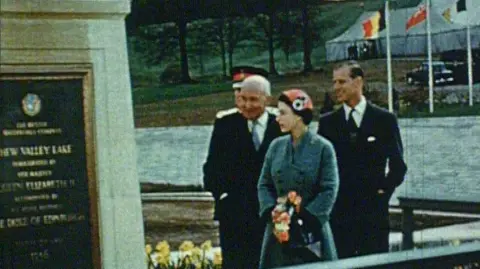
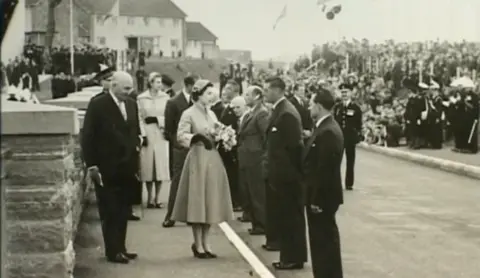
Seventy years ago, Queen Elizabeth II unveiled a plaque at the brand new lake in the rural area of North East Somerset. Chew Valley Lake was open for business.
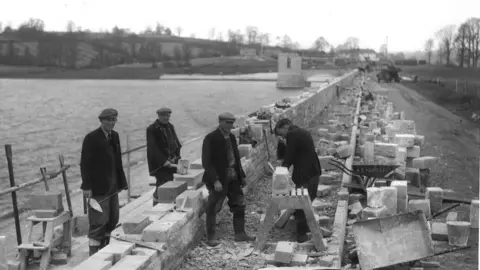
The need for new drinking water had grown in the nearby city of Bristol and the decision was taken to flood a whole valley to make way for the reservoir.
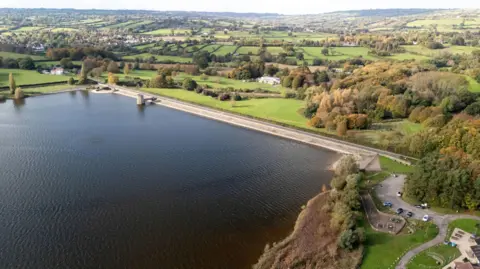
Farmland, villages, homes and even a church disappeared. Seven decades later, the 1,200 acre lake continues to supply Bristol and the surrounding Mendip Hills. It has a capacity of 20 billion litres of water, according to its owners Bristol Water.
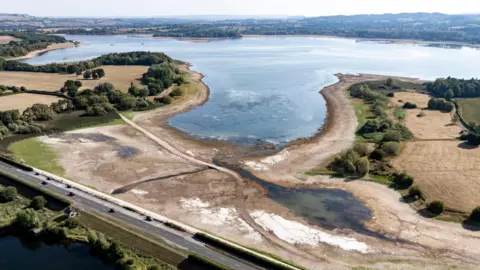
Chew Valley is not just a lake. It is used for walking, angling, sailing and birdwatching - but history occasionally does remind us that this area was once made up of fields and settlements that date back thousands of years.
 PA Media
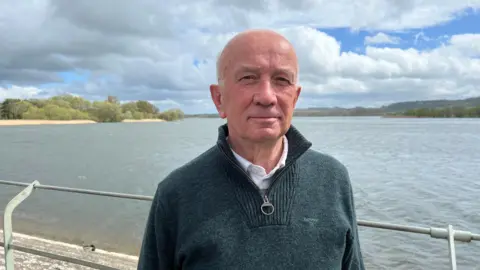
Robin Cade, from the Chew Valley Local History Society, said: "It was a beautiful valley with a lot of dairy and mixed farms on it, but a natural place to dam and create a store for water for the people of Bristol.
"You've got to remember at the time... the population was growing. They needed more water."
The idea for the lake first came about in the 1930s and, after various battles and eventually an act of Parliament, construction started in November 1950.
Cade said it took years to get approved because of a "lack of money" and World War Two.
 Bristol Water
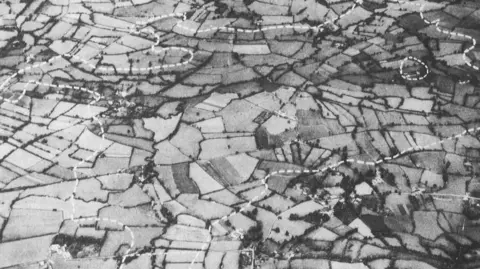
The huge new lake was created by the damming of the River Chew and flooding farmland, villages and settlements which dated back to the Neolithic Ages.
Settlements such as Moreton, Chew Park, St Cross Nunnery and Ben Bridge were demolished to pave the way for water. There were also 5,000 trees and 70 miles of hedgerows cleared.
Cade said: "I think it was really heartbreaking for the farmers. Many of them have been here for generations."
 Bristol Water
 Bristol Water
17 April 1956 was called a "golden day" for the Chew Valley as Queen Elizabeth II and The Duke of Edinburgh opened the lake.
Cade said: "It was certainly a big moment for the people of the Chew Valley and people who attended that day still remember it fondly.
"It was the first and for many the only time they saw Her Majesty Queen Elizabeth II. It was a remarkable day for locals, called a golden day."
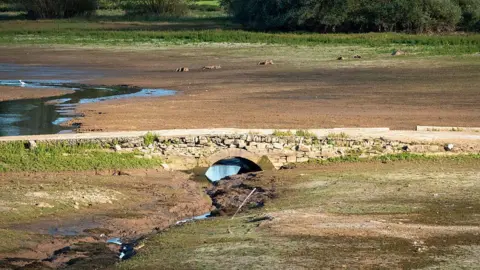
There have been some reminders of the history of the former valley and its past, especially during the recent hot summers of 2022 and 2025.
The former Ben Bridge area and village Moreton was revealed as the reservoir's water levels dropped to lower than 35% capacity.
There has also always been rumours that when the water is low, you can see the spire of a former church underwater. But Cade disputes this.
"I've never come across the church spire that's so called underneath it and I didn't see it last year in the drought. I think most of the buildings were taken or demolished," Cade added.
 Getty/Matt Cardy
The history of Chew Valley Lake is just one part of the area's story, as flooding an entire valley opened up new areas for wildlife.
"It's become a wildlife corridor," said Stewart McCarthy-Thompson, from Avon Wildlife Trust.
"It's an iconic landmark in the landscape. Originally set up to meet our water needs, now a haven for nature.
"It's nestled between lots of sites for nature, 260-270 bird species have been recorded there as nature find its way," McCarthy-Thompson added.
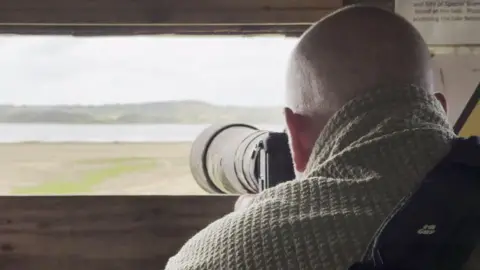
There are bird hides dotted around the lake, with the area designated as a Site of Nature Conservation Importance as well as a Site of Special Scientific Interest.
McCarthy-Thompson said: "If you're new to nature, [it is] fantastic for birdwatching and a great site to start nature watching at all ages.
"It's quite shallow in some areas, so it exposes the muddy area for wading birds. Its volume of water is a lot less to other reservoirs."
The lake is run by Bristol Water, which says it is a "big part" of its infrastructure with the company taking 40 to 50 million litres every day from Chew Valley Lake.
Although, it added there is "growing demand" for drinking water and so it is hoped a second reservoir will be built at Cheddar.
 Getty/Colin Peachy
Ralph Ledbetter, from South West Water, said creating Chew Valley Lake was a "necessity" at the time to improve water quality.
Ledbetter said: "In 1933-34, there was a widespread drought and the water companies and authorities at the time recognised something needed to be done.
"They wanted to capture more water that was falling on the Mendip Hills, and Chew Valley was the natural site identified.
"Chew Valley Lake is about half of all the storage we have in the Bristol area and it is really important."
Seventy years on, Chew Valley Lake is still just as important to when it opened in 1956.
Follow BBC Bristol on Facebook, X and Instagram. Send your story ideas to us on email or via WhatsApp on 0800 313 4630.
