Plea to use water 'wisely' to avoid hosepipe ban

 Getty Images
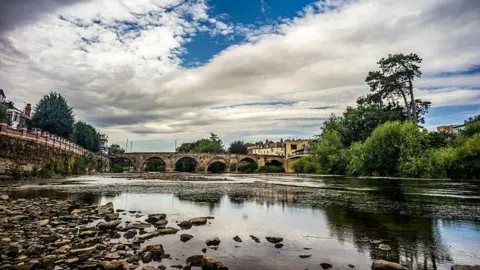
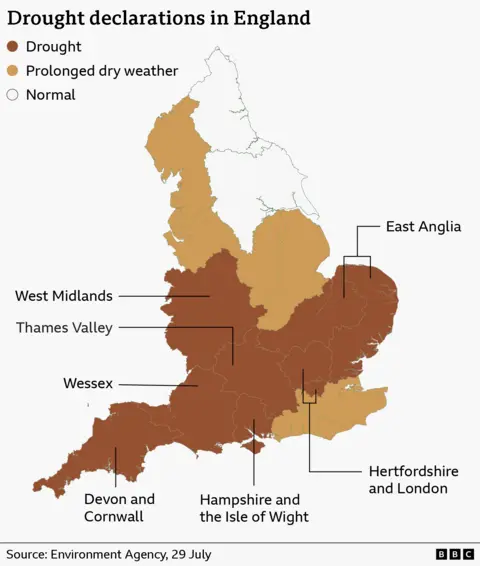
People across the West Midlands are being urged to "use water wisely" by the Environment Agency (EA) after drought was declared.
The region is one of seven areas in England now officially in drought due to the summer heatwaves and prolonged dry spell.
Nick Green, from the EA, said the agency was topping up the River Severn in Shropshire with the equivalent of 80 Olympic-sized swimming pools worth of water, to keep it flowing.
Water companies supplying the region said, while they have no plans to introduce restrictions, customers should take steps to try to avoid a future hosepipe ban.
The EA said about six million people relied on the River Severn for drinking water.
When flows are predicted to drop below a prescribed minimum level at Bewdley gauging station, water is released from Llyn Clywedog, Lake Vyrnwy and the Shropshire Groundwater Scheme.
The latter project uses groundwater stored naturally within the sandstone aquifer beneath the county and transfers it through a 53km network of underground pipelines.
"By the time that's got down into Gloucestershire that's being used by drinking water abstraction and agricultural irrigation," Green said.
"And making sure that boats and people can still use the river and the wildlife is still sustained."
 Getty Images
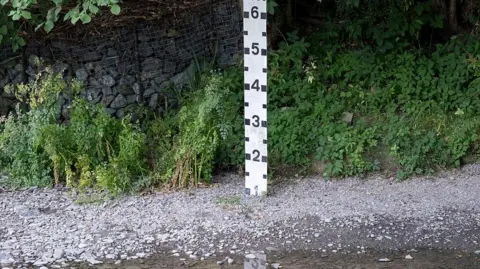
The agency is rescuing fish from dried up watercourses daily, including on the River Teme and the River Onny in Shropshire.
"It's really important that we all use water wisely when we've got stress situations like this," Green said.
"At the moment there isn't a hosepipe ban, but we're working with the water companies so that they understand how much water they've got."
The BBC's West Midlands science, environment and rural affairs correspondent, David Gregory-Kumar, said the drought had happened quickly, in meteorological terms.
"If you look back at our history of droughts in the Midlands, '96 was a big one," he said.
"That really had almost a year of lower than average rainfall leading up to the declaration of drought in the summer of '96.
"This year we've had a lot of rain in the winter and then suddenly we get into spring and the rainfall has just stopped.
"We've had about 5% of the average rainfall you'd expect for this month. That is obviously extremely low, and that is why the drought has been declared.
"You combine it with this intense heat, and everything's drying out.
"This is the impact of climate change, it's exactly what we always said would happen. Much wetter winters, and then really dry summers."
 Getty Images
Severn Trent's Draycote Water reservoir in Warwickshire is 80% full thanks to the wet winter, the water firm said, meaning supplies are fairly healthy.
However, the firm said it had experienced record demand during the heatwaves and its staff were "working around the clock" to treat more water, move supplies where they were needed and fix leaks.
Although it had not issued a hosepipe ban in 30 years, Doug Clarke, from the firm, suggested customers "leave the lawn".
"We know they go dormant and look dead and dry but actually they do recover, they do come back when the rains come, "he said.
He also advised people to "look out for those leaky loos in the home" and fill a jug of cold water in the fridge instead of running the tap.
The firm also asked people to avoid hosepipes or sprinklers, which it said could use about 1,000 litres an hour, and instead recycle paddling pool water for the garden.
Their advice was echoed by a spokesperson for South Staffordshire Water who urged only those who struggled to carry a watering can to use a hosepipe "as sparingly as possible" - and let your lawn go brown.
Follow BBC Birmingham on BBC Sounds, Facebook, X and Instagram.
