Doctor caused serious harm to patients, review finds

 Getty Images
Three people may have died prematurely and others suffered permanent harm while under the care of a consultant at a London hospital who was giving outdated and incorrect medical advice, a review has found.
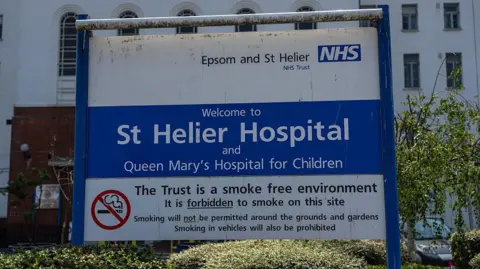
At St Helier Hospital in Sutton, Dr Veronica Varney prescribed treatments to patients with Interstitial Lung Disease (ILD) that had no scientific evidence while proven drugs were withheld.
The Royal College of Physicians (RCP) review added 12 suffered severe harm and in three cases, patients had not been given treatments that could have extended their lives.
Epsom and St Helier University Hospitals NHS Trust has apologised and said it was reviewing the care of more than 200 patients.
It added that it had accepted all 19 of the RCP's recommendations and that most had been carried out.
 Getty Images
ILD is a group of conditions that scar the lungs and make breathing progressively harder. Most patients in the review had idiopathic pulmonary fibrosis, the most aggressive form. Drugs called antifibrotics can slow it down.
The RCP found the consultant did not actively recommend those approved drugs.
Instead, patients were prescribed or advised treatments the review said had no evidence base, including antibiotics and a drug licensed for severe chronic obstructive pulmonary disease rather than for ILD.
The review, which was commissioned by the trust and examined the records of patients chosen at random, also found:
- Treatment was delayed or never started
- Little evidence patients were referred for oxygen, pulmonary rehabilitation, or for palliative care when their disease had advanced
- The consultant misread lung function test results
- Patients were not consistently discussed at the specialist team meetings used to reach a diagnosis, and referrals to larger expert centres were slow
- Ran a trial despite concerns about consent procedures, patient selection and use of an unproven treatment
- One patient was told their symptoms were down to poor fitness and was given dietary advice rather than treatment
- Patients were advised to avoid rapeseed oil, and to avoid flu and Covid vaccination, against national guidelines recommended for people with ILD. They were not told these treatments were unproven
- The consultant did not attend the meetings she was expected to
- Very few patients were sent copies of their clinic letters
The RCP blamed strained relationships between clinical leaders, the fact the two respiratory departments sat on separate sites, weak routes for escalating concerns, and disruption caused by the pandemic.
Responding to investigators, Varney said she raised concerns about complications and side effects associated with antifibrotic medication, saying she preferred to try other medications first.
She said some delays in starting antifibrotics were attributed to patient choice, as well as workload and staff shortages.
When approached following the board's publication of the RCP report, her representative said she had no comment.
Concerns about the consultant's practice were repeatedly raised by trainee doctors and through the trust's whistleblower scheme between 2019 and 2022 and were not adequately addressed, the RCP found.
The consultant was stopped from seeing patients in January 2023 and retired that April.
In the report, the trust said it was clear in hindsight it should have acted sooner, and that some of the staff who raised the alarm were not properly supported.
NHS bodies must tell patients when they have been seriously harmed. The trust said that applied in 22 of the 28 cases, and it had written to all of them or their families.
It has also written to a further 203 ILD patients treated by the same doctor between 2019 and 2023, whose care it will now examine. That work is expected to take up to a year.
The board said it had received assurance in November 2024 that all patients with ILD looked after by the hospital were on the correct treatment.
The board said: "The improvements we have made, and the work that is ongoing to improve further, can never put things right for those patients who have been harmed, or for families who have been bereaved, but it is very important that they should be able to see how seriously we have taken this issue, how much we have reflected on it as an organisation, and what we are doing to prevent it happening again."
They added: "It is clearly important that the board and our patients and public can be assured that the respiratory department is continuing to provide safe care."
'Significantly harmed'
Dr Richard Jennings, the trust's group chief medical officer said he offered his "sincere apologies to our patients and their families for the harm this has caused – the care they received fell far below what should have been given.
"While the Royal College of Physicians' report makes it clear that patients were significantly harmed, it also expresses confidence in the changes we had already made to make the service safe, and we have accepted and acted on all of their recommendations.
"We have also contacted patients or their families to share the findings, apologise, and offer further support."
The report has been sent to the coroners for London South and Surrey, the Care Quality Commission, the GMC and NHS England.
Varney remains under investigation by the General Medical Council and has restrictions on her practice while this process is ongoing.
Listen to the best of BBC Radio London on Sounds and follow BBC London on Facebook, X and Instagram. Send your story ideas to hello.bbclondon@bbc.co.uk
