Heatwaves creating new pressures for NHS hospitals

 PA/Ben Birchall
Soaring summer temperatures put pressure on hospital services similar to winter problems, according to a senior NHS manager.
Zara Jones, Acting Chief Executive of Doncaster and Bassetlaw Teaching Hospitals, said heatwaves placed additional demands on staff, patients and buildings.
NHS England said A&Es nationwide "bore the brunt" as the May heatwave piled pressure on hospitals. Ambulance services were also reportedly under intense demand, with paramedics said to be experiencing demand "at levels never seen outside of winter".
Along with patients suffering from heat-related conditions, staff also said they were struggling to work in buildings where temperatures could peak above 30C (86f).
In a report, Jones said "operational pressures are no longer confined to winter months".
"Caring for patients during periods of extreme heat places additional demands on colleagues, patients and our estate," she explained.
"It reinforces the importance of investment in modern facilities, resilient infrastructure and neighbourhood-based models of care."
In Wakefield in West Yorkshire, Dr Richard Gorman, a consultant in emergency medicine at Pinderfields Hospital, said the heat was also piling more pressure on their services.
"We are busier now this summer than some of our busiest days during winter," he said.
"On the hottest day of the last heatwave we had more than 1,000 patients come through our doors.
"That's extremely busy, we would expect to see 850 on those days."
On Thursday, the UK Health Security Agency (UKHSA) updated its amber health alert to include Yorkshire and the Humber, with it in place until 21:00 BST on Sunday.
The alert means "significant impacts are likely across health and social care services due to the high temperatures".
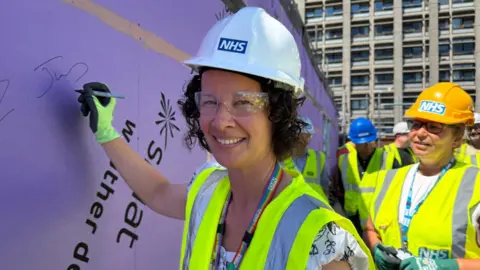 Doncaster and Bassetlaw Teaching Hospitals
Doncaster and Bassetlaw Teaching Hospitals Trust is currently building a £19m critical care unit which will feature cooling systems. The 22-bed department is set to open early in 2027.
Specialist systems are being installed throughout the building to help maintain safe temperatures and support essential clinical equipment.
Research by the University of Sheffield has suggested 90% of hospital buildings were vulnerable to overheating, which "severely compromises" patient care, particularly for vulnerable children with chronic conditions like asthma or diabetes.
The university's School of Architecture and Landscape is currently researching ways to combat the "urgent threat of extreme heat in NHS buildings".
One study aims to achieve a heat-resilient UK children's hospital system by 2050. The university said overheating incidents had increased by 53% since 2016-17.
A second project with Sheffield Teaching Hospitals is focused on high-risk zones such as surgical wards, drug storerooms, and critical IT centres and sustainable methods for dealing with heat.
'Operations disrupted'
The Doctors' Association UK, a campaign group led by medics, has written to the government urging immediate action to protect NHS patients and staff during extreme heat.
It called for Health Secretary James Murray to bring in a maximum safe working temperature for hospitals and GP surgeries. Among 367 reported indoor temperatures, the median was 33C (91F) , with temperatures reaching as high as 45C.
More than 1,100 doctors and healthcare workers responded to DAUK's survey and described patients developing dehydration and heat exhaustion, operations being disrupted, and clinical decision-making becoming more difficult in the heat.
The government said that despite unprecedented demand, 1.86 million attendances were managed within four hours of arrival at hospital - the highest number for any May in a decade.
Listen to highlights from South Yorkshire on BBC Sounds, catch up with the latest episode of Look North
