Waste‑fuelled heating network 'could double in size'

 BBC
BBCA communal heating system powered by burning household waste could double in size, a council has said.
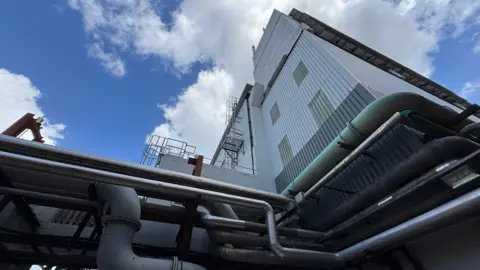
Nottingham's district heating network launched in the 1970s and currently provides heat and hot water to 5,000 homes in the city and more than 100 commercial properties using steam from the privately owned Eastcroft incinerator.
The city council said this significantly cuts the amount of waste sent to landfill while saving about 17,000 tonnes of carbon emissions.
Officials said they were now exploring options to attract private sector investment as any expansion would likely cost "tens of millions".
Growing the network would spread infrastructure costs, create jobs and help meet government targets of providing 20% of heat from such schemes, the council said.
There was also the potential for major developments such as Broad Marsh to be linked to the scheme.
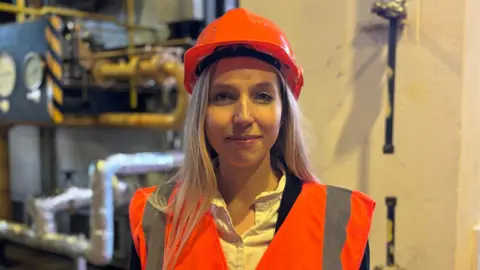
Sam Lux, city council executive member for climate and energy, said the system could "potentially double" in size, but admitted plans would need a "huge amount of investment", likely amounting to "tens of millions".
She said: "We have done quite a few feasibility studies and we have had some help from the government in funding those.
"We have a few ideas about the type of technologies which could be hooked up.
"But what we want to do now is understand what is out there in the market because we think it might be beneficial if we can attract private sector investment and private sector expertise.
"So it's a case of going out and seeing what our options are before we make a decision about the next step."
The facility was run by a council-owned company called Enviroenergy, which was given a number of loans by the authority, with around £11m left unpaid by 2021.
At the time, the council said the company had made a profit every year since 2013, with the exception of 2017.
But when it emerged it needed £17.5m of investment to continue to operate - including upgrading boilers, meters, pipes and pumps - the functions of Enviroenergy were taken in-house by the council.
The council's executive will meet on 21 April to examine a report on the system and consider an 18-month period of "market engagement".
From January, heat networks have come under the regulation of Ofgem, giving it powers to regulate pricing.
Listen to BBC Radio Nottingham on Sounds and follow BBC Nottingham on Facebook, on X, or on Instagram. Send your story ideas to eastmidsnews@bbc.co.uk or via WhatsApp on 0808 100 2210.
