Farmers scared about bluetongue vaccine shortage

 Charlie Stubbs / BBC
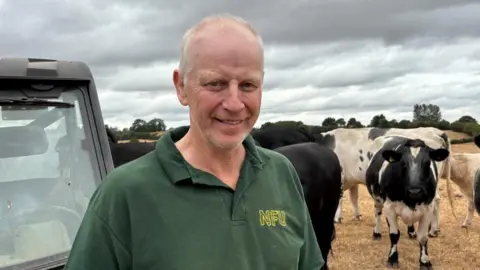
A farmer in Shropshire says he is worried for animals across the country because of the spread of an outbreak of the potentially fatal bluetongue virus amid a vaccine shortage.
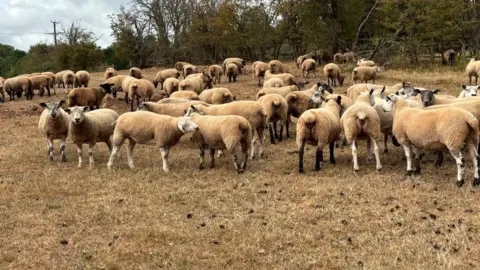
Richard Yates, from Middleton Scriven near Bridgnorth, at first only vaccinated his cattle, but once cases started to rise in the South West, he jabbed his sheep.
It is now "extremely difficult to get the vaccine", he said and warned farmers could be faced with "considerable losses" if their animals died from the outbreak,.
The Department for Environment Food and Rural Affairs (Defra) said it was "working closely with the industry and is putting processes in for additional vaccine supplies".
Bluetongue is an insect-borne viral disease affecting sheep and cattle among other animals, mainly spread by biting midges, which thrive in long, hot summers like the one the UK is experiencing.
There are currently 456 cases in the UK, none in Shropshire, but that number is expected to rise across the country.
The UK's chief veterinary officer committed earlier this month to "ramp up" testing and wanted all farmers to get the vaccine when it became available.
 Charlie Stubbs / BBC
Yates said the virus was a big issue in Belgium and the Netherlands two years ago and killed cattle and sheep there "in their droves".
"[Animals] can be healthy one day and dead the next," he added.
"It can also cause abortions, stillbirths, reducing fertility. It is devastating."
Yates said the vaccinations he gave his animals last year could still give them some protection.
"There will be some benefit if the animals are vaccinated last year [as it is] kicking around in their system," he said.
"But it evolves and mutates. Twenty-five years ago, there was a different strain of bluetongue.
"I remember going to the old Royal Show and that was the next big problem that was coming our way. We all vaccinated and after a year it disappeared."
'Worst outbreak'
Vets across the county have encouraged farmers to take up the vaccine by going on to a waiting list.
The shortage was because of issues with supply and demand because of "unprecedented levels" of need, according to Susan Carr, a farm vet at Severn Edge Practice in Bridgnorth.
"There is about 20,000 doses on our waiting list but I can imagine other practices are going through the same," she added.
"We are importing a lot of stock at the minute from Europe; it is a UK-licensed vaccine but there just isn't the stock in Europe.
"It's just taking time and obviously at the minute that's not what people want to hear."
Carr has worked as a vet for 12 years and said, about this outbreak, she had never seen it so bad.
"This is the worst notifiable disease outbreak I have had to deal with," she added.
"The only other [outbreak] we have had was bird flu a few years back."
"[It was] pretty bad around here and some of us did go and work alongside the ministry there with outbreaks but this has by far been sadly the the most the biggest one I've seen."
The spokesperson for Defra said they recognised how concerning bluetongue was for farmers and urged them and vets to place vaccine orders.
"There is a wide range of support available to help farmers protect their livestock and we will continue to monitor the situation closely," they added.
Follow BBC Shropshire on BBC Sounds, Facebook, X and Instagram.
