Runner in shock after buzzard attack

 BBC
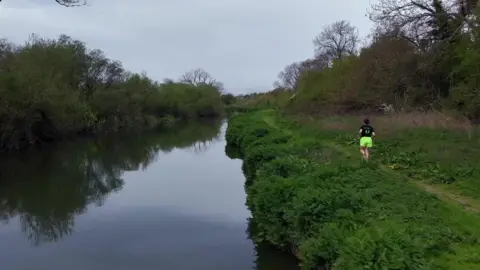
BBCA runner who needed hospital treatment after a buzzard attacked her said it was "clawing" at her head.
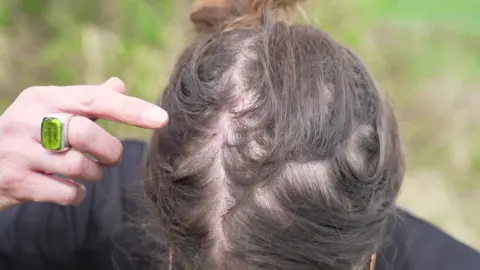
Heather Davey from Wimborne was out training for the Southampton marathon when the bird swooped, sinking its talons into her scalp.
"There was a lot of blood," said Davey who stumbled to safety where a passing driver was able to take her to the nearby Victoria Hospital for a tetanus jab and some anti-biotics.
Davey said she often runs along the 20-mile route in Cow Grove near Wimborne but will "definitely be avoiding" the area in the future.
She said she had noticed buzzards there in the past but admitted she "had not experienced anything quite like that before".
She added: "It was very heavy, the impact, it just felt like something had knocked me out, and the pain was a really sharp stinging pain."
She said the the whole ordeal was over in about 15 seconds but it left her "in shock".
 Getty Images
Keith Betton, Chair of the Hampshire Ornithological Society, said Buzzard attacks do "occasionally" happen to people in the wild but they were rare.
He added that the bird may have thought there was "some sort of danger", for instance it may have thought that the runner was approaching too close to a nest or that they were attempting to steal the animals prey.
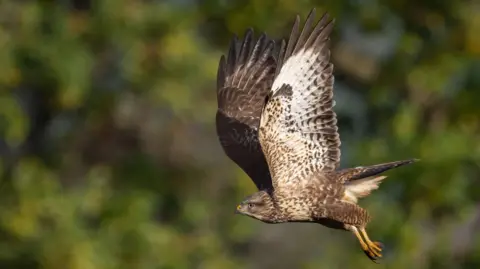
Buzzards are the most common bird of prey in the UK and are quite large with broad, rounded wings that span up to 128cm on average.
The brown and white feathered animals are currently thriving across the country, where they can be seen throughout the year and are particularly active in the spring and early summer months, with males performing aerial dances known as "the rollercoaster" to impress females.
They tend to eat small mammals and birds and according to the RSPB the species makes a mournful mewing call, which could be mistaken for a cat.