Tactile Iron Age burials 3D-printed for museum

 Bournemouth University
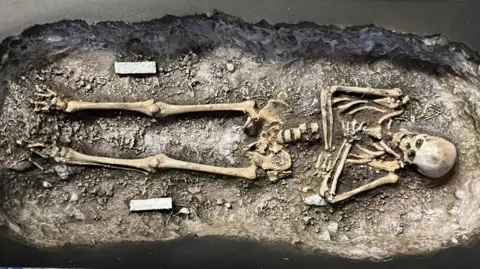
Scale replicas of 2,000-year-old skeletons unearthed in Dorset have been 3D-printed for members of the public to view and handle.
More than 100 Iron Age burials have been unearthed at Winterborne Kingston in Dorset by Bournemouth University archaeologists since 2009.
Digital records have been used to recreate some of the recent finds, showing the exact positions they were found before being excavated.
The replicas have gone on display at Wareham Town Museum as part of its new Durotriges Exhibition.
The Durotriges was a Celtic tribe that inhabited south-west Britain before and during the Roman conquest.
Dr Martin Smith, associate professor of biological anthropology at Bournemouth University, said: "Dorset is a really special place from an archaeologist point of view.
"We have nice chalky alkaline soils that's very kind to bone preservation and, for the period we are interested in, which is the end of the Iron age and beginning of the Roman period, the local people buried their dead in cemeteries, which is actually quite unusual at that time."
Smith believes the 3D replicas, created by the university's archaeological team and its National Centre for Animation, could be the first of their kind.
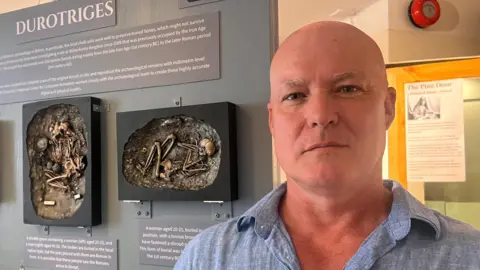
Speaking to BBC Radio Solent's Dorset Breakfast show, he said: "People have 3D printed objects for display in museums before but what we are doing is recreating the burials in-situ, with the human skeletons and other objects in the grave as they were when they were encountered at excavation.
"When you excavate an archaeological site, afterwards, it's gone forever... the patterns and placements of bones and objects are gone."
Smith said finds had traditionally been recorded through drawing and photographs but, in recent years, were logged digitally in 3D, allowing them to be accurately recreated.
Wareham Town Museum said it hoped the replicas could transform the way museums share archaeology with the public.
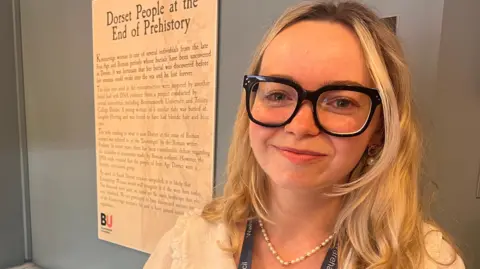
Museum co-ordinator Katie Seal said the models were "breathtaking", adding: "They can also be used as an aid for people who are visually impaired because, for the first time, you can physically touch and feel the bones.
"It's amazing that they are here, especially because we are a small museum."
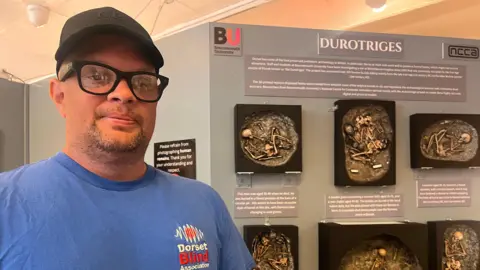
Darrel Bennett of the Dorset Blind Association, who is visually impaired, said: "It's absolutely fantastic.
"You can feel where the skeletons and the people actually are and some of them have the grave goods still in there as well. It's just amazing to be actually able to feel the history and not just read about it."
