US-bound plane diverts to Canada after person from Ebola-hit region boards 'in error'

 Getty Images
A plane from Paris to Detroit was forced to divert to Canada after a passenger from the Ebola-hit Democratic Republic of Congo boarded the plane "in error", officials have said.
US entry restrictions aimed at limiting the spread of the deadly virus meant the passenger should not have boarded the Air France plane, the US Customs and Border Protection (CBP) agency told the BBC.
Almost 140 people are believed to have died from Ebola in the outbreak in central Africa, with more than 600 suspected cases identified.
Officials did not specify when the person was last in DR Congo. Canadian health officials said the passenger did not show symptoms and has been flown back to France.
"A Public Health Agency of Canada Quarantine Officer assessed the traveller and determined they were asymptomatic," Health Canada said in a statement.
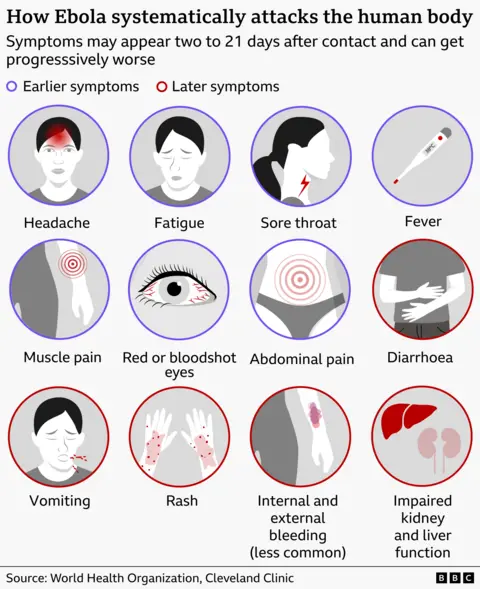
Infected people can only spread Ebola once they start showing symptoms, according to the Centers for Disease Control and Prevention (CDC). Symptoms can appear two to 21 days after exposure.
Cabin crew put on masks after the captain announced the diversion, a passenger on the flight toldthe BBC's US partner CBS News.
Deborah Mistor said passengers were informed of the change four hours before they were due to land: "I think enough people must have been questioning what was going on because 30 minutes later, [the captain] came back on and said that he wanted to confirm that there was nothing wrong with the plane, there were no technical difficulties, that it was strictly because of US authorities not allowing us to land in the US."
She added that people were subsequently flown to Detroit on the same aircraft.
Air France confirmed to US media that "at the request of US authorities, [the flight] was diverted to Montreal Airport after a Congolese passenger on board was denied entry into the United States".
The US border agency CBP said: "Air France boarded a passenger from the Democratic Republic of Congo in error on a flight to the United States."
The agency said it took "decisive action" to stop the flight landing at Detroit Metropolitan Wayne County Airport. It was diverted by about 500 miles (800km) to Montreal, Canada.
The US is restricting entry for people without US passports who were in DR Congo, South Sudan or Uganda in the last three weeks.
US passport holders and permanent residents who have been in those countries can only enter through Washington-Dulles International Airport in Virginia for enhanced screening.
The current Ebola outbreak has been declared a public health emergency of international concern by the World Health Organization.
The US Centers for Disease Control and Prevention said the risk to the US was relatively low, but it would introduce measures to prevent the disease from entering the country.
One American has tested positive - a doctor who was working with a medical missionary group in DR Congo. He is being treated in a special isolation ward at a hospital in Germany.
The Bundibugyo species of the virus does not yet have a vaccine, and it could take up to nine months before a vaccine against it is ready, the World Health Organization said on Wednesday.