Why modern parents feel more sleep deprived than our ancestors did

 Serenity Strull/ BBC/ Getty Images
In ancient times, parents probably didn't suffer as much from feeling sleep deprived, leading some scientists to reconsider guidelines for today's new parents to get some shut-eye.
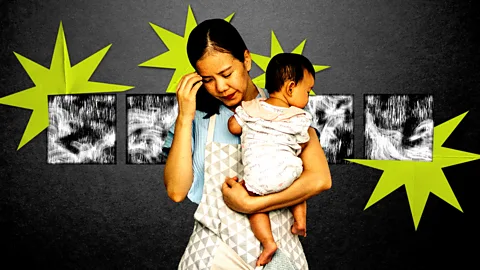
How exhausting is it to be a parent? When one brave soul posed this to a Reddit parenting forum, more than 400 answers flooded in. "Extremely. It's extremely exhausting and it is literally CONSTANT," wrote one respondent, the sentiment echoed by hundreds of others.
There are many reasons why parents feel so bone-crushingly tired today – and not all of them have to do with sleep. For instance, many families raise their children without community support, while parents often have to juggle work with child-rearing.
At the same time, many caregivers' sleep certainly changes after having children, whether that's due to an infant's middle-of-the-night feeds or a preschooler's penchant for a 05:00 start.
Given that we've been parenting for as long as humans have existed, it may seem natural to assume parents have been sleep-deprived for millennia, too. But the evidence that we have indicates this likely isn't true. So what did our ancestors do differently – and is there anything we could learn from them?
How much sleep are parents really getting?
In everyday conversation, parenting and sleep deprivation are taken to be synonymous. However, the evidence on just how much sleep parents tend to lose after having a child is mixed and culturally dependent.
One study, for example, found that first-time mothers in Germany on average get an hour less of sleep per night in the first three months after their baby is born than they did pre-pregnancy. Fathers lose a third of an hour. Although sleep duration increased after an all-time low at three months, neither parent had fully recovered their pre-pregnancy sleep after six years.
But the overall difference between parents and non-parents after the post-partum period is not nearly as big as you might believe. On average, the German study, which looked at nearly 40,000 people in total, found that parents who had at least one child under six years old reported sleeping about seven hours per night. Non-parents received just 10 minutes more sleep per night, for women, and 14 minutes more per night, for men.
Meanwhile, data from a 2024 survey in the US found that parents with children under age six are, on average, in bed for between eight and nine hours per night – well within the recommended range. Similarly, a French study, following more than 400 couples in the 36 months after birth, found that both mothers and fathers logged an average of eight hours' sleep or more at all time points (although some individuals slept as little as 4.25 hours per night, others as much as 12).
Of course, this is mostly self-reported data, so people may over- or underestimate their sleep duration, like starting their calculations from when they went to bed and not when they fell asleep, for instance.
But it does, overall, suggest that many parents are getting relatively good amounts of sleep, albeit with a lot of variation. And when researchers examine sleeping patterns in contemporary foraging societies – which is often helpful to try to determine how our ancestors probably lived – results aren't too different. One analysis of three hunter-gatherer societies, for example, found that adults (including parents) spent between 6.9 to 8.5 hours per night in bed. Because they woke frequently, the average of how much they actually slept was between 5.7 and 7.1 hours per night.
Crucially, though, modern parents in industrialised societies consistently report feeling much more tired and exhausted than those in foraging societies. Scientists have been trying to solve the mystery of why that is.
The perception of sleep
In foraging societies, nearly all adults – many of whom are parents – say they're very satisfied with their sleep, says evolutionary anthropologist David Samson, director of the University of Toronto's Sleep and Human Evolution Lab and author of the book The Sleepless Ape: The Strange and Unexpected Story of How Social Sleep Made Us Human.
Samson spent three months living with the Hadza, a foraging society in northern Tanzania, to study their sleep patterns. "When you go to the Hadza and ask them, 'Is your sleep good or is it bad?', they say 'It's good'," he says.
In contrast, when parents in modern, industrialised societies are asked about the quality of their sleep, they usually give it low marks. In the German study, for example, mothers rated their satisfaction with their sleep 6.57 on a scale of 0 to 10; fathers, 7.03. In the French study, nearly three-quarters of the mothers of three-month-olds said they thought they had not had enough sleep.
 Serenity Strull/ BBC/ Getty Images
It's not that modern parents are waking up more often. Work by Samson and others has found that people in hunter-gatherer societies usually wake more frequently through the night than we do.
Part of this might be because it wasn't until the Industrial Revolution that we began to focus on the goal of "consolidated" sleep, says Helen Ball, director of the Durham Infancy and Sleep Centre in the UK and author of the book How Babies Sleep: A Factful Guide to the First 365 Days and Nights. The concept still isn't shared universally around the world. She recently oversaw a research project comparing adolescent sleep in two rural villages in Mexico versus Mexico City. In the rural villages, "this idea of sleeping like a log is unfamiliar", she says. "It was only in Mexico City that that was a familiar concept."
Our ancestors may have simply had less practical need to sleep deeply in one continuous stretch. "They would not have had the pressure of having to work a nine-to-five or an eight-to-five job that required them to get a certain amount of sleep during the night to be able to function the next day and to function safely," Ball says. "They weren't driving cars. They weren't operating heavy machinery. The kinds of things that matter to us just simply wouldn't have been issues."
Sleep habitat
But there's another way that ancient parents approached sleep differently than many of us do today.
When Samson stayed with the Hadza, he described common parenting practices in the US, such as encouraging babies to sleep separately from their caregivers. "They looked at me like I was insane," says Samson. "They were like, 'Why? Why? Why?'… I felt bad almost asking the question."
Hadza mothers, as in many other cultures throughout the world and virtually every hunter-gatherer society ever studied, sleep with their babies and breastfeed through the night. This is a practice dubbed "breastsleeping" by anthropologist James McKenna, the founder and director of the Mother-Baby Behavioral Sleep Laboratory at the University of Notre Dame in Indiana, US.
"There really isn't just infant sleep or maternal sleep, or breastfeeding or not breastfeeding," McKenna says. "It is all highly integrated. The mother's body becomes the baby's habitat."
Findings about how breastsleeping might affect a mother's sleep are mixed. But some research indicates it affects how well-rested new parents feel.
One study found that actual sleep time doesn't, on average, differ much between mothers who do and don't bedshare. Bedsharing mothers wake a little more throughout the night, but seem to fall back asleep more quickly. Instead, some of the difference lies in the mothers' mindsets.
"The mums are not aware of how frequently they might feed in the night, or of how often they might check their babies in the night," Ball says. They may not be arousing fully during a feed. Or they may simply be forgetting the wakes. This may be key to making them feel more refreshed the next day.
Bedsharing Guidelines
Guidance from public health organisations like the American Academy of Pediatrics is to sleep in the same room as an infant for at least the first six months of life to reduce the risk of Sids, but on a separate surface from the infant.
The UK's Lullaby Trust has guidelines for how parents can make bedsharing as safe as possible, and in which situations a family should never bedshare – including after anyone in the bed has been drinking, smoking or taking drugs, if a baby was premature or low birth weight, or on a sofa or armchair.
This chimes with research on how the way we view our sleep can change our own energy levels. Less rigid expectations of sleep might not just help us relax and unwind at night but also help us feel less fatigued during the day, no matter how we slept the night before.
Since mothers who breastsleep are breastfeeding rather than using formula or pumping, their sleep quality may also feel improved due to the hormone prolactin, which spikes during breastfeeding and can make mothers sleepier. One study of 133 mothers found that breastfeeding parents got around 40-45 minutes more sleep than parents who used formula, for example, while another study on 120 mothers found that mothers who breastfed exclusively got about 30 minutes more sleep per night at one month postpartum.
Samson himself swears by this. He and his wife spent their daughter's first three months struggling to get the sleep they needed until trying the same breastsleeping he'd witnessed with the Hadza, following public health guidelines about how to bedshare as safely as possible. "Our entire life changed," Samson says. "She didn't have to sit up, she didn't have to wake up, she was just aware – oh, she's feeding now – and then boom, back to sleep. And it changed everything."
 Serenity Strull/ BBC/ Getty Images
Not all studies have found that sleeping close to one's infant improves a parent's sleep. One study that followed 139 families across the first year of infancy, for example, found that mothers who shared a room or bed with their infant had more disrupted sleep than those who did not. Their babies, however, did not wake more. (Of course, it is hard to tease out cause and effect: it could be that more vigilant or anxious mothers, who also might wake more often, were more likely to want to keep their babies close during sleep rather than separate.)
Alertness makes a difference
The quality of wakefulness and how alert mothers are during it likely plays a role. Take, for example, the common advice to put a baby in a crib, if not in a different room entirely; to stay highly alert throughout feeding or re-settling an infant, even if it requires scrolling a phone; and to track waking and feeding times – none of which, of course, our hunter-gatherer ancestors would have done.
All of these stimuli signal to our body to arouse fully, says Pamela Douglas, a senior lecturer at the medical school of the University of Queensland, Australia.
For some of these strategies, this is, in fact, the point. Accidentally falling asleep with a baby in a space not set up for shared sleep – such as a couch or armchair – can make the risk of sudden infant death up to 67 times greater. As a result, some health professionals tell parents to do whatever they need to be fully awake during night feeds.
One downside to this, of course, is that it isn't always successful, with parents sometimes falling asleep in these especially unsafe spaces. Another is that it can then be harder for parents to fall back asleep after tending to their baby – ultimately affecting sleep quality, the researchers posit.
To keep parents and children safe, while taking into account the growing body of research on parental sleep quality, Douglas has founded a sleep intervention programme nicknamed Possums. Her work, on top of promoting strategies for mindfulness and relaxation, for instance, suggests parents should not track wakes and feeds. They should also allow babies to "feed to sleep".
Made to lose sleep… with support
Humans present a striking paradox: compared to other species, our babies are born extremely immature and require a great deal from caregivers, says Sarah Blaffer Hrdy, a professor of anthropology at the University of California-Davis in the US, and author of several books on evolutionary parenting. Yet the hunter-gatherer environment that our ancestors survived for tens of thousands of years was a difficult one, where humans had to expend a great amount of calories and time simply on procuring food.
Unlike now, though, they had help – lots of it – to devote the necessary time and resourcing to each offspring, while having enough children to allow for population replacement.
"There's no way that population would not have gone extinct, there's no way that species could have evolved," Hrdy says, "unless mothers had had alloparental as well as parental care and provisioning of offspring."
These "alloparents" included other relatives, particularly grandmothers and older siblings, but often more loosely-related caregivers, too.
Anthropologists observing the Efé of Central Africa, for example, found that 18-week-old infants spend 60% of their time being cared for by someone other than their mother and often are breastfed by someone other than their mother.
More like this:
In many industrialised societies, that model has largely disappeared. Its closest replacement, paid childcare, can create its own sorts of stresses, including financial.
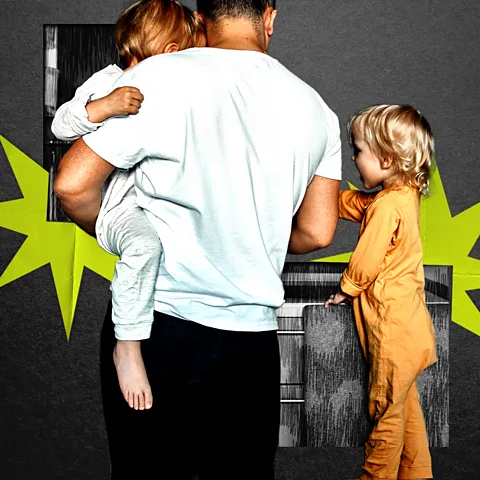
Today, many families work a "double shift" – caregiving and working outside the home. In the US, more than five-in-10 households with children today are dual-income, while in the EU, more than six-in-10 are. Gender disparities also persist, with the majority of caregiving and household labour usually still falling on women – making mothers, in particular, feel more tired.
Compared to foraging cultures, it is also more common to have more children with smaller age gaps. Anthropologists, including Hrdy have found that, in foraging cultures, babies were normally spaced around four years apart; it was when societies became agricultural and settled that mothers began to have more children, more quickly. So for our foraging ancestors, having only one baby or toddler to look after at a time may too have helped with fatigue levels.
As a result, it's likely the changes in sleep and lifestyle that have led today's parents to feel so overwhelmed and sleep-deprived, not necessarily lack of sleep itself.
Still, if anything, some experts argue that we've evolved to be resilient to the strain of sleep deprivation during early parenthood, because it's an evolutionary trade-off for our species to survive – it's the culture around us that has made this resilience harder to uphold.
"We evolved to be adaptable, to have flexibility, to be able to manage crises, to be able to manage different life history patterns," says Samson. "There are just going to be times in life where it's worth it. You're shifting the gear from 'longevity' to a mission-critical task in the present. And I think reproduction is one of those things."
So, are there times in life when it's okay to lose sleep?
"From the evolutionary anthropology perspective – it's 100% yes."
--
For trusted insights on health and wellbeing, sign up to the Health Fix newsletter by senior health correspondent Melissa Hogenboom who also writes the Live Well For Longer and Six Steps to Calm courses.
