The English stately home where Nazis were tricked into spilling their secrets

 Houghton Hall
At north London's Trent Park during World War Two, high-ranking Nazi prisoners of war relaxed and chatted in the elegant upstairs rooms – while downstairs, "secret listeners" were eavesdropping. What they heard changed the course of World War Two.
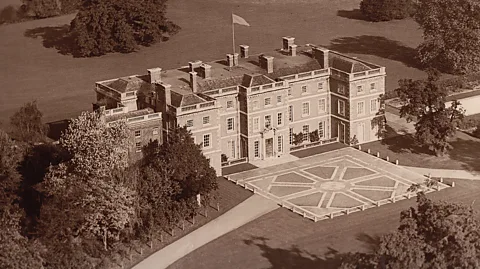
Trent Park House of Secrets certainly lives up to its name. While the exterior and ground floor rooms of this elegant house in north London showcase the refined taste of the great pre-war host and aesthete, Sir Philip Sassoon, those who venture into the basement will discover a little-known story of World War Two espionage and intrigue.
Warning: This article contains mentions of the Holocaust that some readers may find upsetting.
Last month, Trent Park opened for the first time to the public as a museum, paying tribute to its crucial wartime role. There it was that a team of "secret listeners", many of them German Jewish refugees, eavesdropped on high-ranking German prisoners of war held at the house. These Nazi generals were oblivious to the fact that their every word was being bugged. Lulled into a false sense of security, they let slip vital intelligence that changed the course of the war.
Highly luxurious
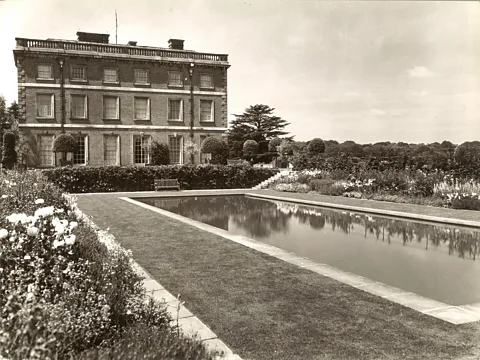
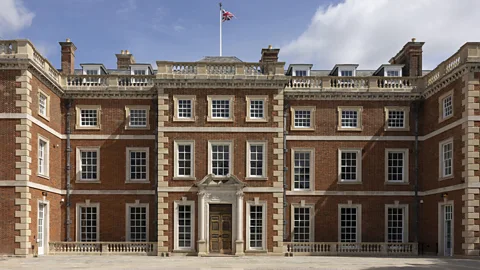
Politician and art collector Sir Philip Sassoon inherited Trent Park in 1912, and in the 1920s set about completely remodelling the exterior and interior in the then highly fashionable neo-Georgian style.
 James O Davies
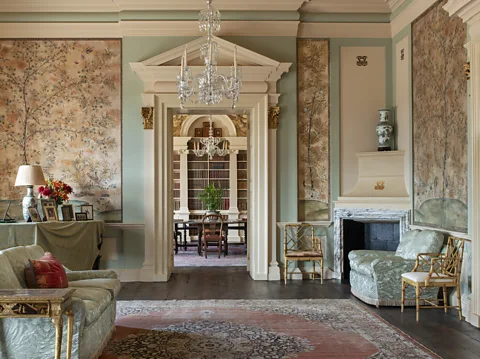
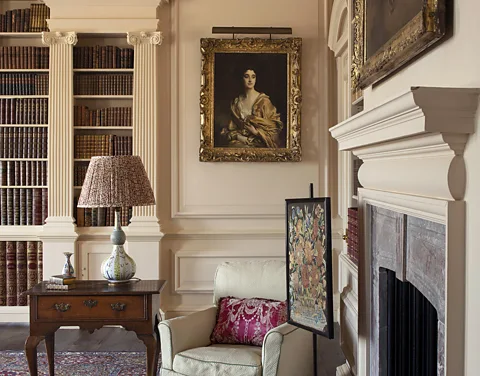
"He creates this very elegant, calm, understated architecture and the interiors are very much the same – uncluttered, very spacious, with a small number of fabulously beautiful and valuable antiques," Simon Thurley, Trent Park's senior advisor tells the BBC. Exquisite Chinese wallpaper and family portraits by Philip de László and John Singer Sargent adorn the walls.
The ground floor interiors of this stylish house have now been meticulously recreated. "People will feel like they're stepping back into Sassoon's world on the ground floor," says museum director Giuseppe Albano, "but then of course they go downstairs."
Wired for sound
Downstairs is indeed a very different matter. Sir Philip died in June 1939, and when war broke out in September the house was requisitioned by the British Government. It had been identified by Thomas Kendrick, one of the British Secret Service's most senior spymasters, as the perfect spot for a Combined Services Detailed Interrogation Centre (CSDIC).
 James O Davies
Although Kendrick had already experimented with bugging POWs at the Tower of London, he realised that CSDICs needed to be in more discreet locations and far enough removed from central London to avoid the risk of being bombed. Trent Park and its sister sites at Latimer House and Wilton Park also provided the necessary space for Kendrick to upscale his operation in order to gain the kind of intelligence he wanted from prisoners' private conversations.
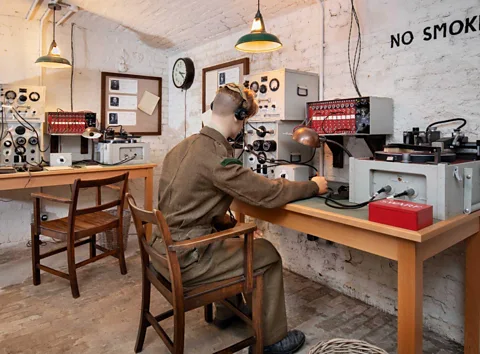
And upscale he certainly did. "The whole mansion block and stable block were wired for sound," historian Helen Fry, author of The Walls Have Ears, tells the BBC. Microphones were hidden in everything from plant pots and light fittings to the billiards table and even in trees in the grounds. Concealed wires that ran behind panelling and under the floorboards connected them to the miked rooms, known as "M" rooms, in the basement, which have been recreated by the museum, where the secret listeners, at first British German speakers, would eavesdrop night and day.
 Trent Park Museum Trust
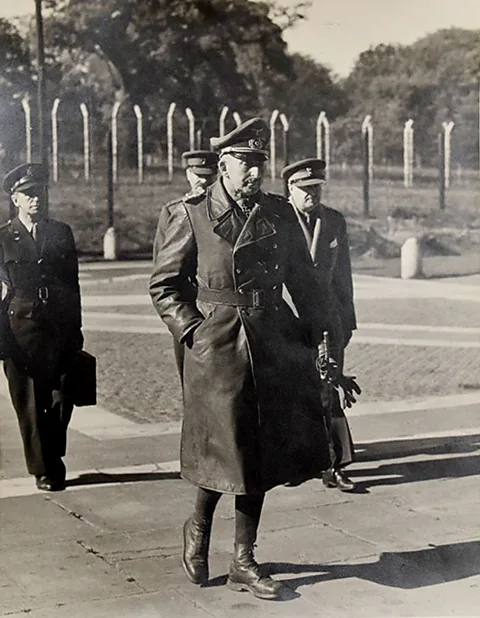
Trent Park would become the primary holding centre for high-ranking German officers, many of them upper class or aristocratic, whose sense of entitlement appears to have made them surprisingly easy prey for Kendrick's plans. Sassoon's fine antiques may have been carted off by relatives to be replaced by rather more utilitarian government issue furniture, but the house was still a highly luxurious prison which was intended to make them lower their guard. The generals each had their own military valet who had been captured with them, there was a library, British officers provided English classes and there was even the odd trip into town.
A fake lord
They also had their very own welfare officer, the fictional Scottish aristocrat Lord Aberfeldy, a role played by a young interrogation officer. The imaginary lord had been "named after a whisky distillery," laughs Fry. Aberfeldy had a supposedly secret admiration for Hitler and would visit the prisoners in order to entice confidences – which would of course be picked up by those listening below.
 Houghton Hall
Although all German officers were warned that if they were captured they might be bugged, somewhat astonishingly the generals seem to have thought it wasn't happening at Trent Park. "There's an amazing recorded conversation between two of the generals where they're talking about this and saying 'Well we were warned, but clearly they're not bugging us. We'd know if they were'," laughs Thurley. "You pamper their ego, their sense of self-importance and they don't think logically," says Fry.
Although a regular flow of intelligence was forthcoming, as the war progressed it became obvious that the British listeners with their purely academic understanding of German were finding it difficult to pick up on jargon and slang. It was therefore decided to recruit German speaking Jewish refugees from Germany, Austria and Czechoslovakia.
The secret listener
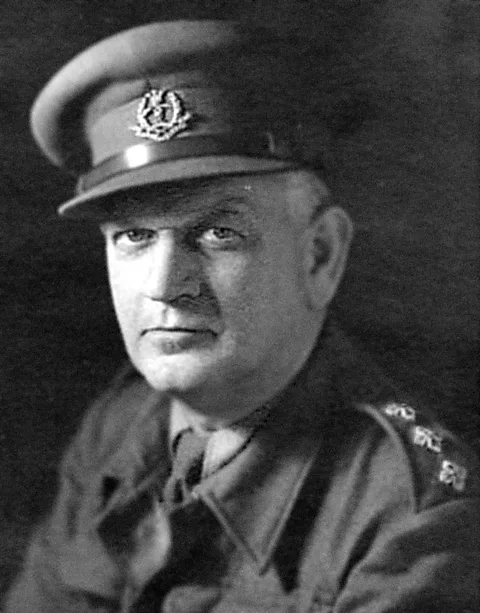
One such recruit was Ernst Lederer, the grandfather of comedian and actress Helen Lederer, who had escaped from Czechoslovakia on one of the last trains out in 1939. Like all the secret listeners, he had signed the Official Secrets Act, and took his war-time work with him to the grave.
 Helen Lederer
"His wife assumed he was in the Home Guard but in fact he would be going to do long shifts in Trent Park," his granddaughter, who is now working on a film script about the events that unfurled there, tells the BBC. "We didn't know what he did until I happened to do a documentary called War Hero in My Family for Channel 5." The series followed celebrities uncovering the secret war records of their parents and grandparents.
"A bizarre adjunct to this is that my English mother, at age 21, had been conscripted to Bletchley Park," says Lederer. "She would go on family outings with Ernst Lederer and neither of them knew what the other had done." Indeed, none of the secret listeners would have known about code-breaking centre Bletchley Park, although their officers did, and intelligence was shared between the two sites throughout the war.
When a conversation referencing a system of navigation beams called Knickebein (Crooked Leg), which enabled night bombers to accurately target British munitions factories, was overheard at Trent Park in 1941 the information was corroborated by the code breakers at Bletchley Park, who were able to give Air Intelligence the information they needed to jam the signals.
 Houghton Hall
The most vital intelligence to come out of Trent Park was undoubtedly information relating to Germany's secret V-weapon programme, which involved the development of terrifyingly powerful Vergeltungswaffen (revenge weapons) designed to be deployed against Allied cities like London.
More like this:
An overheard conversation relating to a rocket that could be launched 15km into the air and another revealing the existence of the V2 rocket, the world's first long-range ballistic missile with a range of 300km (186 miles), ultimately led to the bombing of Germany's chief research and testing facility for rockets and missiles at Peenemünde on the Baltic coast in August 1943. As Fry notes in her book, the impact of the raid cannot be overstated.
It delayed the launch of the first V1 rocket on London until 13 June 1944, a week after the D-Day landings. If they had been launched before, D-Day may well not have gone ahead. The first V2 rocket did not fall on London until 8 September 1944.
Nazi atrocities
The Trent Park team also gleaned "information about the extent of the atrocities that Hitler was carrying out, which was not widely known at the time," says Albano. This must have been extraordinarily traumatic for Jewish listeners such as Eric Mark to overhear – his own parents were gassed at Treblinka in 1943. Mark, who died in 2020, recalled hearing the Germans boasting about what they had done. "They would say things like 'I knocked off about 1,500'."
 Ruth Board
However, this information was never used at war crimes tribunals as it would mean revealing how it was obtained. "The British government at the time didn't want the tactics or the technology or the sheer audacity of the operation to be widely known, particularly with the looming threat of the Cold War against Russia," explains Albano.
The fact that those who had effectively confessed to atrocities escaped justice is a bitter pill to swallow. But at the time the UK government was seriously concerned about the extent of the Russian threat, largely on account of overheard conversations at Trent Park, which didn't close as an eavesdropping site until November 1945. "Trent Park and those two sister sites prepared us for the Cold War in ways that no one has picked up on, or no one has really understood yet," says Fry. "Its legacy is immeasurable and we're just beginning to understand that."
--
If you liked this story, sign up for The Essential List newsletter – a handpicked selection of features, videos and can't-miss news, delivered to your inbox twice a week.
