'Pure malevolence': How Cape Fear's psychopath Max Cady became one of America's all-time greatest villains

 Getty Images/ Alamy/ Apple TV
A new TV take on the classic thriller is dominated once again by its monstrous antagonist, here played by Javier Bardem. Here's why he's such an unforgettably terrifying figure.
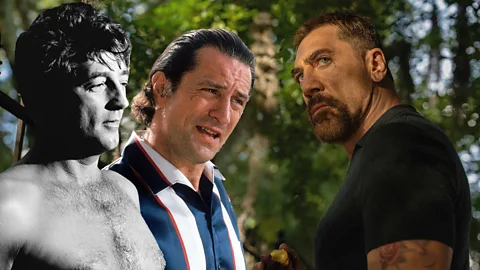
Few bad guys in US culture have left quite as terrifying a mark as Max Cady – the vengeful psychopathic criminal who was first introduced in John D MacDonald's 1957 thriller novel The Executioners. Cady blames attorney Sam Bowden for testifying against him as a witness in a rape case, and getting him put in prison for over a decade. And, once he is released, he takes revenge on Bowden by menacing him and his family. MacDonald describes him as a "black thing loose in the world".
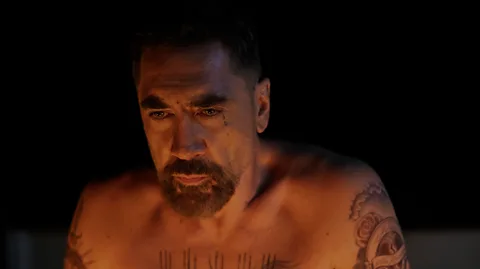
Since then, Cady has been immortalised on screen in two revered film adaptations – J Lee Thompson's 1962 version, evocatively retitled Cape Fear, and Martin Scorsese's 1991 remake of the same name. In these he was memorably played by Robert Mitchum and Robert De Niro, respectively. Now comes the first small-screen Cape Fear, a new 10-part series for Apple TV, executive produced by Scorsese, with Javier Bardem filling his malevolent shoes.
 Apple TV
Throughout these different iterations, Cady has come to symbolise something profound in American life – an anti-establishment threat towards the suburban family unit and the very legal systems that govern American civilisation. Yet at the same time, the story and Cady himself have gone through an evolution. As Nick Antosca, the showrunner for the new series, puts it: "Cape Fear is the story about an all-American, safe, privileged family that is terrorised by an outsider, a monster in all versions. But the nature of the family and the nature of the monster is different in every version – and in the 2020s everything is more complicated."
The character's first incarnation
In the original novel, indeed, things are far more simple: Cady is presented as a savage predator whose violent psychopathy is exacerbated by his family history of crime, his wife's desertion of him while in prison, and his son's death. Yet MacDonald leaves no ambiguity about the antagonist's guilt or his remorseless sadism, as he terrorises the righteous Bowden, who witnessed Cady commit sexual assault as his lieutenant during World War Two. Bowden's family symbolises to Cady everything he has lost, and he stalks them while cannily avoiding doing anything that could get him arrested, underscoring the fragility of the legal system.
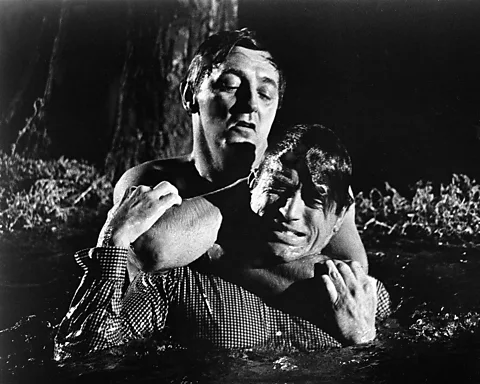
When it came to the 1962 film, Mitchum's Cady was stripped of almost all backstory to create an even simpler film noir revenge plot. Mitchum, already known for his roles as bad apples in films like The Track of the Cat (1954) and The Night of the Hunter (1955), exudes a cool charisma that was familiar to audiences and a laconic, Southern Gothic menace.
"He's like the proto hippie and American rebel character," says Michael Arnzen, author and professor of Popular Fiction at Seton Hill University, who explored the changing depiction of Cady in his essay Cape Fear and the Hollywood Remake as Metanarrative Discourse. By giving Cady a non-conformist "beatnik" characterisation and juxtaposing him with Gregory Peck's conservative Bowden, the film reflected the mainstream anxiety at the time towards individuals who rejected traditional values.
Scorsese's 'over the top' Cady
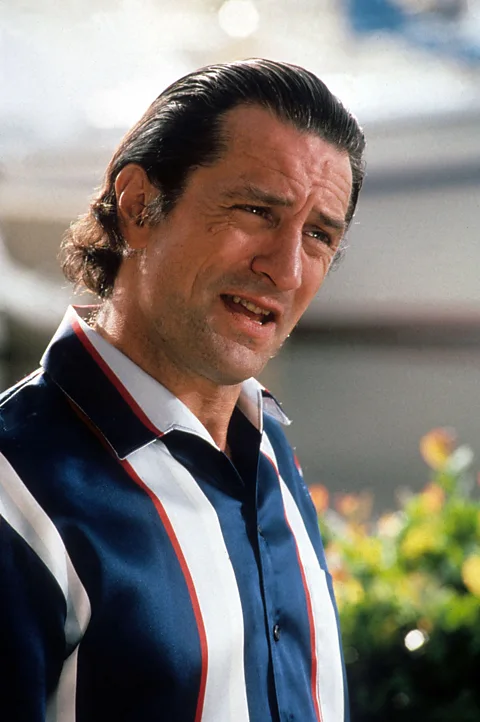
Twenty-nine years later, De Niro would take a maximalist approach to his performance as Cady, creating with Scorsese another indelible portrayal of warped masculinity to stand alongside his Raging Bull, Mean Streets and Taxi Driver roles. "De Niro's performance was so over the top," says Arnzen. "It's comedic and intentionally discomforting."
Scorsese's film, written by Wesley Strick, changes the plot and consciously turns Cady into a mythic figure. In this version, Bowden (played by Nick Nolte) is not a witness in the rape case against Cady, but his defence lawyer, who deliberately buries evidence that could have got his client a shorter sentence. And Cady himself is formidable in all ways – now a muscular, heavily tattooed, highly intelligent avenging angel, who has educated himself in prison with legal books, religious texts and the works of Friedrich Nietzsche, all contributing to the creation of his own warped moral code.
Arnzen notes that the way De Niro's Cady throws out Bible quotes, legalese and silky-tongued lies to ensnare his victims shows commonality with another iconic '90s villain, Hannibal Lecter. "You might throw him in the same box as that superhero of criminality, who can seduce anybody through his language and performances." Free from the Hollywood Production Code of the 1960s, Scorsese also depicts De Niro's Cady meting out shocking violence which pushes the film further into the realm of out-and-out horror.
 Getty Images
What's just as interesting is how this version reimagines the supposed hero. In the 1962 film, as in the book, Sam Bowden is positioned as a fallible but fundamentally decent man, with Cady representing his moral opposite. Come the climax, Peck's Bowden refuses to kill him, ending, ultimately, as a virtuous patriarchal figure, with his perfect family left intact.
In Scorsese's version, however, the nuclear family is far more dysfunctional. Bowden has a history of both infidelity and unethically representing his client, suggesting that underneath his civilised exterior, he too has a corrupt moral code. His wife Leigh (Jessica Lange) has had a mental breakdown, while his daughter Danielle (Juliette Lewis) has been in trouble for using drugs. "The level of divorce was so much higher than it was in the early 1960s, so Max Cady becomes this litmus test [for] the strength of the family," says Arnzen.
For Vulture TV critic Roxana Hadadi, Cady represents not just a danger to the American family, but "a threat to white femininity and chastity". In both films, Cady sexually assaults Bowden's wife and targets his daughter, but Scorsese's remake shows the peril more explicitly: Cady seduces 15-year-old Danielle over the phone and later talks her into sucking on his finger and accepting an inappropriate kiss. By the film's end, Nolte's Bowden has regressed, exacting vengeance on Cady with a caveman-like fervour, which poses a compelling question about patriarchal duty.
"At a certain point, your little girl is going to grow up and meet all kinds of men who you don't know," Hadadi tells the BBC. "Are you a good man by being a bad man to protect your daughter from other bad men?"
The new series and its key change to Cady
The new Apple TV series shifts the narrative set-up yet again by making both Bowden parents lawyers. Amy Adams' Anna, his original public defender and Patrick Wilson's Tom, the lead prosecutor of his case, married after Cady's conviction – and, it is implied, colluded to secure it. Perhaps the biggest difference in this latest adaptation is the question of Cady's guilt. Here, his original alleged crime is the murder of his wife and unborn child, and having spent 17 years in prison for it, he is exonerated after his mistress leaves a suicide note confessing that she was responsible. However, whether Cady committed the crime or not is left unclear.
The show also spends time solidifying a traumatic backstory for Cady of childhood domestic abuse, and shows him suffering a brain injury after surviving a prison fight, to present a nuanced villain deserving of more compassion than his predecessors. "We wanted to play with the paranoia, the mystery, and whether the uncertainty about his guilt or innocence can play on audiences' sympathies," Antosca tells the BBC. "If a wrong has been done to you, if you're genuinely the victim of an injustice, what can we forgive? What are you allowed to do if your vengeance is justified? Are you still a monster?"
 Alamy
AlamyHadadi says that this more ambiguous approach, which speaks to an age more interested in moral uncertainty, has pros and cons. She appreciates how the series heightens the story's class anxiety and the "Fear of the Other" theme by illustrating a "very cloistered, genteel Southern white world for the Bowdens", and by having a racialised Spanish-American version of Cady. This forces viewers to interrogate the prejudices of a criminal justice system where "some men are able to hire a rich defence lawyer to get away with things", she argues, and some aren't.
This othering of Cady is further amplified through the Santeria faith he adopts in prison. This Afro-Caribbean-Yoruba religion, developed by enslaved people in Cuba, involves the worship of deities called Orishas. "Max's Orisha is of thunder, justice and vengeance, so that's very appropriate to his character, his needs and motivations," says Antosca. Cady's tattoos, continuing De Niro's legacy, are just as evocative, with dozens of eyes etched across his skin: "There are a lot of ways to spy on, terrorise and surveil people in 2026 that didn't exist before, so Max's tattoos [emphasise] that he's always watching."
More like this:
Hadadi relished watching Bardem's performance, which channels both Mitchum's delicate charisma and DeNiro's sexual magnetism, while offering something unique. "Bardem brings a natural charm that [makes him] more acceptable in polite society than previous films," Hadadi says. "That tells you something about the insidiousness of this kind of man in a way you wouldn't expect."
But she believes the fleshing-out of Cady's motivation and psychology also takes away the power of Cady's "inexplicable" wickedness. "I'm so primed to see Max as this figure of almost cosmic evil, a pure entity of malevolence without explanation," she argues. "I struggle with the backstory that does a little bit too much to hit a lot of our current Hollywood established trauma markers."
With several more episodes to go, the full impact of Cady's blunt force attack on the American family, the legal system, and so-called civilised society is yet to be experienced. But Antosca hopes this modern take on the iconic villain will be as terrifying as it is challenging. "The audience may have sympathy for 'the Other', but at its heart, [Cape Fear] is a heightened thriller, a psychological horror story, and Max Cady is a scary, menacing figure – there's no question about it."
New episodes of Cape Fear premiere internationally every Friday on Apple TV.
--
If you liked this story, sign up for The Essential List newsletter – a handpicked selection of features, videos and can't-miss news, delivered to your inbox twice a week.
