How an enslaved, shipwrecked African became the US's first great explorer

 Granger
Nearly 500 years ago, a Moroccan man travelled thousands of miles from Florida to the Pacific Coast, becoming the first known outsider to see the American West.
In 1528, a man from Morocco washed up on the coast of present-day Texas, more dead than alive. He had spent the previous month adrift in the Gulf of Mexico alongside a group of Spanish sailors on a flimsy lifeboat lashed together with tree trunks, horse hide and what was left of their tattered clothes. When a storm stranded the castaways on a barrier island near Galveston, they unwittingly became the first people from the Old World to enter the American West – and when they did, they were each starving, exhausted and naked.
In the weeks that followed, the shipwrecked survivors began dying, one by one. Many succumbed to hunger, others to the elements and some to attacks from Indigenous tribes. Of the roughly 600 men who had set sail from Spain a year earlier on this ill-fated expedition to conquer present-day Florida and the Gulf Coast for the Spanish Crown, only four survived: three Spanish captains and, somehow, the enslaved Moroccan.
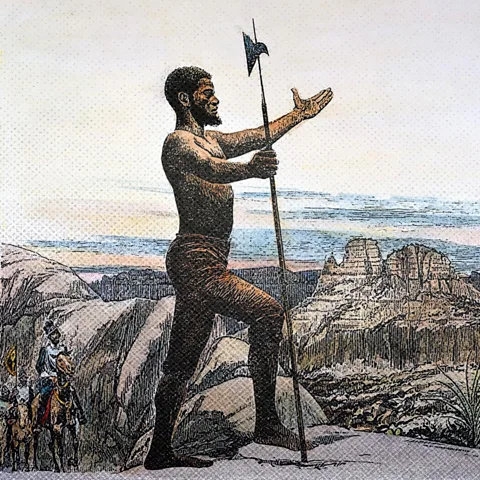
During the next eight years, the man would become the party's de facto leader, and embark on one of the most remarkable survival journeys in exploration history. And yet, we don't even know his real name.
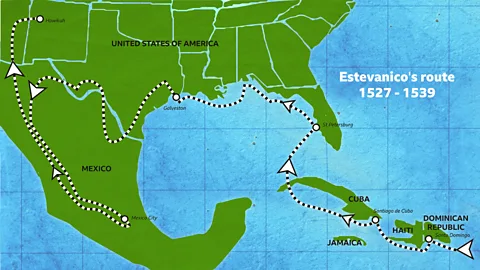
Known variously as Esteban de Dorantes, Esteban the Moor or – most commonly – Estevanico, this enigmatic individual was one of the first documented Africans, Arabic speakers and Muslims to step foot in what is now the United States, arriving nearly 40 years before the first European settlement. Between 1528 and 1536, he walked roughly 2,250 miles (3,620km) west from Florida to the Pacific Coast of Mexico, completing what is widely believed to be the first recorded crossing of North America in history and predating Lewis and Clark's overland expedition to the Oregon Coast by nearly 300 years.
Along the way, Estevanico was captured by Native Americans, learned their languages and became a healer before journeying an additional 1,300 miles (2,090km) south with the three other shipwreck survivors from the Gulf of California to Mexico City. He then embarked on a separate 1,500-mile (2,415km) odyssey north, and became the first known non-Native American to enter modern-day New Mexico and Arizona.
 Serenity Strull
"Estevanico is one of the most extraordinary, yet overlooked, figures in the early history of what would become the American Southwest," said Dr Hsain Ilahiane, an anthropologist and professor at the University of Arizona, who has spent years studying the explorer. "He helped open routes, trails and geographic knowledge that later informed Spanish incursions into [the present-day American West]."
Still, most people have never heard of him – even in the US.
Now, as the US celebrates its 250th anniversary and looks back on its origins, a growing number of museums, tours and monuments around the country are highlighting his little-known legacy.
Estevanico's odyssey
Since Estevanico left no written records, historians have pieced together his life largely through the surviving accounts of the Spanish survivors who travelled beside him. He was born in the early 1500s in Azemmour and enslaved by Spanish nobleman Andrés Dorantes de Carranza, who brought him on Spain's Narváez expedition to the Americas. Since Muslims were forbidden from travelling to the New World on official Spanish expeditions, Dorantes baptised him, renaming him Estevanico.
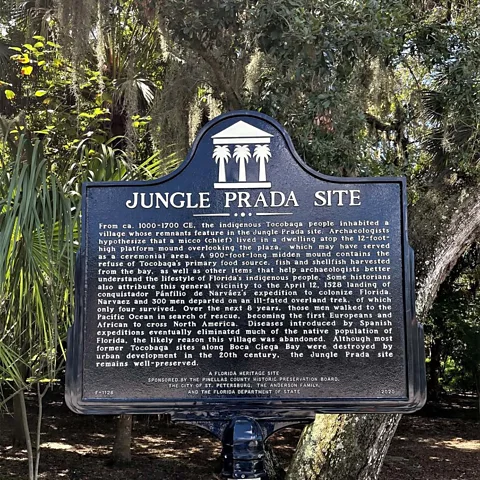
The 600-person, five-ship voyage set sail in June 1527, and it was a disaster from the start. Some 140 men deserted the expedition during a stop in Santo Domingo, and while resupplying in Cuba, a hurricane sank two ships and killed 50 more sailors. The crew eventually tried to sail to Mexico, but storms blew them into modern-day St Petersburg, Florida, in April 1528.
 Florida Department of State
The expedition's leader, Panfilo de Narváez, then ordered Estevanico and several hundred men to march north to explore Florida's interior. After slogging some 300 miles (480km) through mosquito-infested swamps to what is now Saint Marks, Florida, and getting ambushed by Apalachee Native Americans, Estevanico and the remaining Spaniards were so decimated and desperate that they slaughtered and ate their last horses, built five makeshift rafts and sailed along the coast in hopes of reaching present-day Mexico.
As the men drifted west, they became the first non-Indigenous travellers to see the mouth of the Mississippi River. But the same storms that eventually capsized their rafts near Galveston would kill two-thirds of the remaining Spaniards, including Narváez himself.
Like many of the shipwrecked castaways, Estevanico was soon captured by Native Americans. Somehow, the person with the lowest status in the Old World managed to survive in the New World.
"When the order of the Old World fell away, Estevanico had some advantages. Unlike [the Spanish], he had to speak other languages," said Laila Lalami, whose novel, The Moor's Account, is based on Estevanico and was a finalist for the Pulitzer Prize. "Since Azemmour was an Amazigh [city] controlled by the Portuguese, we know that he likely spoke Tamazight, Arabic and Portuguese. And since he was enslaved to a Spaniard, he spoke Spanish."
During his roughly five years of hard labour under Karankawa Natives, Estevanico learned their spoken language and the sign language shared by other groups in the region. He then covertly coordinated with a rival tribe of the Karankawa to escape with Dorantes, and helped free the two remaining Spaniards.
 Getty Images
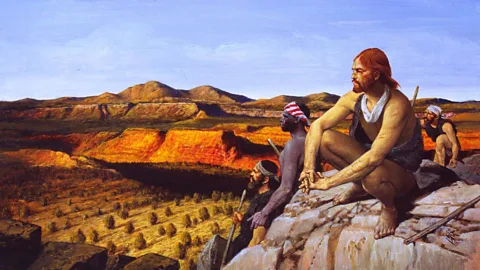
In the next two years, the four survivors walked from the Gulf Coast to the Gulf of California, relying on Estevanico's linguistic skills and cultural adaptability to navigate them from one Native community to the next.
"He was the leader of the group – the translator, the mediator, the scout," Ilahiane said. "They were moving in a new world and didn't know where they were going and Estevanico had an advantage: information."
During their travels, Estevanico met an Indigenous trader and arranged for them to stay in his community. While there, a sick person approached the visitors and asked them to treat her. By blending Christian rituals from the Spanish and Native practices Estevanico had observed, the men somehow convinced the woman that she was cured.
As word of the men's alleged healing powers spread, Indigenous communities began seeking them out and even following them as they journeyed west. Estevanico travelled ahead of the Spaniards to announce their arrival, often adorned with seashell bracelets on his arms, jingling bells around his ankles and carrying a rattle made from a dried gourd.
"He reminds me of a rural Moroccan Sufi with medicinal knowledge travelling from village to village, but he also picks up these [cultural] aspects from Native Americans and uses them as an entry point into other tribes as he wanders," Ilahiane said. "In the end, that would be a bit tragic for him."
 Alamy
AlamyThe Seven Cities of Gold
After conquering the Aztecs in 1521, Spain had established a colony in modern-day central and southern Mexico. As the four travellers approached Culiacán in what is now Sinaloa, they met a group of Spanish horsemen who led them 1,300 miles (2,090km) south to the capital of New Spain (today, Mexico City). There, the four shipwreck survivors told tales of gilded cities somewhere in the northern desert that Native tribes had recounted to Estevanico – likely to get the outsiders to keep moving away from their villages.
Where travellers can learn about Estevanico
• The National Museum of African American History and Culture (Washington DC)
• National Museum of the American Indian (Washington DC)
• Arab American National Museum (Dearborn, Michigan)
• The Hidden History Museum (Los Angeles, California)
• Discover Florida Tours (St Petersburg, Florida)
• El Paso Museum of History (El Paso, Texas)
• New Mexico History Museum (Santa Fe, New Mexico)
• African American Museum of Southern Arizona (Tucson, Arizona)
• Coronado National Memorial (Hereford, Arizona)
Determined to locate these so-called "Seven Cities of Gold", the Viceroy of New Spain dispatched Estevanico to guide a group of Spanish friars north into modern-day New Mexico and Arizona in 1539. With turquoise jewellery around his neck and feathers in his hair, Estevanico walked ahead of the party, serving as the lead scout to gain knowledge of these fabled cities from Native tribes. If what he learned was moderately important, he'd send a small cross back to the Spaniards via a messenger. If it was important, he'd send back a medium-sized cross. And if it was highly important, he'd send back a large cross.
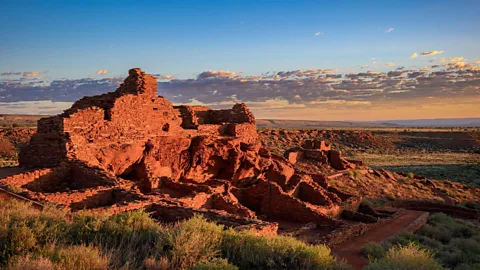
One day, shortly after becoming the first known outsider from the Old World to enter the land of the Zuni Pueblo people, Estevanico reportedly sent back a cross said to be "the height of a man". Elated, the Spaniards raced ahead to join him, only to learn that when he'd attempted to enter the southernmost of the supposed Seven Cities of Gold, Hawikuh, he had been killed by Zuni Natives.
While the Spanish never found any gilded cities, Estevanico's final journey led them into what became known as the "Tierra Nueva" (New Land), that would later become central to Spanish expansion in the American Southwest.
"Estevanico helped shape the geographic imagination of the Spanish Empire in North America," said Ilahiane. "His travels spread knowledge about routes, peoples and possibilities for expansion into regions that would become Texas, New Mexico, Arizona and beyond. This final journey into Zuni territory in 1539 triggered the Coronado Expedition of 1540 [that paved the way for Spanish expeditions and settlements across the American Southwest]."
From introducing devastating diseases and displacing Native populations to establishing Catholicism, cultural and culinary practices, this Spanish expansion would profoundly shape the future of the nation to come.
 Travel Texas
'Something in between'
For centuries, Estevanico remained little more than a footnote in Spanish chronicles, and a forgotten figure among Americans.
"That's because his exploration isn't tied to the foundational myth of the United States," said Lalami. "It's one of those things that doesn't quite fit neatly into the history of the US's founding that's taught in schools about the 13 colonies and people escaping persecution in England."
But in the past decade, museums, monuments and tours around the US have increasingly begun recognising his role in the continent's early history.
"He had one of the most amazing journeys into the unknown in history. Someone should really make a movie about him already," said David Anderson, the owner of Discover Florida Tours, which has led historical guided walks in St Petersburg where Estevanico landed since 2017 and recounts his epic odyssey.
More like this:
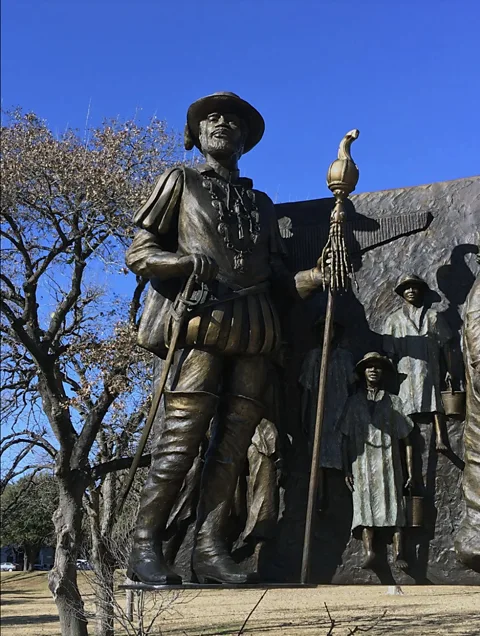
In 2016, a 7ft (2.15m) bronze statue of Estevanico was erected at the Texas State Capitol in Austin, commemorating his role as the first African to step foot in Texas. Since 2022, the El Paso Museum of History in West Texas has recounted Estevanico's odyssey on its interactive digital wall, and the explorer is heavily featured throughout the New Mexico History Museum in Santa Fe and at the Coronado National Memorial in Arizona.
"This is someone who did something quite formidable," said Diana Abouali, the director of the Arab American National Museum in Dearborn, Michigan. "At the museum, we present him at the start of our 'Coming to America' exhibit to show that Arabic speakers are not new to this country. Arabic language and culture has been in what is now the United States for a long, long time."
For Lalami, what makes Estevanico so important isn't just what he did – it's what he represents.
"He was the first African to cross North America, but what makes him so fascinating is his position," she said. "He didn't come to the US as a conqueror, and he wasn't part of the people who were conquered. He was something in between."
--
If you liked this story, sign up for The Essential List newsletter – a handpicked selection of features, videos and can't-miss news, delivered to your inbox twice a week.
