Here's what it's like to ride India's sleek new sleeper train

 Jamie Fullerton
The first sleeper in India's semi-high-speed Vande Bharat fleet is drawing crowds, selfies and intense curiosity – but what is it actually like on board?
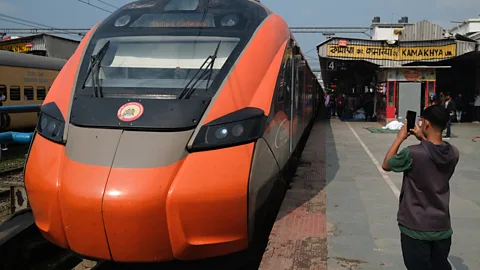
Lightning flashed above Kolkata's Howrah Junction station as rain lashed platform six. The waiting passengers barely seemed to notice, however, as they jostled and angled their phones to get selfies next to the sleek orange, black and grey nose of Indian Railways' newest object of fascination: the Vande Bharat Express sleeper train.
Launched in January 2026, this is the first sleeper in the Vande Bharat semi-high-speed fleet, a train series that has become a point of national pride since services began in 2019. Clips of the sleeper's first journeys quickly went viral – and when I visited Kolkata, three months later, the excitement had hardly dimmed, with the train's 823 berths still selling out weeks in advance.
A symbol of India
Vande Bharat means "Salute to India" in Sanskrit. Designed and built in India, the fleet has been promoted as a cleaner, more modern upgrade from the country's older long-distance stock, featuring aerodynamic noses, sliding automatic doors and comfortable interiors. The Times of India called the sleeper carriages "stunning" and "swanky" – words not usually associated with Indian long-distance trains – and Prime Minister Narendra Modi flagged many of the Vande Bharat trains off in-person, stoking public intrigue and helping turn them into a symbol of Indian ambition.
What does it cost?
Tickets for the full Kolkata-Guwahati route cost around 2,400 rupees (£19) for third-class, where six berths share each open-plan compartment. It's around 3,100 rupees (£25) in second-class, where four berths sit behind curtains; and about 3,800 rupees (£30) for a first-class berth, shared with three others in a closed-off cabin.
The new sleeper service runs six times a week in each direction between Kolkata in West Bengal and Guwahati in Assam, a 14-hour trip (down from up to 18 hours on older trains). With India's average monthly wage around 21,000 rupees (£165), even the cheapest fare is beyond the reach of many. This means the sleeper train is largely aimed at business travellers, offering a more comfortable alternative to flying between two major commerce centres.
But the route also has wider appeal. Guwahati is home to the hilltop Kamakhya Temple, one of India's most important Hindu pilgrimage sites.
 Getty Images
And for travellers, the train stops at New Jalpaiguri Junction, a gateway to Darjeeling's famous tea fields. From Guwahati, visitors can continue to Shillong, a waterfall-dotted hill station known as the "Scotland of the East", as well as Pobitora Wildlife Sanctuary, where jeep safaris offer the chance to see one-horned rhinos.
Enticed by the route – and by the chance to experience this much-hyped new era of Indian sleeper train travel – I decided to try it out.
Cleaner, faster, quieter
After boarding at Howrah Junction, I was relieved to find my berth looked as clean and orderly as the footage from the Prime Minister's inspection had suggested. I had a plug socket, a reading light, USB and USB-C charging points, plus clean sheets, a blanket and pillow. I happily walked around the carriage in socks: a move that would have felt grimily unthinkable on some older Indian sleeper trains I had ridden.
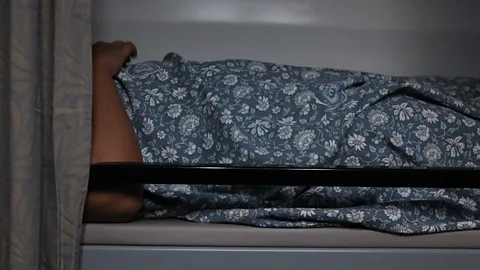
At 18:20 the train pulled out exactly on time. I shook hands with my closest bunk neighbour, a recently retired Indian Railways inspector in a smart purple shirt. He told me he was riding "just to get a new experience… this is the new train. Lots of new things are here". He tore open the brown paper holding his assigned bedsheets and photographed the North Frontier Railway logo woven into the sheet's floral pattern. Around us, passengers settled in quietly with the low hum of the train as a constant backdrop.
 Jamie Fullerton
Indian sleeper trains have long inspired equal measures of affection and dread: symbols of adventurous slow travel but also of chaotic carriages and daunting washrooms. After the Vande Bharat sleeper launched, an Indian Railways staffer's post warning passengers to ride it only "if you have learnt your toilet manners" sparked debate; while a video showing rubbish strewn across a carriage caused widespread dismay online.
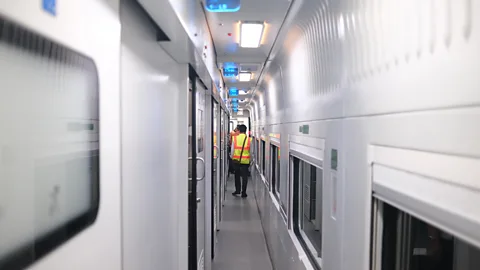
On my journey, the chrome toilets (both Western and squat-style) stayed shiny throughout, and staff seemed acutely aware of the online discussions. Soon after departure, a cleaner carrying a cordless vacuum wandered past my berth in search of the evening's first specks of dust. He introduced himself as Raju Nath, then invited me to tour his "favourite washroom". Smiling broadly, he gestured to the pristine, Western-style toilet and the neatly hanging shower curtain, then pressed a plastic dispenser that released a cloud of flowery scent.
More like this:
Nearby, another staff member in a face mask carefully poured cups of chai. With a top speed of 180km/h (112mph), Vande Bharat trains are trumpeted as examples of Indian innovation and ambition, but on board, pride seemed to lie just as much in these small acts of order and care.
"Nice and clean train," Nath said, pointing to the stitched logo on his neon-yellow waistcoat: a smiling janitor holding a broom and bucket.
It was also noticeably quieter and smoother than other Indian sleeper trains I had taken, without the loud clunks and jolts that had soundtracked my previous journeys.
 Jamie Fullerton
The government has described the trains as a "new phase in India's premium passenger rail services", linking them to its broader ambition for India to officially become a developed nation by 2047. The goal is to have 800 Vande Bharat trainsets operational by 2030, rising to 4,500 by 2047.
Dinner and loud phones and a good night's sleep
My ticket included dinner delivered to my berth: pots of chicken curry, dal, rice, potato and broccoli, flatbread and a milk sweet. It was a knee-balanced version of Assamese thali, the multi-dish meal native to the train's destination; tasty, if lukewarm.
Plan your trip:
How to book: Tickets can be booked through Indian Railways' IRCTC website. Travellers outside India may find third-party booking platforms such as 12Go easier to use, though agency fees may apply. Book well ahead, as berths can sell out weeks in advance.
The journey: The Kolkata-Guwahati service runs overnight between West Bengal and Assam, passing through India's narrow land corridor between Bhutan and Bangladesh. Stops include New Jalpaiguri Junction for Darjeeling, Barpeta Road for Manas National Park, and New Cooch Behar for Cooch Behar's royal architecture.
At either end: In Kolkata, highlights include the grand marble Victoria Memorial and College Street: the book shop-laden intellectual thoroughfare of the city. From Guwahati, travellers can visit Kamakhya Temple, continue to Shillong or take a day trip to Pobitora Wildlife Sanctuary, known for its one-horned rhinos.
Sleep proved difficult when I first went horizontal, though not due to berth design. The real enemies were my carriage-mates' phones, which pinged well into the night. By 02:00, the text message cascade finally subsided, and I drifted off to the low, airplane-cabin-like burr of smooth new wheels on tracks. At 1.9m (6ft 2in) tall, I usually sleep on trains with my knees slightly bent, but here I could stretch out without worrying that my feet would be clipped by passing passengers.
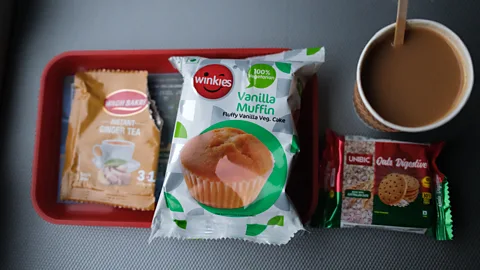
By 06:30 I was sitting on a lower berth, chai in hand, watching concrete farmhouses with corrugated iron roofs, sodden rice paddies and the occasional lone cow slide past under an overcast sky. Our train arrived in Guwahati at 08:20, bang on time.
Before leaving the city in search of rhinos and misty hills, I met up with Guwahati-based vlogger Anushia Sharma, whose Instagram reel about her experience on the Vande Bharat sleeper train had helped fuel the hype.
"I really liked the train," Sharma said. "I could see people actually taking care of the things. Maybe because it was a little more expensive than the normal train… they were like, 'OK, we need to keep it clean'."
 Jamie Fullerton
I liked the train too, partly because the smooth ride made sleep possible, but mostly for the same reasons: it felt carefully looked after. Its sleeper carriages aren't drastically different in layout to older Indian train designs, but cleanliness changes the experience.
After we discussed the rubbish-strewn carriage video that went viral, I asked Sharma if she was keen to ride the train again.
"Everything was neat [on my train], but I want to go and see exactly how it will be after six months," she said. "The government has done a great job in making this train and giving this service, but now it's up to the public, and how they maintain it."
I thought of Raju Nath and how I hoped that he'd still be proudly showing off his favourite carriage washroom in a few months' time. The real test may not be whether India can build a premium sleeper train, but whether it can keep one feeling new.
--
If you liked this story, sign up for The Essential List newsletter – a handpicked selection of features, videos and can't-miss news, delivered to your inbox twice a week.
