Inside the world's best airport: Why does Changi keep winning?

 Getty Images
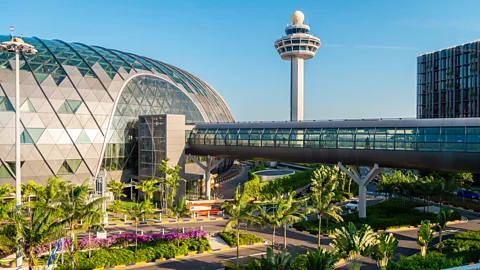
Singapore's Changi Airport is famous for its waterfall, butterfly garden and seamless transit. But its real competitive edge is behind the scenes.
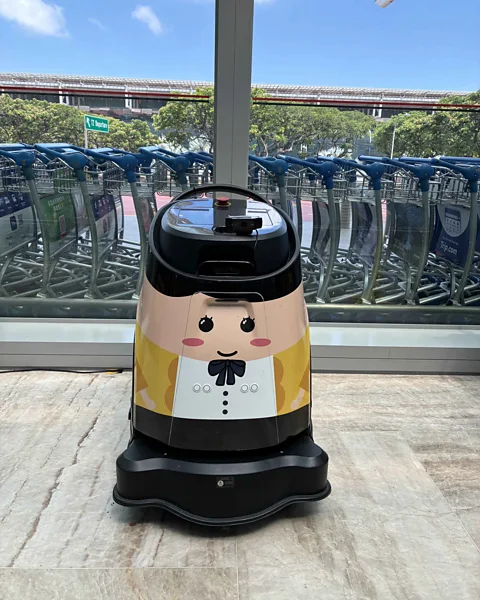
You've just landed after an 18-hour flight, red-eyed and yawning, and brace yourself for the usual airport indignities: the trudge to immigration, the dead-eyed queueing and the endless wait for your bag. Instead, smiling AI-powered autonomous cleaners wipe the spotless floors and immigration moves with the kind of speed that makes you momentarily suspicious. In less than 15 minutes, you're curbside in the tropical heat, wondering why the rest of the world still makes this so hard.
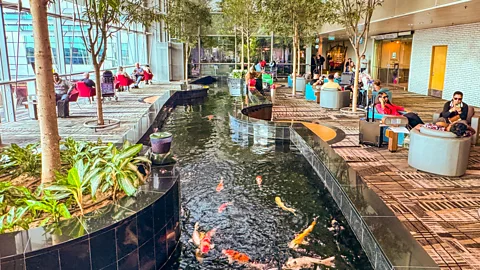
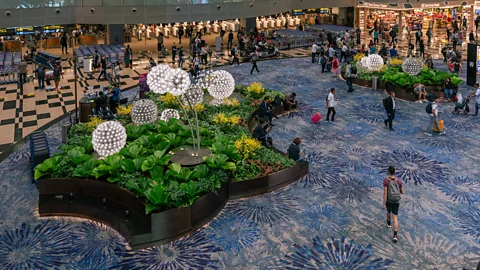
Days later, after a seamless check-in for your trip back home, you wait for your flight in the airport's transit halls, where there's a free 24/7 cinema, butterfly garden and the world's tallest indoor waterfall. There's even an indoor glass fishpond you can walk over, complete with a digital roof display that mirrors the weather outside. At times you forget you're in an airport, and not a tiny, futuristic city that's exceedingly well-run.
This may sound like a frequent flier's fever dream. In fact it's Singapore's Changi Airport, which has just won the Skytrax Award for World's Best Airport for the second year in a row, and 14 times overall.
Where other major airport terminals struggle with rodent infestations, crew strikes and collapsing ceilings, Changi's futuristic peacefulness feels a world apart. The gulf between an average and world-class airport has never felt larger. So, what does it take to make modern air travel run this smoothly – and how does Singapore keep getting it right when its rivals struggle?
 Getty Images
Efficiency first, spectacle second
For Max Hirsh, managing director of Airport City Academy, a research centre focused on airport planning and development, Changi's success is not just about quality, but nailing the everyday fundamentals, from speed to safety to connectivity. It's also about having the flexibility to adapt when things don't go as planned.
"In the world of aviation, that happens a lot," Hirsh says. "The challenge isn't achieving that balance just once – it's maintaining it for decades in the face of changing demands, technologies and disruptions. Changi succeeds because it treats that balance as an ongoing project, not a one-off design feat."
If you've ever flown through Singapore, you'll likely have noticed the sense of calm that pervades the airport. What you likely don't realise is how carefully manufactured that tranquility is. Behind the scenes sits a huge and tightly choreographed operation in which automation, biometrics and predictive analytics are used to remove bottlenecks before they become visible, while 60,000 staff keep baggage, cleaning, energy use and passenger flow ticking along in sync. As Hirsh puts it, Changi often feels "one step ahead of you".
 Daniel Seifert
The same logic extends to the less glamorous details. Back-end groundwork like intuitive wayfinding, clear signage and crowd management means jet-lagged passengers aren't burning their cognitive load just trying to reach their gate. Five hundred toilets spread across the terminals doesn't hurt either. Each one comes with a digital touchscreen for passengers to rate their experience – any dip in ratings and a janitorial crew swoops down in minutes. "The hierarchy is simple," says Hirsh. "Efficiency first, atmosphere second, spectacle third."
The power of flow
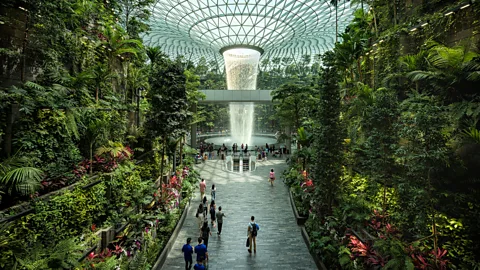
Changi has so many offerings that it can take several visits to appreciate their breadth. The best-known example is the Jewel Rain Vortex, the indoor waterfall in Changi's adjoining retail complex, which has become one of Singapore's most recognisable travel images.
Elsewhere, travellers can watch Toni, Changi's robotic bartender, mix a range of cocktails in Terminals 2 and 3. The butterfly garden imports pupae every two to three weeks so it never runs dry of winged delights. If flying insects aren't your thing, there's also a cactus garden and a rooftop sunflower garden. A new Fit and Fun Zone, which opened in early 2025, is filled with activities to suit any mood, from punching bags to mini trampolines.
And for those with a long enough layover (and no visa requirements), the airport even offers free guided tours of the city.
 Getty Images
But the continually updated attractions do more than lighten the load of a long trip. They also serve a more practical purpose: by encouraging people to explore, they draw foot traffic to different corners of the terminal and help avoid the sense of crowdedness that plagues other airports.
Easy come, easy go
Some of this efficiency is born of pragmatism as much as ambition. It is Singapore's labour constraints that have pushed the airport towards automation, from immigration clearance to cleaning and other passenger services.
"Immigration services need a lot of manpower, and not all Singaporeans are willing to do such work," explained Ivan Tan, Changi Airport Group's senior vice president for corporate and marketing communications. "So in part, we're driven by need."
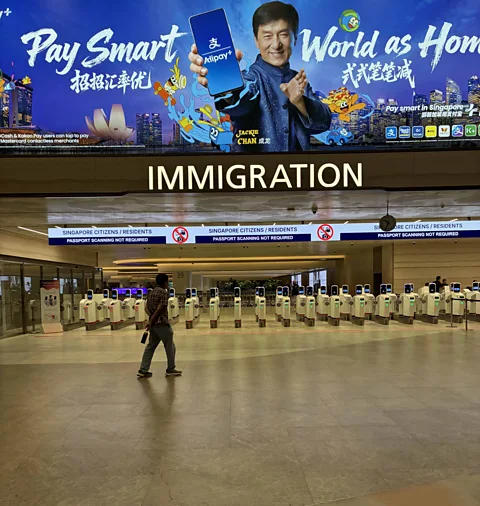
In 2024, Changi became the first airport to fully implement passport-less immigration clearance, using biometric facial and iris recognition to shave time off one of the most frustrating parts of any international journey. Singapore residents can use it on arrival and departure, while foreign travellers can use passport-free clearance when leaving Singapore.
 Daniel Seifert
That practical mindset also helps explain why Changi has never really been allowed to sit still. Airports are miniature cities driven by tight schedules and complex logistics, and are highly vulnerable to volatility. It's one reason Changi recently set up Terminal X, an innovation lab tasked with tackling weather volatility, manpower issues, capacity pressure and ever-evolving customer expectations.
More like this:
"For us the innovation hub is a must," says Kris Mok, the lab's communications manager, adding that the ever-shifting matrix of challenges means that "in a few years we'll have to work twice as hard". The team is encouraged to test left-field ideas even if they fail – an unusual approach in Singapore's often cautious work culture. Among the lab's projects are a fleet of drones that hover in storms to deter ground lightning strikes that could shut down runways in one of the world's most lightning-prone countries.
A national calling card
Changi's obsession with efficiency is not new. It dates to the 1970s, when Singapore's founding father and first prime minister, Lee Kuan Yew, decided that to grow, the small, trade-reliant nation needed a welcoming symbol of efficiency. It was a costly gamble, but it worked. Lee would eventually call Changi "the best S$1.5bn investment we ever made."
 Getty Images
Half a century on, the investment is still paying off. "[Changi] is like Singapore in a nutshell: efficient, clean, organised, and you can trust everything works as expected," says Alisha Rodrigo, who lives in Singapore and flies out frequently from the airport. Speaking shortly after a shutdown left American airports with four-hour wait-times at security and check-in, she adds that "sometimes predictable is a good thing".
And that, in the end, is why Changi keeps winning. While the waterfall might be what travellers remember, the real achievement is that they reach it without getting lost or breaking stride.
--
If you liked this story, sign up for The Essential List newsletter – a handpicked selection of features, videos and can't-miss news, delivered to your inbox twice a week.
