St Patrick's dig finds 'medieval burial site'

 BBC
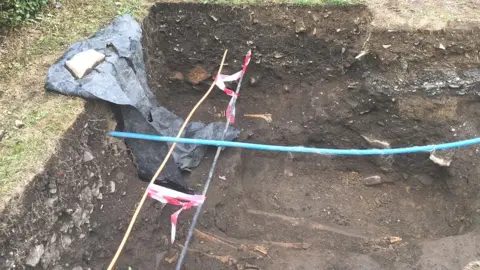
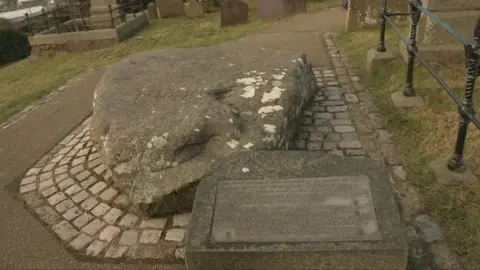
BBCArchaeologists have found a possible medieval burial site after uncovering 12 skeletons near the grave of St Patrick in County Down.
The human remains were discovered at Down Cathedral in Downpatrick, Belfast Live reported.
It is believed they date from the 14th or 15th Century.
The first remains were discovered in March, when archaeologists excavated an area ahead of erecting a replica St Patrick's Cross.
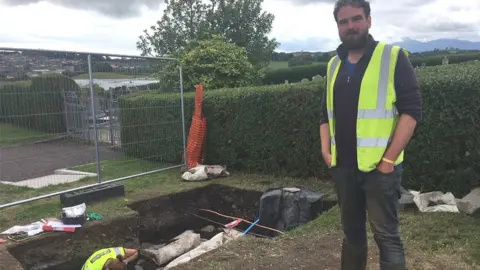
Brian Sloan, director of the excavation, told BBC News NI that 12 skeletons had been discovered at two dig sites.
 Queen's University Archaeology
"We believe it's a medieval burial ground, situated right under the cathedral's car park," he said.
"Tourists have been parking their cars there and the whole time all of this was underneath their feet."
It was initially believed the remains were Benedictine monks, but it is now thought the area may have been a community burial ground.
Mr Sloan said that the dig has also uncovered medieval pottery, as well as other items that date back as far as the 8th or 9th Century.
He added that excavators were "probably at the tip of the iceberg" as the dig is examining a "small area".
The remains will now be taken to Queen's University Belfast and examined, before being brought back to the site for reburial.
"It's a very sensitive process," said Mr Sloan.
"The examined remains will be treated with respect. They're not just bones, they're people: Someone's mother, father, son or daughter.
"They'll be studied to try and determine the age at death, any pathology that indicates how they died or lived. Then they'll come back to the site.
"The dean here has very kindly offered the cathedral for reburial."
The excavation site has proved popular with the local community and the cathedral's steady supply of tourists, he added.
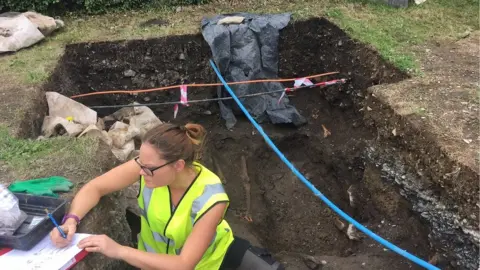
"We're very visible here, right beside the cathedral. Bus loads of US tourists have been coming over to take a look at what we're doing."
"It can be awkward for getting work done but that's all part of the game," he added, with a laugh.
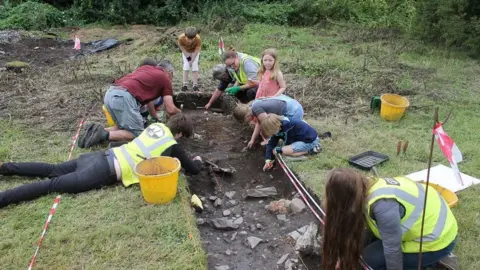
"But this is a community excavation and we've been inviting people up from the area to come and give it a go. This isn't just for archaeologists, it's for the people.
"This is their area and their history."
Mr Sloan agreed that such a discovery was an "archaeologist's dream" but added: "Every site's different.
"We came here from studying a 16th Century artillery fort in Tyrone. Archaeology is always keeping us on our toes."
