County to charge more for taking DIY waste to tips
A council is set to charge extra for excess DIY waste at its household recycling centres (HRCs).
The changes, which will come into force in 2027 in Gloucestershire, mean small amounts of rubbish will still be accepted free of charge, but larger excess waste will face extras fees.
It has been voted on and approved by the Gloucestershire County Council, after being suggested in early July. The charges are predicted to generate a net revenue of between £300,000 and £450,000 a year.
The council said it was aware of concerns about fly-tipping, but stated that other councils across the UK already had this policy and had reported no increase in the issue.
The free allowance will include a maximum of four visits within a four-week period and up to two 50-litre (11-gallon) rubble type bags per visit, or two DIY items, such as a toilet or sink.
Residents will be charged extra if they exceed this.
It will cost an extra £2.50 per item, which includes doors, baths, toilets, sinks, window frames and kitchen units.
Extra bags of rubbish will cost £5 and plasterboard will cost £10.
Residents have shared their concerns this will increase the amount of fly-tipping around the county.

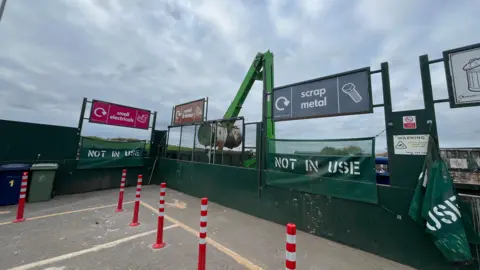
Councillor Ashley Bowkett, cabinet member for nature, climate and waste reduction, said the authority was following national regulations.
"Other councils across the country that have already been using this system have found that there has been no increase in fly-tipping in their region, he said.
Bowkett added: "We really do understand the concerns that many residents have shared with us up to this point and we are very keen to keep everybody involved in the conversation as we go through this process."
The council said research showed the vast majority of fly-tipping was linked to illegal waste operators rather than householders.
A council spokesperson said: "We will monitor the impact of the changes closely, including customer feedback, waste levels, recycling performance, and any wider effects, to make sure the system works well for residents."
Follow BBC Gloucestershire on Facebook, X and Instagram. Send your story ideas to us on email or via WhatsApp on 0800 313 4630.
