Farmers fear future as fertiliser and fuel bills soar

 BBC
BBCThe soaring cost of fertiliser has put enormous pressure on arable farmers and vegetable growers, those in the industry have said.
A third of the world's fertiliser chemicals are shipped through the Strait of Hormuz, which has been severely disrupted due to the ongoing tensions in the Middle East.
Adding to the pressures being faced by farmers, red diesel prices have increased by more than 50% in recent weeks.
This week Chancellor Rachel Reeves cut fuel duty by more than a third until the end of the year.
While this move has been welcomed by the National Farmers' Union, its chairman wants more support for members during the current "crisis" facing the sector.
'Very, very tight'
Jon Forshaw grows a range of vegetables to supply Booths supermarkets on his farm in Tarleton, Lancashire.
Pointing to a field of cauliflowers, he said the crop was looking good, but for it to continue growing, it needs fertiliser, but the price of that was now at eye-watering levels.
"Our fertiliser costs have gone up by 26%," he said.
"It's a cost we can't stop as we have to get a harvestable crop."
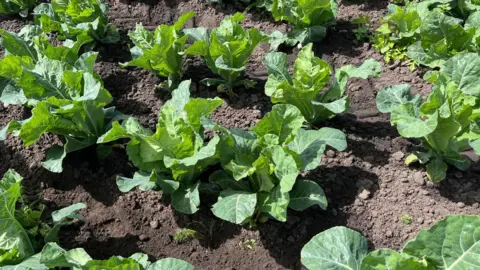
Forshaw said the cauliflowers were planted before the conflict in the Middle East and once they were in the ground, he had to commit to growing them.
Put simply, he said that if there was no fertiliser, there would be no crop.
Fears over supplies forced many growers to buy fertiliser earlier than usual.
"It is pretty much killing us at the minute," he said.
"And then you've got diesel which has gone up 60% for us.
"Cash flow is very, very tight."
Farmers always plan months in advance, so critical decisions have to be made now about next season's planting.
"We are going to cut back, we're going to have to because costs are just too high." he said.
"There has definitely got to be a price increase or there's going to have to be a lot of thought whether a lot of British growers carry on growing different types of crops."
'Why am I bothering?'
Over in Prescot, Merseyside, arable farmer Olly Harrison said he was also feeling the strain after a hike in input prices.
After a wet spring, his field of barley was turning a corner and looking good, but it was a different story last year.
He said the weather was so poor in 2025 that he did not bother using up his fertiliser on crops that would not flourish.
As a result, he had bags of fertiliser left over to use this year.
While that has paid dividends this year, he said he had been "stung for next year".
He said he paid £315 a tonne for last year's fertiliser, but had "just ordered some now for 2027 and it's cost me £615 a tonne".
"And when you think we probably use around 150 tonnes a year, it's a massive increase in costs."
He says this was not sustainable unless wheat prices increase.
"Brazil has got some dry weather, so their corn isn't growing," he said.
"America and Australia couldn't get fertiliser or fuel so their planting is down, so fingers crossed the wheat market is going to rise and that should mitigate some of the cost.
"But we still need a good season next year.
"Let's hope we don't get a drought next spring otherwise we've completely lost out."

The rise in red diesel prices has also impacted Harrison's business.
"Our fuel bill for last month was £20,000," he said.
"It would normally have been about £9,000.
"It's unbelievable... how fast things have changed."
He said he felt lucky he has diversified in response to the challenging market conditions.
"You look at your accounts and think 'Why am I bothering farming?'
"It's completely undervalued. If things haven't improved by September there would be more profit selling the fertiliser on, rather than growing wheat."
Jon Forshaw said people in agriculture felt their sector was undervalued.
"From cereals to livestock, everyone you speak to is feeling pretty downtrodden at the minute," he said.
Read more stories from Cheshire, Lancashire, Greater Manchester and Merseyside on the BBC, watch BBC North West Tonight on BBC iPlayer and follow BBC North West on X.
