Keeping swans safe from catapults

 BBC
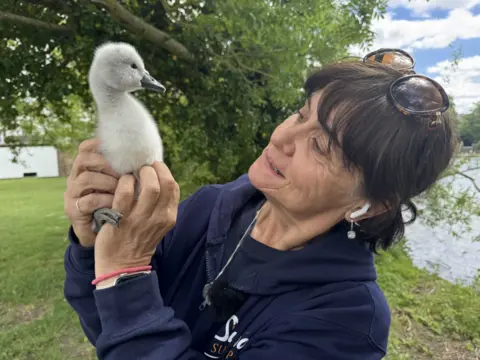
BBCRescuing swans and cygnets from the River Thames in Windsor is all in a day's work for volunteers at the Swan Support rescue service.
Usually it's because a bird has got trapped in weeds or been attacked by other swans.
Increasingly though volunteers from the Berkshire based charity say they have been left distraught after pulling birds out of the water which have been maimed or killed by high-powered catapults.
Hoping to deter such attacks the local authority introduced a public space protection order (PSPO) on 11 May which can see people fined £100 for carrying a catapult near to the river.
It's not illegal to carry or use a catapult out in the open, but carrying one in specific stretches of the Thames around Eton, Windsor Castle, Old Windsor, Datchet and Wraysbury is banned under the PSPO.
Wendy Herman from Swan Support says just a few weeks ago she treated a bird with a pellet lodged in its neck, leaving it traumatised.
She says the PSPO will make a difference, if not quite yet: "They don't even have to have done a crime with that catapult whereas before they did. I think it might take a few years for the message to get through to people but it's a good thing it's being brought in now".
The catapult ban on the Thames around Windsor has been introduced by the Royal Borough of Windsor and Maidenhead.
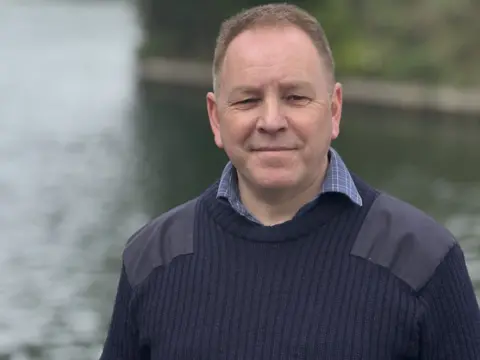
Richard Coe, the Borough Councillor who's overseen its introduction says that as a Liberal Democrat he's fully aware of the civil liberties involved:
"It's about balancing the rights of people to wander around with a catapult against the rights of everyone else to enjoy their lives peacefully and for wildlife not to have to suffer cruelty".
PSPOs were introduced in 2014 and their use has grown over time.
The Campaign for Freedom in Everyday Life is concerned at how some local authorities are using them.
"Councils in England and Wales have introduced a swathe of bizarre bans that will turn ordinary people into unwitting criminals.
"PSPOs were intended to target serious anti-social behaviour, but our research finds that these powers are being used to ban actions such as picking up stones, shouting, feeding birds, and sleeping in public".
In a recently released report, the organisation said one in five councils now use these orders to ban swearing, shouting, gestures, or certain kinds of language in public spaces.
PSPOs remain in place for three years and the campaign group wants the system reformed to make it easier and cheaper for people to appeal any order they disagree with.

Putting a PSPO in place is one thing, enforcing one quite another.
Fines can be handed out by either council wardens or police officers.
Dr Ben Archer who's a senior lecturer at Sheffield Hallam University is an expert in the field: "You introduce a PSPO and you don't automatically get 10,000 more police hours in that public space. It can lead to an order that simply raises public expectation while causing frustration to the police".

The Thames Valley's Police and Crime Commissioners accepts staffing numbers are an issue but believes PSPOs are an important part of modern day policing:
"Often the things we think of as big problems most people don't actually see but the things that are happening on your street corners every day, every weekend are the things that people want tackled. Tools like PSPOs are really helpful in giving police the extra powers that are needed to prevent crime happening".
