Man 'told 13 years of chemotherapy unnecessary'

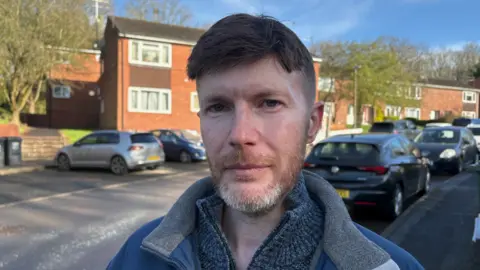 BBC
BBCA man who had 13 years of chemotherapy for what was thought to be an aggressive spinal tumour has spoken of his devastation at being told his cancer was low-level and the treatment unnecessary.
Andrew Whitehead, of Redditch, said the incorrect diagnosis at the age of 29 led to isolation, depression and other health issues.
Lawyers investigating about 40 cases of prolonged chemotherapy at University Hospitals Coventry and Warwickshire NHS Trust (UHCW) have told the BBC in some cases tumour tissue samples were incorrectly overdiagnosed in Birmingham.
University Hospitals Birmingham NHS Foundation Trust said it was awaiting independent legal advice and it would be inappropriate to comment.
Whitehead said his lawyer's independent medical expert informed him his chemotherapy was unnecessary.
"It was devastating," he said. "I'd lived my life for so long in fear this cancerous tumour in my neck was going to at any point take my life away from me and then to find out I'd gone through all that for all those years... I couldn't believe it."
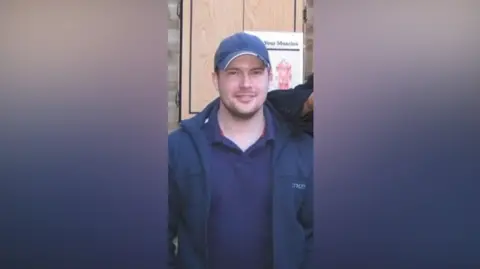 Andrew Whitehead
Whitehead had surgery in Coventry to remove his tumour in 2010 and then tissue samples were sent to Birmingham for analysis.
He said medics in Coventry had later told him he had an aggressive life-limiting tumour and radical chemotherapy was his only option.
"I was told they needed to throw the kitchen sink at it," he said.
He is one of about 40 patients being represented by the law firm Brabners amid concerns about prolonged courses of chemotherapy in Coventry under the care of Prof Ian Brown, who has now retired.
NHS guidelines say the chemotherapy drug temozolomide, which comes in tablet form, should usually only be taken for a maximum six cycles, normally over six months.
But many people claimed they received it much longer.
In Whitehead's case, the firm said independent analysis had shown he should not have received chemotherapy at all.
The chemotherapy treatment was halted in 2024 when a new oncologist took over his care and his plan was reviewed.
 Google
Brabners said it was one of several cases of incorrect overdiagnosis by Birmingham.
Partner Fiona Tinsley said: "What we've actually found is that in a number of cases where we've had the samples tested independently, those diagnoses don't actually fit with what they were diagnosed with by Birmingham and that - actually - the type of tumour was a lesser grade and, therefore, not requiring the level of treatment these patients have undergone."
The BBC has repeatedly attempted to approach Brown for comment.
A review by the Royal College of Physicians (RCP) is expected to reveal its findings in September.
'Safest possible care'
A UHCW spokesperson said the trust was "committed to providing the safest possible care".
It added that "on becoming aware of this incident, we spoke with all individuals who were receiving temozolomide (TMZ) treatment at the end of 2023 to ensure appropriate support and care plans are in place".
The spokesperson added an "independent, external review" was being led by the RCP, which the trust was "fully supporting".
"It is important that the RCP is given the necessary time to complete a full, robust and thorough review."
Brabners said on Thursday that UHCW had formally admitted some failings in one case for the first time.
The law firm stated in the case of patient Michael Grady, the trust had accepted adequate consent was not obtained for prolonged chemotherapy and there was a link between the overprescription of temozolomide and the harm he suffered.
Responding to the latest comments from Brabners, UHCW said it could not comment on individual cases while legal proceedings were ongoing, but that it continued to "engage with the process".
Follow BBC Coventry & Warwickshire on BBC Sounds, Facebook, X and Instagram.
