How do I keep safe from cows on countryside walks?

 Hugh Venables/Geograph
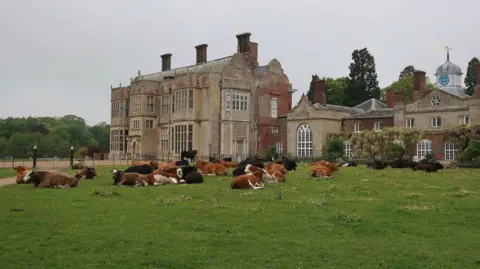
A man in his 70s has died after being seriously injured by cattle while walking on the National Trust's Felbrigg Hall estate in Norfolk.
The victim died on Monday in parklands surrounding the hall, near Cromer.
An investigation into the tragedy, by police and the Health and Safety Executive (HSE), is now under way.
What is the advice for people to best keep safe while walking in the countryside?
What is Felbrigg Hall?
 Shaun Whitmore/BBC
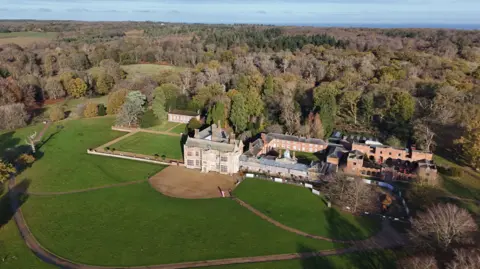
Standing tall among the patchwork of never-ending green pastures and woods, Felbrigg Hall is a local landmark.
The much-extended stately home, which started being built in Tudor times, was left to the National Trust by Robert Wyndham Ketton-Cremer, who died in 1969.
The country mansion attracted more than 120,000 visitors over 2022-23, and is nestled in more than 520 acres (211 hectares) of woodland, surrounded by rolling parkland, a lake and waymarked paths.
More from Norfolk:
Nearby residents and visitors use the sprawling estate's network of trails.
In a social media post in 2024, Felbrigg Hall reminded visitors that they shared its "estate with creatures big and small" and that a tenant farm's herd grazed on fields around the hall.
Consequently, it asked dog owners to follow the canine code.
The National Trust website says while dogs are allowed into Felbrigg, they must be kept on leads between 1 March and 31 July to protect nesting birds - and at all other times on certain sections of the estate too, marked on a map.
It also advises dog owners there are signs indicating where sheep and cattle are grazing.
"In the unlikely event of cattle chasing you, it's safer to let your dog off the lead," the Felbrigg Hall website says.
How do you keep safe on a countryside walk?
The HSE says members of the public should enjoy their surroundings and respect farming activities by following the Countryside Code.
This includes:
- Following a farmer's instructions when animals are being moved or gathered together
- Leave gates and property as you find them and follow instructions on signs
- Give animals plenty of space as their behaviour can be "unpredictable, especially when they are with their young"
- Keep dogs under control and always on a lead or in sight
How many people have died in livestock incidents?
 PA Media
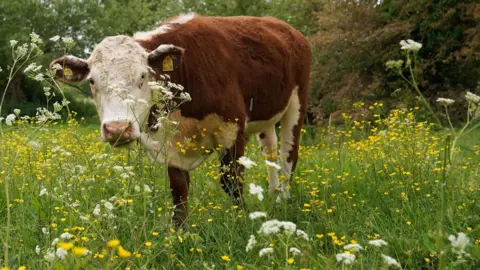
Twenty-six people in Great Britain have been killed by animals in incidents reported to the HSE between 2020 and 2025, it says.
It says these deaths involved 14 workers and 12 members of the public, and while the HSE's statistics do not specify the type of animal, it was "likely" a significant number "involved a bull or a cow".
The regulator can prosecute farmers or landowners in England and Wales when health and safety failures are found.
One of its most recent prosecutions has been against a farmer in Cornwall.
In December, the HSE said she was fined after failing to take action when walkers - including a 75-year-old dog walker who was seriously hurt - were attacked by cattle on a footpath.
What can landowners do to protect walkers?
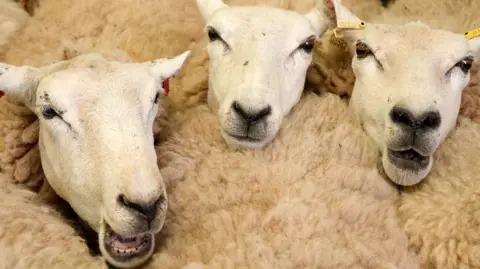
An information sheet, produced by the HSE for farmers and landowners, points out potential dangers posed by cattle to walkers using public footpaths.
It says the two most common factors in incidents it investigates involve cows with calves and walkers with dogs.
The National Farmers' Union says livestock is one of agriculture's top causes of fatal and serious injury.
- Moving herds into fields not crossed by a public right of way
- Fencing public rights of way
- Marking paths
- Opening permissive paths
In March, new laws designed to better protect farm animals from attacks in England and Wales were brought in.
These included unlimited fines for dog owners.
Previous tragedy at the estate
 PA Media
In 2007, an 11-year-old boy died and three other children were injured by a falling tree branch while on a school trip at Felbrigg Hall.
Daniel Mullinger, from West Bergholt in Essex, died instantly when the 70ft (21m) branch fell from a 180-year-old beech tree in the Great Wood.
Lawyers argued the tragedy would have been averted if inspectors had spotted a defect in the ancient beech tree and "tagged" it for remedial action.
The families sued the National Trust for damages in 2011, but the High Court judge ruled it was not to blame.
In a statement released through the families' solicitor at the time, they said it was "a difficult decision to accept".
Do you have a story suggestion for Norfolk? Contact us below.
Follow Norfolk news on BBC Sounds, Facebook, Instagram and X.
