'Fragile ceasefire at risk' and 'Putin mocks Starmer'
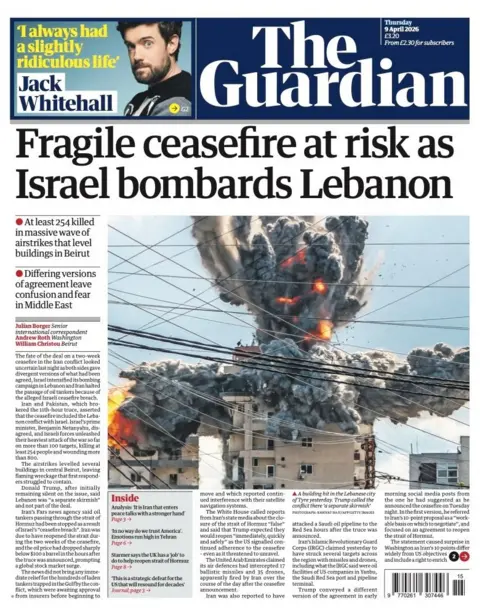
The papers on Thursday focus on the aftermath of the two-week ceasefire deal agreed Wednesday between the US, Israel and Iran. The Guardian says the fate of the deal "looked uncertain last night", with the sides involved giving "divergent versions of what had been agreed". The paper features a photograph of a building struck in Lebanon on Wednesday, and reports that Israel has "intensified its bombing campaign" against the nation - Israel and the US have said Lebanon is not included in the ceasefire agreement.
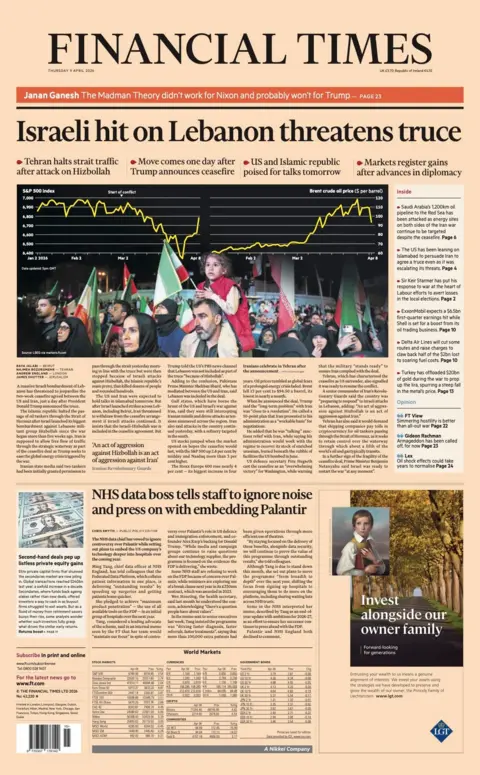
"Israeli hit on Lebanon threatens truce" says the Financial Times, reporting that Iran has halted the passage of oil tankers through the Strait of Hormuz after Israel "launched its biggest bombardment" of Hezbollah since the war began. The terms of the ceasefire include Iran allowing free flow of traffic through the waterway, the paper says.
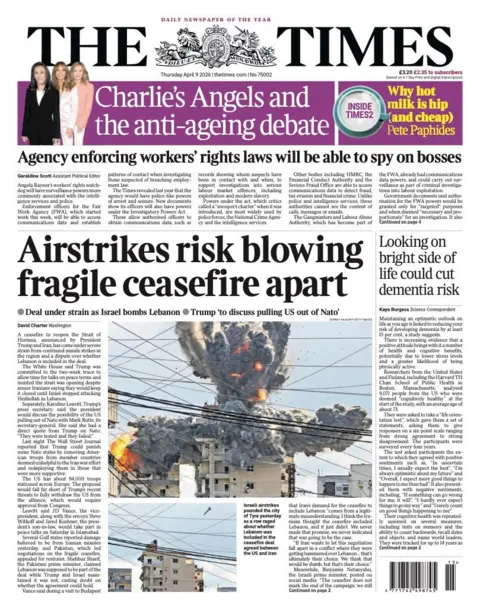
A similar headline leads the Times: "Airstrikes risk blowing fragile ceasefire apart." According to the paper, peace talks are scheduled in Islamabad on Saturday. The White House has confirmed that Vice President JD Vance and US envoys Steve Witkoff and Jared Kushner will take part. The Times also draws attention to comments from White House Press Secretary Karoline Leavitt, who says Donald Trump is set to discuss the possibility of the US pulling out of the Nato alliance with Mark Rutte, its secretary-general.
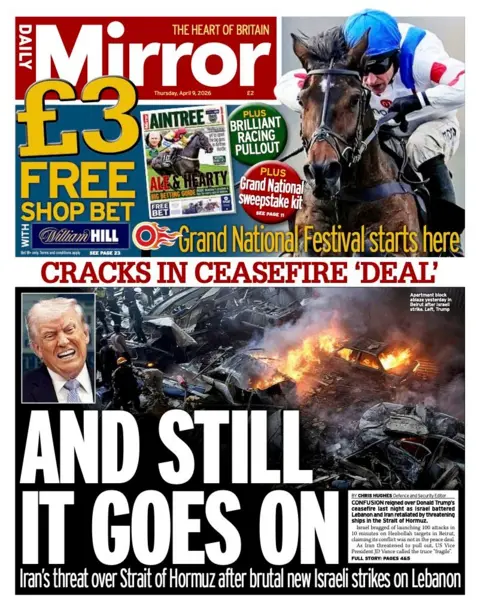
Burning wreckage in Lebanon's capitical city is front and centre of the Mirror, which says "confusion reigned over Donald Trump's ceasefire" on Wednesday. It says that Israel claims to have launched 100 "brutal" attacks in 10 minutes at Hezbollah targets in Beirut, writing of the conflict: "And still it goes on."
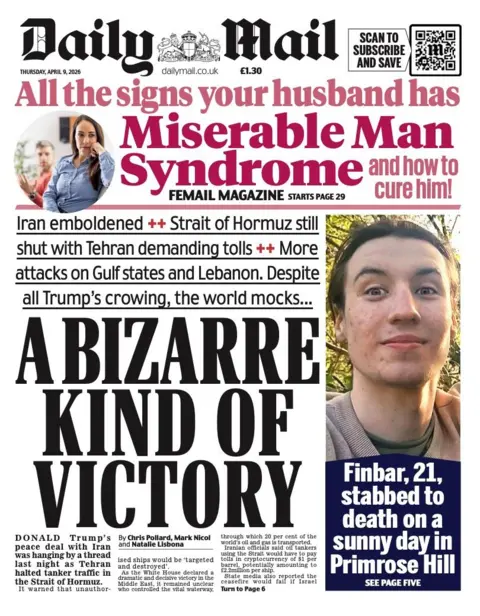
The Daily Mail characterises the two-week ceasefire as "a bizarre kind of victory", focusing on the lack of clarity over the Strait of Hormuz amid reports that oil tankers will have to pay up to £2.2m per ship to pass through the vital waterway.
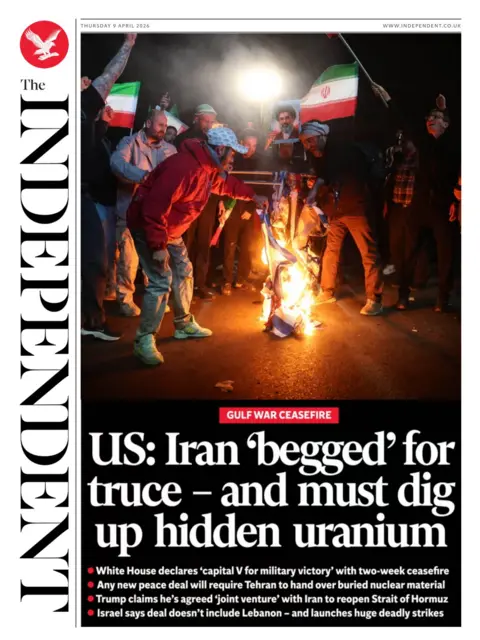
"US: Iran 'begged' for truce - and must dig up hidden uranium" says the Independent, reporting that Iran will need to hand over buried nuclear material as part of any peace deal.
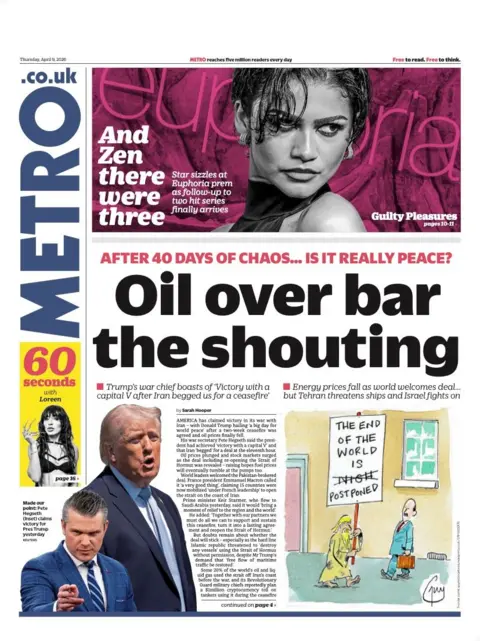
The Metro illustrates the current state of the conflict with its daily cartoon, where a man holds a sign that says "the end of world is postponed", and the word "nigh" is visibly crossed out.
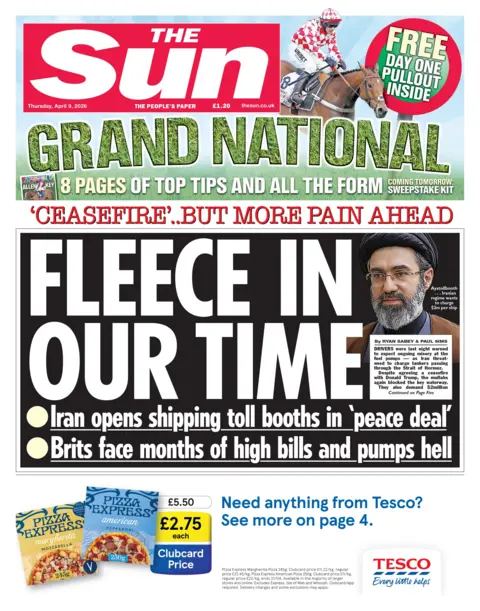
The impact of the ceasefire on petrol prices is the main focus for the Sun, which warns there is "more pain ahead" as Iran threatens to charge oil tankers passing through the Strait of Hormuz. The paper suggests that people in the UK "face months of high bills and pumps hell".
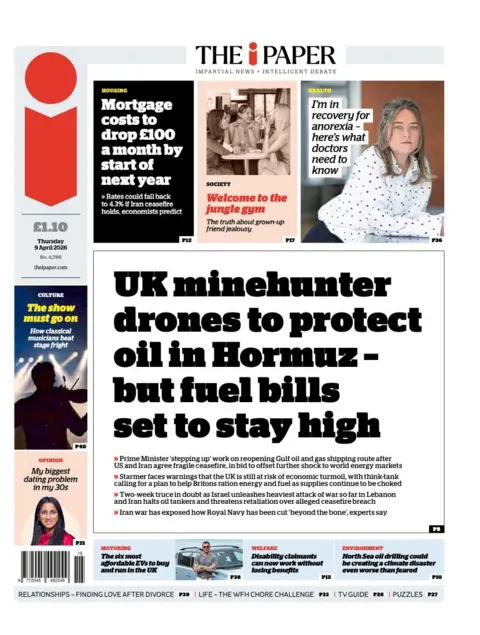
The i Paper takes a similar approach, saying fuel bills are "set to stay high", but notes Sir Keir Starmer is "stepping up" work to re-open the Strait of Hormuz, in a "bid to offset further shock to world energy markets".
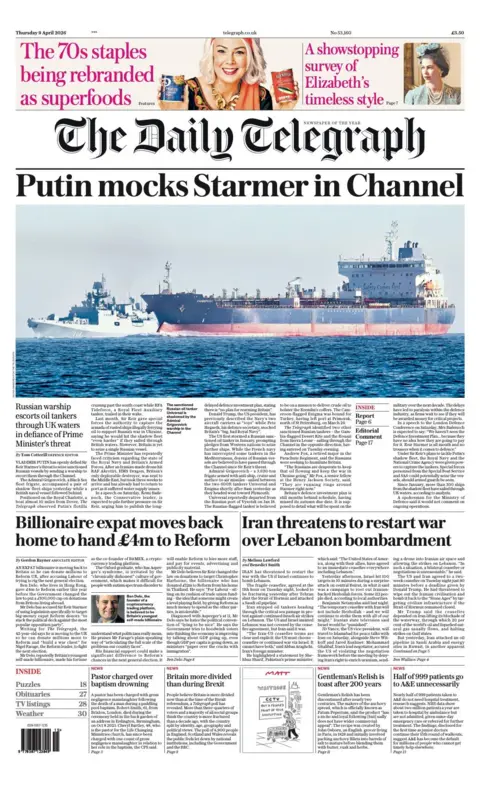
Russian President Vladimir Putin has "openly defied" a threat from Sir Keir to seize sanctioned Russian tankers by sending a warship through the Channel to escort them, the Telegraph reports. It says that a Black Sea Fleet frigate accompanied two "shadow fleet" ships on Wednesday, with a British naval vessel seen following behind. The paper notes that the prime minister has "repeatedly" faced criticism regarding the state of the Royal Navy and the UK's armed forces.
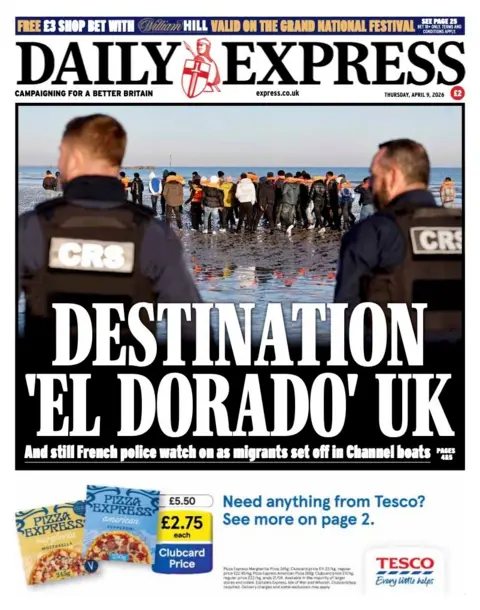
A photograph of migrants attempting to cross the Channel from France dominates the front page of the Express, which is emblazoned with the headline "Destination 'El Dorado' UK".
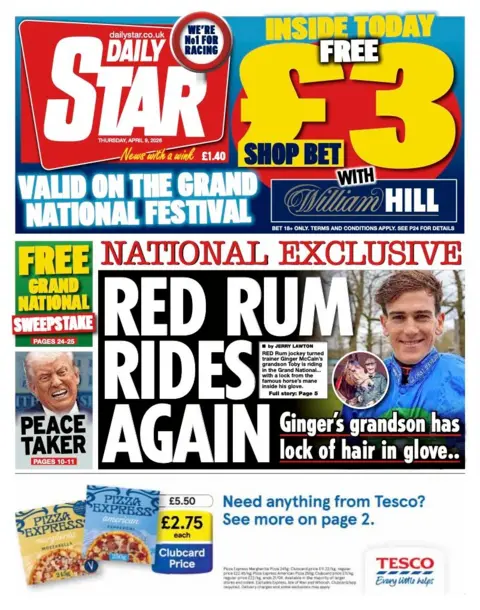
The Grand National continues to lead the Star, which says that the grandson of acclaimed jockey-turned-trainer Ginger McCain will ride in the famous race this weekend.