Music giant Universal gets $64bn takeover offer

 Getty Images
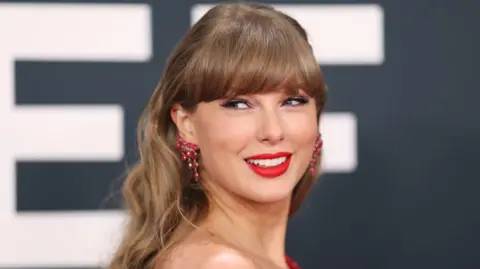
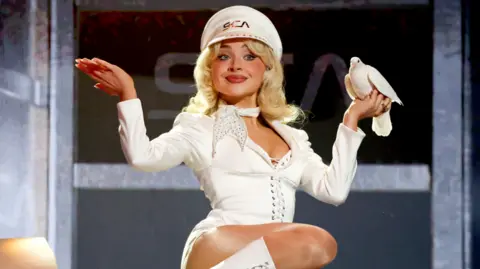
Universal Music Group, the entertainment giant behind acts such as Taylor Swift, Sabrina Carpenter and Kendrick Lamar, has received a takeover offer estimated to be worth $64.3bn (£48bn).
US investment company Pershing Square is offering to buy Universal in a merger that would see the new company listed in America, its billionaire chief executive Bill Ackman said.
As well as representing a huge list of artists, the world's largest music company also runs Abbey Road studios and owns labels such as EMI and Island Records.
Pershing Square, which already owns a stake in Universal, also has holdings in Google, Meta and Amazon, as well as Restaurant Brands International, which includes Burger King.
Universal said it had received Pershing's proposal and would assess its implications for shareholders, employees, artists, songwriters and other stakeholders.
The company's board also expressed full confidence in chief executive Sir Lucian Grainge, his management team and strategy.
Ackman said its management had "done an excellent job nurturing and continuing to build a world-class artist roster and generating strong business performance".
He said Universal had reshaped the industry to put artists at its centre, and had shown it could seize growth opportunities from artificial intelligence while protecting intellectual property.
But he said the company's stock price had "languished" due to issues unrelated to the performance of its music business, which could all be "addressed with this transaction".
Dan Coatsworth, head of markets at AJ Bell, said: "On paper, you might think is a money-making machine. In reality, it's not that simple."
Universal "is home to nine of the top 10 global recording artists of 2025", said Coatsworth but growth in the music streaming market had been slower than expected which matters "because Universal relies heavily on the likes of Spotify and Apple Music for royalty payments".
Global music revenues have been growing year-on-year as streaming subscriptions rescued the industry from a period of piracy and financial decline.
But a heated debate has been ongoing about how much these platforms pay out in royalties.
The industry is also battling a rise in deepfakes - songs by fraudsters impersonating its artists - which are created by AI and are flooding platforms.
 Getty Images
In a letter to its board of directors on Tuesday, Ackman said Universal had "dramatically underperformed" compared with several key US and world stock indexes.
He blamed a variety of factors, including uncertainty around an 18% stake in Universal owned by Bolloré Group, the family conglomerate of billionaire Vincent Bolloré, as well as a recent decision to delay listing the company's shares on the New York Stock Exchange.
Universal is currently listed in Amsterdam but Ackman has long-campaigned for the company to float in the US.
Ackman became a high-profile supporter of Donald Trump in July 2024 during his bid for a second term in the Oval Office.
His intervention was seen as an important electoral endorsement of the now president from the business world.
Adrian Cheesley, a former senior vice president at Universal, said the company would be the only music major to be listed on the S&P 500 stock market index in the US if the move went ahead.
Commenting on Ackman's motives, Cheesley told BBC Radio 4's Today Programme he believed the billionaire investor was happy with the current management.
"I think this is about financial engineering, I don't think it's gonna affect the day-to-day running of the business," he said.
Universal's share price initially soared by nearly 30% after the offer emerged on Tuesday. By the afternoon, it was 10% ahead.
How music businesses earn revenue has changed as listeners switched to the likes of TikTok and Instagram.
In 2024 Universal threatened to pull its songs from TikTok, claiming the platform wasn't paying fair value for music, and it was also concerned about "protecting human artists from the harmful effects of AI, and online safety for TikTok's users".
Coatsworth said this dispute, while now settled, points to broader concerns around getting paid by social media networks.
Added to that, he said: "Cut-throat competition in the music business also doesn't help. Record labels must plough significant amounts into marketing to make their artists stand above the crowd, and that means Universal must constantly spend money to make money."
Music industry adviser Tony Rigg said a deal could be a "financial and strategic reset for Universal", but pointed out it was far from a failing business.
He said a "complex matrix" of factors could be behind the share price concerns, including the streaming industry, AI anxiety, royalties and the broader market conditions.
He continued: "These all affect market confidence, but I suspect a further issue is that the uncertainty is more external than internal: the market remains unsure how to value the future of the music industries and what the next phase of growth will look like."
