'Rebuilding life after prison is daunting'

 BBC
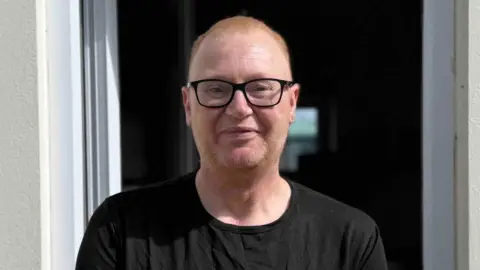
BBCAn islander who spent time in prison said getting his life back on track following release had been a "very difficult time".
Dave Morris said the first day of being free was spent "begging" to Social Security for money to help keep him fed and watered after his benefits stopped whilst serving his sentence.
He said while he was in prison there was "no support" as to where he was going to go once he was out which was "daunting".
The Committee for Home Affairs has declined to comment.
Morris was sentenced to eight weeks in prison for drink-driving in 2020.
He said he left Les Nicolles having no idea how much money was in his account and had to find a way to charge his phone to contact friends and family.
"My life was spent for the best part of three, four months living two nights at this hotel, two nights that hotel, three nights in a guesthouse."
Not being originally from Guernsey, he said it was tough without a family support network to help in the island.
'Not a safe place'
Morris said he wanted somewhere stable and "safe" to rebuild his life after being in prison which he said was "not a safe place".
"All I wanted was my own front door key," he added.
Support from Social Security helped him to find somewhere more permanent and he moved into his own rented apartment this year.
"They worked so hard in me securing this place that I'm in now and without them, I wouldn't be here."
Morris said housing had continued to be a struggle in recent years.
Following his original sentence in 2020, he subsequently spent time in custody and received a suspended sentence in November last year, also for drink-driving.
After suffering a head injury from a fall prior to his convictions, Morris found himself unable to work, which he said made it even more difficult to find a home.
He said that with a lack of housing, landlords "could pick and choose" tenants and were more "wary" of giving their place to someone that's on benefits over someone with a stable job.
Morris said he had had to battle social stigma since his release: "You go down the street and you can see the people that want to stand and talk and the ones that want to cross the road... I'm still myself, I'm still Dave."
Now he has a roof over his head, Morris said he is getting back on track and is no longer drinking.
"It's step by step, day by day... I'm getting better and it's hard, but I'm getting there, I'm determined," he said.
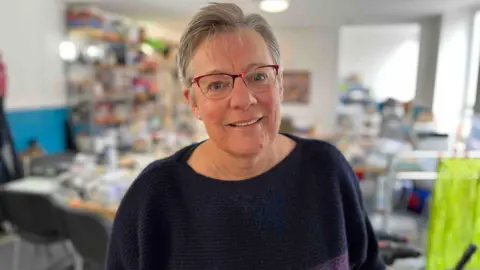
The charity Caring for Ex-Offenders offers a space for those who have left prison to learn new skills.
From cooking to crafting, the charity assists with employment and community.
Co-ordinator Mary Hervé said she saw a small number of people who found it "easier" living in prison than in the community.
"Sometimes their friends are in prison and when they come out all of a sudden they don't have any community."
She said finding accommodation was one of the biggest barriers.
"We can help them find it and help them keep it, but I can't magic up something that's not there," Hervé added.
She said the hardest part of her work was knowing some of her service users were sleeping out in the cold.
"They are out in that bad cold weather and I haven't been able to do anything about it and it makes me feel sad, it makes me worry about them."
If you have been affected by any of the issues in this story, help and support is available at BBC Action Line.
Follow BBC Guernsey on X and Facebook and Instagram. Send your story ideas to channel.islands@bbc.co.uk.
