Nine seats that could decide Scotland's election

 Getty Images
Across Scotland, a number of different electoral contests are playing out.
The SNP and Labour are going head-to-head for constituencies across the central belt.
The Conservatives are fighting to hold on to their heartlands in the north-east and along the southern border.
The Liberal Democrats are seeking to expand their strongholds in the Highlands and islands and the capital, while the Greens are hoping to add to their tally of regional list seats - and maybe even win their first ever constituency.
And Reform UK is seeking to make its mark by getting MSPs across the country, as well as having a major bearing on how other parties campaign.
But where are the key battlegrounds which will decide the election, and which will give us an idea of how things are shaping up?
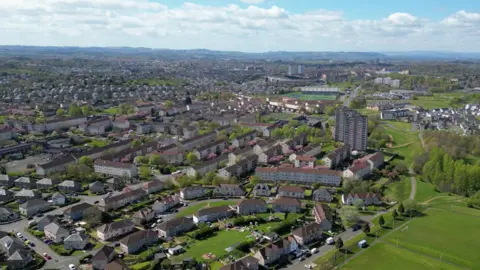
Rutherglen and Cambuslang
 Getty Images
Constituencies across the central belt of Scotland are key to whether the SNP can win a fifth term in power - or whether Labour can turn the tables on them.
Rutherglen and Cambuslang is one of Labour's key targets, with the SNP holding a 13% majority from 2021.
But since then Labour has won a Westminster by-election and then a UK election in the area, which has become one of their strongest in the country.
It will serve as a barometer of what will happen across the rest of the central belt.
If Labour can win here, it opens the door to other constituencies in Glasgow.
Equally, if the SNP can hold them off, they can be hopeful of returning to government.
There are seasoned campaigners involved too, with three of the candidates having served as MSPs since 2016 - the SNP's Clare Haughey, Labour's Monica Lennon, and Tory Annie Wells.
- The full list of candidates for Rutherglen and Cambuslang includes: Clare Haughey (Scottish National Party), Monica Lennon (Labour), Patrick Logue (Liberal Democrats), Allan Lyons (Reform UK), Chris Sermanni (Scottish Trade Unionist and Socialist Coalition) and Annie Wells (Conservative).
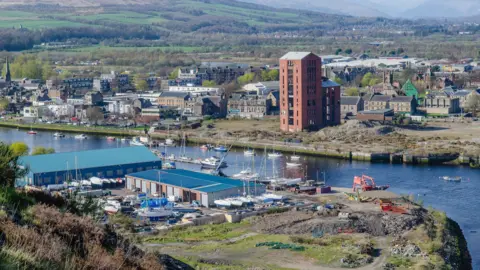
Dumbarton
 Getty Images
Dumbarton is one of three seats which has had the same MSP since 1999 - and in all three, the same candidate is seeking to continue that streak.
Here, it's Labour's deputy leader Jackie Baillie who has seen off challenge after challenge from the SNP, though they came within 109 votes of unseating her in 2016.
Her current majority is a slim 3.8%, and the result here will tell us a lot about the relative performances of the parties.
Can Labour hold out despite the apparent unpopularity of Sir Keir Starmer's UK administration, which got to the point where Anas Sarwar disowned him in a bid to save his Scottish campaign?
Or can the SNP finally crack Labour's final stronghold north of the border?
If the party is serious about winning a majority to build a mandate for an independence referendum, taking Dumbarton would be a crucial step.
- The full list of candidates for Dumbarton includes: Jackie Baillie (Labour), Elaine Ford (Liberal Democrats), Lynda McEwan (Scottish Trade Unionist and Socialist Coalition), Andrew Muir (Independent), Gary Mulvaney (Conservative), David Smith (Reform UK) and Sophie Traynor (Scottish National Party).
Eastwood
 Getty Images
While the constituency contest in central Scotland may be talked up as the SNP against Labour, there are plenty of seats where the Conservatives have been in contention too.
Eastwood was once a proper three-way marginal, with all three of the parties winning over 30% of the vote in 2016.
Over the course of nine years, the equivalent Westminster seat in East Renfrewshire passed from Labour to the SNP to the Tories, back to the SNP and then back to Labour.
The question at Holyrood is whether former Scottish Conservative leader Jackson Carlaw can hold on to the seat against a challenge from the SNP's former local MP Kirsten Oswald.
Some polls have suggested that if he does, it might mean the party won't win a regional list seat in the area - thus knocking current leader Russell Findlay out of parliament.
- The full list of candidates for Eastwood includes: Jackson Carlaw (Conservative), Euan Davidson (Liberal Democrats), John Mooney (Reform UK), Kirsten Oswald (Scottish National Party) and Kayleigh Quinn (Labour).
- The full list of candidates for the West regional list includes: Alliance for Democracy and Freedom, Alliance to Liberate Scotland, Conservative, Independence for Scotland Party, Independent Green Voice, Labour, Liberal Democrats, Reform UK, Scottish Common Party, Scottish Family Party, Scottish Green, Scottish Libertarian Party, Scottish National Party, Scottish Socialist Party, Socialist Labour Party, The Scottish Liberal Party, UK Independence Party, Paul Mack (Independent), Paddy McCarthy (Independent) and William Wallace (Independent).
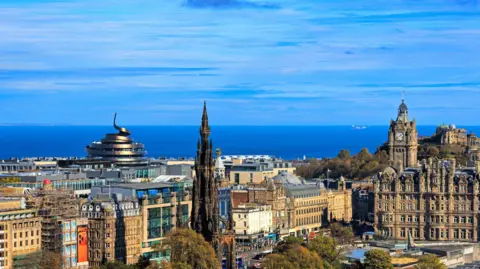
Edinburgh Central
 Getty Images
Edinburgh Central has quite the electoral history, having been a Labour seat in 1999 before flipping to the SNP in 2011, then the Tories in 2016, and back to the SNP in 2021.
Boundary changes have added some previously Labour-friendly wards in the southern portion of the city, making this a more realistic target for them.
However, the Greens also see this as a winnable seat, given its demographics include a swathe of city-centre students, with the Gorton and Denton by-election victory by their sister party in Manchester a blueprint for coming through the middle.
They are fielding former co-leader Lorna Slater in a bid to win their first-ever constituency seat.
It could end up being a three-way contest, with the SNP's Angus Robertson one of the biggest potential scalps of the election.
- The full list of candidates for Edinburgh Central includes: Bob Bonnie Prince (Independent), Chris Creighton (Independent), James Dalgleish (Labour), Charles Dundas (Liberal Democrats), Tam Laird (Scottish Libertarian Party), Jo Mowat (Conservative), Craig Murray (Alliance to Liberate Scotland), Gary Neill (Reform UK), Robert Pownall (Independent), Angus Robertson (Scottish National Party) and Lorna Slater (Scottish Green).
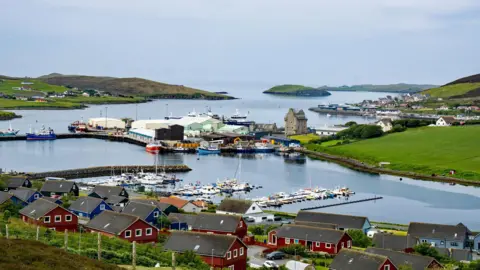
Shetland
 Getty Images
Shetland has been a Lib Dem seat at Holyrood since 1999, and you have to go back to 1945 for the last time someone else won a national election here.
The SNP has long coveted it, though. They spent more on a 2019 by-election here than they did on their whole EU referendum campaign, and John Swinney was up making the case for his party before the Holyrood contest had even begun.
The SNP has selected Hannah Mary Goodlad - their only constituency candidate who doesn't have a political background of some sort.
The Lib Dems, meanwhile, have picked the local council leader, Emma Macdonald.
So this is perhaps the one seat in Scotland where the SNP is truly the anti-establishment force.
But it is one where victory could make a huge difference to their ambitions for a further term in government.
- The full list of candidates for Shetland includes: Alex Armitage (Scottish Green), Douglas Barnett (Conservative), Vic Currie (Reform UK), John Erskine (Labour), Hannah Goodlad (Scottish National Party), Emma Macdonald (Liberal Democrats), Brian Nugent (Alliance to Liberate Scotland) and Peter Tait (Independent).
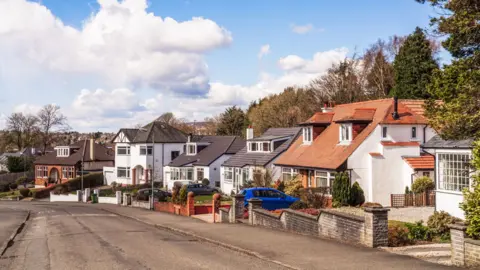
Strathkelvin and Bearsden
 Getty Images
This relatively affluent seat to the north of Glasgow has a tangled electoral history - bouncing from Labour in 1999 to an independent candidate in 2003, back to Labour in 2007 and then on to the SNP in 2011.
However, it is the Lib Dems who are going after it this year, having won the roughly-equivalent Westminster seat of Mid Dunbartonshire in 2024 with an 11 percentage point swing from the SNP.
After years of apologising for their UK coalition with the Conservatives, the Lib Dems have somehow emerged with perhaps the least political baggage among the larger parties, who have all now been in power more recently.
They are hoping to turn that into gains in an era of public dissatisfaction with governments, with Alex Cole-Hamilton targeting 10 constituencies across Scotland.
This one is very much a stretch goal - the Lib Dems would need a 16-point swing to oust the SNP, having finished in fourth place in 2021.
But the SNP need to be alive to the challenge - too much focus on taking on Labour on the ground and Reform in debates could leave the back door open in places like this.
- The full list of candidates for Strathkelvin and Bearsden includes: Pam Gosal (Conservative), Faten Hameed (Reform UK), Adam Harley (Liberal Democrats), Denis Johnston (Scottish National Party) and Colette McDiarmid (Labour).
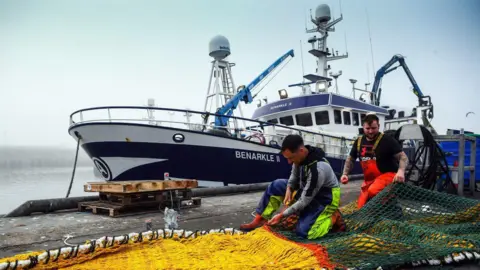
Banffshire and Buchan Coast
 Getty Images
Most polls suggest Reform UK is expected to make an impact in this election chiefly via the regional list vote.
But there are constituencies where they could make an impact too.
Banffshire and Buchan Coast has always been an SNP seat - initially under one Alex Salmond in 1999 - but it has become increasingly marginal under Tory challenges, with a majority of just 2.3% in 2021.
In the 2024 general election, Reform took 14.6% of the vote in this area, their best result in Scotland - and one which might have made the difference in Douglas Ross failing to win the seat for the Conservatives by a margin of 2.6%.
Reform has also selected a candidate who has already demonstrated they have support in the area - Conrad Ritchie took 25.9% of first-preference votes in a council by-election in Fraserburgh in November 2024.
So this will be a key test of whether the Tories can cling on to their core vote - and of the appeal of Reform to similarly-minded "stop the SNP" voters.
- The full list of candidates for Banffshire and Buchan Coast includes: Karen Adam (Scottish National Party), James Adams (Conservative), N D R McLennan (Independent), Brooke Ritchie (Labour), Conrad Ritchie (Reform UK) and Leslie Tarr (Liberal Democrats).
Inverness and Nairn
 Getty Images
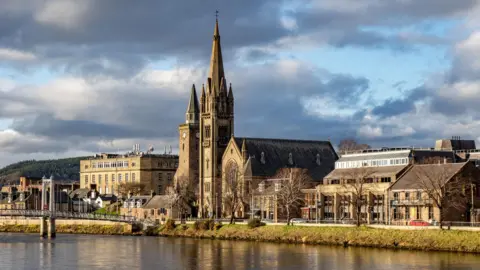
The contest in Inverness and Nairn is not really about one party against another.
It's one man against the party his family has been synonymous with for the last 60 years.
Fergus Ewing - son of legendary nationalist trailblazer and 1967 by-election winner Winnie Ewing, husband of the late MSP Margaret Ewing, brother of former MSP Annabelle Ewing - is now standing against the SNP as an independent candidate.
The increasingly rebellious Ewing clashed with the leadership over a governing pact with the Greens as well as a host of policies from gender to recycling, and ultimately decided to stand as an independent candidate to promote the dualling of the A9 and A96 roads through the constituency.
Having represented the seat since 1999, does he have enough of a personal vote to win it on his own?
Or can Emma Roddick - who was on the opposite side of the SNP's broad tent to Ewing on a host of issues - make this one of the stranger "SNP hold" results on record?
Or, amid all this drama, does it leave an opening for another party to nip through the middle - given the Lib Dems just took the Inverness seat at Westminster with a 19 percentage point swing?
It tells us precisely nothing about races elsewhere in Scotland, but is as crucial as any other to whether the SNP has the numbers to govern - or to push for a referendum - come 8 May.
- The full list of candidates for Inverness and Nairn includes: Neil Alexander (Liberal Democrats), Fred Campbell (Reform UK), Fergus Ewing (Independent), Shaun Fraser (Labour), Emma Roddick (Scottish National Party), Steve Skerrett (Advance UK) and Ruraidh Stewart (Conservative).
South Scotland Region
 Getty Images
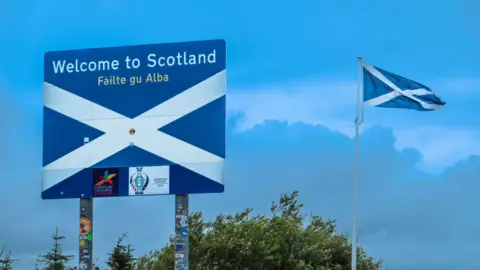
The 73 constituencies are very much not the whole story of the Holyrood election.
The eight electoral regions scattered around Scotland will each elect seven MSPs, for a total of 56.
The system is designed to "top up" the seats already won in the area via the constituency ballot, to make sure each party gets broadly fair representation in parliament.
In 2021, the SNP won six constituencies in South Scotland, while the Conservatives took three.
Reflecting how the vote was shared out across the region, Labour and the Conservatives took three regional list seats each, while the SNP got one.
This region reflects many of the same political battles as the rest of the country - the Tories attempting to face down a threat from Reform UK, the SNP seeking to box out Labour, and the Lib Dems and Greens hoping to gain regional list seats.
But what makes South Scotland particularly interesting is the way its boundaries have changed since 2021, with East Lothian being removed to join up with Edinburgh, and two central belt seats - East Kilbride and Hamilton, Larkhall and Stonehouse - being added in.
What do those relatively urban seats being added to this rural region mean for the vote totals among the parties?
And could the constituency results there change how many list seats parties are entitled to when the top-up system swings into action?
There are no fewer than 15 parties standing here, among 29 which are contesting regional lists across the country.
Scottish voters have rarely had so much choice.
- The full list of candidates for the South Scotland region: Alliance for Democracy and Freedom, Alliance to Liberate Scotland, Conservative, Independent Green Voice, Labour, Liberal Democrats, Reform UK, Scottish Common Party, Scottish Family Party, Scottish Green, Scottish Heritage Party, Scottish Libertarian Party, Scottish National Party, Scottish Socialist Party, UK Independence Party, Independent, Sean Davis (Independent) and Denise Sommerville (Independent).

