'Ancient' freshened water found under ocean floor

 Jez Everest / Ecord IODP3 / NSF
A team of geoscientists from Leicester has helped confirm the existence of "ancient" freshened water sealed beneath the Atlantic Ocean floor.
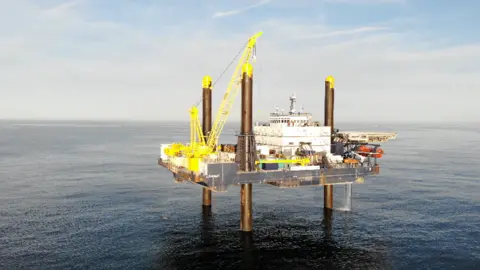
The group from the University of Leicester joined an international crew on the science vessel L/B Robert off the coast of New England in the US last summer.
During the trip, the team directly documented a freshened water system beneath the ocean floor for the first time, collecting sediment cores and about 10,000 litres of water.
The water is thought to be tens of thousands of years old, and while the process of how it got there is not yet fully understood, it is hoped analysis of the samples will help scientists learn more about climate change.
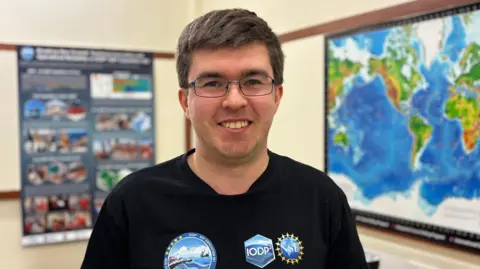
Dr Andrew McIntyre, from the school of geography, geology and the environment at the University of Leicester, believes it could be linked to ice ages.
"Maybe that water percolated through when sea levels were a lot lower, which allows it to reach around a hundred miles off shore," he said.
"Understanding that geological context, how that water got there, how old that water is, the chemistry of that water, the biology within it, that is really really important potentially for its future use."
Although oceans cover about 70% of the Earth's surface, less than 3% of all the planet's water is fresh, and climate change is expected to increase the frequency and severity of droughts around the world.
Freshened water is much less salty than seawater but is not completely fresh.
"This is just one location, there are many other locations around the world and potentially there's a huge amount of water locked up in these systems," McIntyre said.
"Understanding fresh water resources is really important, so this being fresher water than sea water, there potentially could be a future use for those regions that are particularly vulnerable to drought."
The expedition was a joint collaboration between the International Ocean Drilling Programme (IODP) and the US National Science Foundation.
The IODP is an international marine research collaboration exploring the Earth's history and dynamics using ocean research platforms to recover data recorded in seafloor sediments and rocks.
IODP research fellow Dr Tim van Peer said the project has been innovative from the outset.
"We introduced new tools and new methods to explore this freshened water, which is a first for the scientific ocean drilling community," he said.
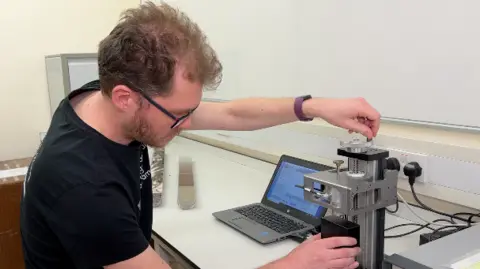
In January, the team travelled to the Center for Marine Environmental Sciences at the University of Bremen in Germany to begin opening and analysing the samples.
Van Peer said the research was only just beginning.
"These remarkable cores, water samples, and data will be open to the global community in a year from now," he said.
"This marks the next phase of an exciting research journey. We can now for the first time discover how ancient the water is, how the sediments were deposited, and how these sediments can contain the water."
Listen to BBC Radio Leicester on Sounds and follow BBC Leicester on Facebook, on X, or on Instagram. Send your story ideas to eastmidsnews@bbc.co.uk or via WhatsApp on 0808 100 2210.
