Ghana halts visit by South African president amid row over anti-migrant protests

 AFP via Getty Images
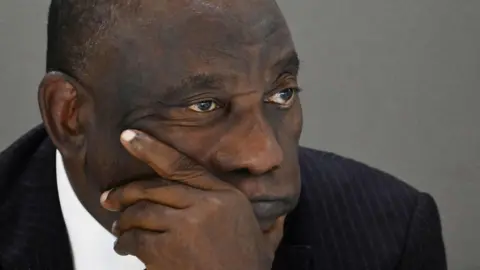
Ghana has postponed a visit by South Africa's President Cyril Ramaphosa following xenophobic rallies that resulted in hundreds of Ghanaians being repatriated from his country.
Ramaphosa had long planned a state visit to Ghana in the first week of August, and it had been hoped this would help de-escalate tensions between the two nations.
But many in Ghana feared his presence would lead to mass protests there. On Tuesday, government spokesman Felix Kwakye Ofosu told the BBC the visit would not happen for the time being.
''We sent them a communication indicating that it would be best to defer the visit in view of the present climate around xenophobia," he explained.
South Africa has sought to play things down, with presidential spokesman Vincent Magwenya telling the BBC of the country's unwavering commitment to "deepening cooperation" between the "two sister nations" and "advancing the African Agenda".
"The two countries will continue to engage through diplomatic channels to identify a mutually convenient date," he said.
Diplomatic tensions between the two nations heightened after a video went viral of Emmanuel Asamoah, a young Ghanaian living in South Africa, being confronted and told to ''go fix his country''.
Ghana has since repatriated more than 900 of its citizens from South Africa, and the last batch of over 900 others is expected to be brought home in the coming weeks.
Other African countries - including Nigeria, Malawi and Kenya - have also been repatriating their nationals from South Africa because of ongoing protests against foreigners. Some groups gave undocumented migrants a deadline of 30 June to leave the country and about 25,000 have been repatriated so far.
Ramaphosa has said that people have a right to protest as long as they were peaceful. He also said he would do more to tackle irregular migration.
 AFP via Getty Images
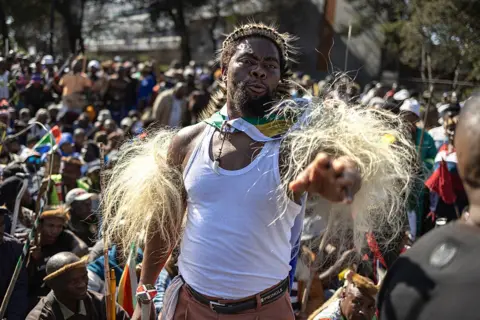
The row escalated last week when Ghana condemned the alleged killing of Bahiru Isak, a 40-year-old Ghanaian national living in the Khayelitsha suburb of Cape Town in South Africa. Ghanaian officials said he was killed during anti-immigration protests on 30 June.
South African authorities however say no such killing happened, and insist the only Ghanaian victim was 35-year-old Kwabena Boagen whose death they say was not related to the protests.
South Africa's justice minister accused Ghana of spreading "false information about South Africa regarding developments on irregular migration".
There is also a legal question at the heart of the rift between Ghana and South Africa: Accra claims most of its nationals living in South Africa had the necessary residency papers, but Pretoria disagrees. Neither country has provided evidence to support their claims.
In May, Ghana petitioned the African Union over the recurring xenophobia in South Africa, urging action and a fact-finding mission to address attacks on foreigners, which contravene the African Continental Free Trade Area agreement.
Analysts say South Africa risks political isolation on the continent if urgent measures are not taken to address the anti-immigration protests and diplomatic tensions.
Xenophobia is nothing new in South Africa, with foreigners blamed by some for unemployment and crime.
But many citizens of other African nations want black South Africans not to forget the support and solidarity they received from fellow Africans during the anti-apartheid struggle through to South Africa's transition into the multi-racial democracy it is today.
Additional reporting by Khanyisile Ngcobo and Natasha Booty

Go to BBCAfrica.com for more news from the African continent.
Follow us on Twitter @BBCAfrica, on Facebook at BBC Africa or on Instagram at bbcafrica
