Fed-up voters wanted something new from Wales' big election - will they get it?

 Getty Images
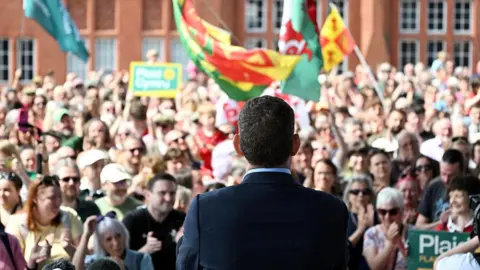
Long before Plaid Cymru stormed to victory in the 2026 Senedd election last week, it felt like there was change in the air.
Wales overwhelmingly rejected the two traditionally dominant parties and instead chose to back Plaid Cymru and Reform.
But there were signs that Wales' electoral loyalty to Labour was already fragile.
A year ago I began a journey around the country's 16 new Senedd constituencies for the BBC's Politics Wales to try and get a sense of how the country was feeling ahead of the election.
And as I reflect on the conversations I had around the country, it's clear the seeds of the change we witnessed last week had already been sown.
The words of Anne-Marie Carpenter in Merthyr Tydfil rings in my ears: "Things have to change, they can't get much worse in some areas."
Despite winning a landslide in the UK general election in 2024, in Wales the foundations of Labour's impenetrable electoral fortress seemed to be unstable.
The party's vote share in Wales was down and the public, who had voted for change, were waiting rather impatiently for their lives to improve.
And that was the context in which I started my tour of all the constituencies ahead of the Senedd election.
I went to a cattle sale, a tropical butterfly house, trendy urban cafes, independent shops, big businesses, a food bank, a village coffee morning and high streets in towns and cities across the country.
While all corners of Wales had their own local issues, there were themes that were common to every part of Wales - and the main one was a palpable, increasingly vitriolic distrust in politicians.
I'd lost count of the number of people who said to me, from Wrexham to Cowbridge, from Narberth to Llanrwst, "they're all the same", or "they're in it for themselves".
Plenty of "I don't trust any party" and one or two felt politicians "don't care about the people".
 Getty Images
One man in Newport told me "we can't go on the way we're going", and said that what the country needed was "shock therapy".
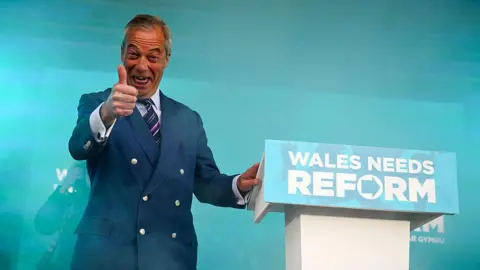
Many of those people wanting a change were talking about Reform UK and their leader. He wasn't standing in the Senedd election, but his name kept coming up.
Across the country, people liked Nigel Farage's straight-talking attitude and thought that maybe his party deserved a chance to govern here.
But for every one Farage fan I met, I met another who feared him and his party.
In Merthyr Tydfil, disaffected Labour voter Elizabeth Shirley said she was undecided which way to go, "but there's one way I won't go and that's Reform".
The Labour party's roots in Wales run deep though, and a proportion of its supporters still turned out to get the party nine seats in the Senedd.
One male supporter in Maesteg told me they didn't want any of the "extreme views" offered by rival parties, and a woman in Newport said to me "it's better the devil you know".
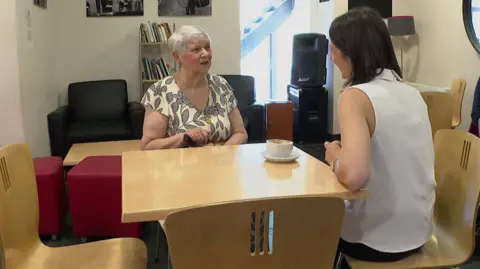
In Canton, the hip suburb of Cardiff, people seemed genuinely upset at the thought of a Reform government in Wales.
One regular at Chapter Arts Centre said: "It's really scary times, it just feels like every day you wake up and it's something horrible on the news."
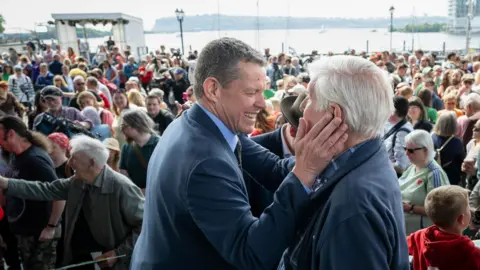
Many there said they'd vote for whoever is most likely to beat Reform, and it was Plaid Cymru that had convinced many that they were best placed to do that.
"I like what Plaid stand for, but I'm very much anti-Reform", said one self-proclaimed "left-wing libertarian".
 Rob Norman/Plaid Cymru
Two friends meeting for coffee agreed that they'd support Plaid Cymru this time too, but they weren't sold on the party's raison d'etre: independence.
"I've always been in two minds about independence.
"I'd like to see an independent Wales in my lifetime but I don't think we can do it just yet," one said as the other nodded.
And it wasn't just in Cardiff that there was a shift.
"We need someone there who'll stand up to the British government, because at the moment they're not," said one woman in the Labour heartland of Maesteg.
I heard similar Plaid Cymru rhetoric repeated back to me across Wales.
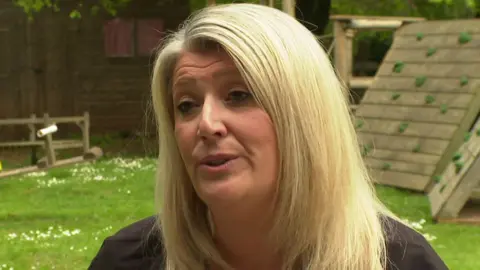
Across the country, time and time again, frustration at how things were going in people's lives mainly boiled down to the cost of living: bills rising, wages stagnating and food prices rocketing.
At Myrtle House food bank in Llanelli in May 2025, its leader Kate McShane said there had been a 70% increase in demand year on year.
She told me that "people need to be able to afford the essentials" whether they're in work or not.
Outside his shop on Narberth High Street, fruit and veg seller Anthony Ryan told me: "We've never known times to be so hard.
"We don't make any money any more. We used to."
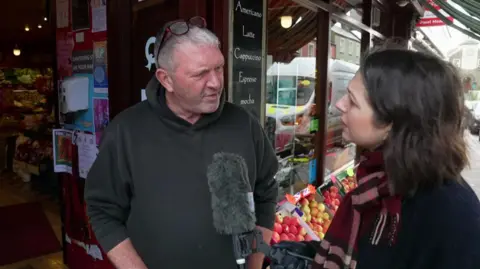
In Menai Bridge, Hay-on-Wye, Ebbw Vale, Llanelli and Mumbles the cost of childcare was a serious concern.
One grandparent in Ebbw Vale said they had thought twice about spending their hard-earned money in retirement because they worried about their children and grandchildren not having enough to cover bills or get on the housing ladder.
We've heard much about a drain on Welsh talent, with young people having to move away from the country in search of better work opportunities elsewhere.
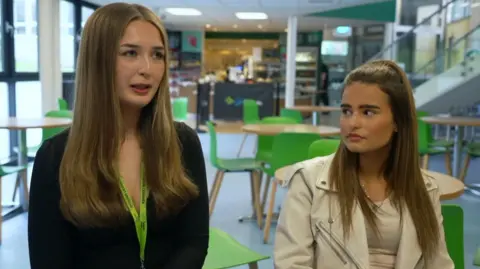
I met two young women in Rhos on Sea, Lily and Eva, who are studying health and social care at Coleg Llandrillo, and I asked whether they'll stay here to work or move over the border to England after they finish their studies.
Without hesitation they said in unison: "Definitely move away."
It is perhaps no surprise that another huge issue was the state of the NHS.
I heard horror stories of 30-hour waits in A&E, an eight-year wait for an operation and countless complaints about access to GPs.
In Narberth, one woman put it simply: "It's just not acceptable."
Another, in Cowbridge, said she'd been on an "emergency list" since February 2024.
There were also those who felt unwanted in modern Wales.
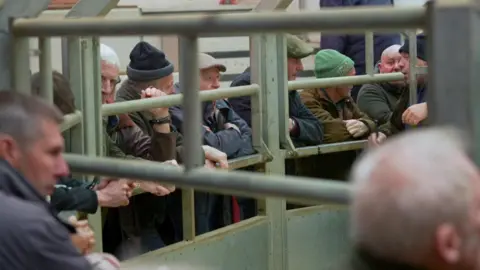
Farmers in Raglan told me that politicians "don't want us" - and there was a distinct feeling from the people in Monmouthshire's livestock market that they felt misunderstood by the political class. "They don't want us farming," one said.
While Plaid and Reform appeared to be inheriting the lion share of votes from people dissatisfied with their traditional parties, as the election drew nearer the Green Party emerged as a serious contender.
In Newport in March, younger voters I spoke to said they were recent converts to Zack Polanski's new eco-populism, and in Hay-on-Wye a former "Labour-leaning" mother in her 30s said she was now "Green-leaning" such was her disappointment at Sir Keir Starmer's UK government.
It's worth noting that in that bustling book-town there was still plenty of support for the Liberal Democrats too.
A group who felt particularly politically homeless though were traditional Conservative voters.
One in Hay said to me: "I honestly can't see any party I feel really confident with" and another in Wrexham, said they didn't think "the Tory party are the Tory party any more - not enough Conservatism".
It goes without saying that there is absolutely nothing scientific about stopping people in the street and asking them how they feel about politics.
But with the 20/20 vision of hindsight, you can see how these fears and concerns, these frustrations and hopes, manifested themselves in the election.
The new voting system was designed to give us a more proportional Senedd and discourage tactical voting, but many heeded Plaid's campaign message that the only way to stop Reform was to vote for them.
The despondency in the population was palpable, but there was clearly hope that things could get better- it's now up to the politicians to prove that they can be.

