Tea leaf reader wants bright future for tradition

 Michelle Liddle
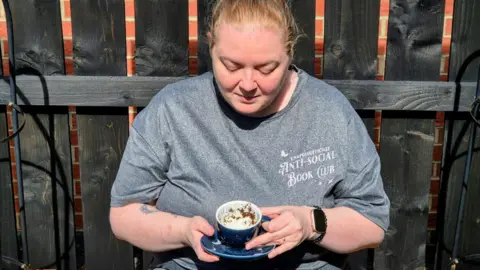
A woman whose grandmothers were both tea leaf readers is trying to keep the tradition alive for future generations.
Michelle Liddle, who lives in Amble, hopes to offer readings at a museum she is opening which will explore the "haunted history" and folklore of Northumberland.
Her family have a long history of telling fortunes and she believes it is not about predicting the future but helping someone recognise "what they already feel deep down".
Liddle said her tea leaf reading was highly intuitive and felt it was important to pass down through families "before it is lost", along with other stories which make up the "cultural memory" of the county.
She hopes to open Northumberland Haunted Museum in May as a way to keep folktales and old traditions like tea leaf reading going.
People in Northumberland have already been donating vintage Ouija boards, old portraits of mysterious people and objects with "haunting" histories.
What is tea leaf reading?
It is unknown exactly when tea leaf reading, also known as tasseography or tasseomancy, began but some people believe the art, as opposed to science, holds the secret of revealing the drinker's future.
The practice became popular in Europe during the 17th Century when tea from China first became available in Britain.
Some believe as a person drinks from their cup their movements affect the leaves and reveal shapes, once the liquid is drunk, which can reveal a way to read the future.
 Michelle Liddle
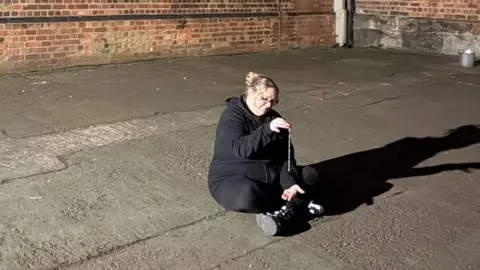
Most people would fall into the category of a non believer, Liddle acknowledges, and said one of her most memorable readings was with a sceptic.
She saw a break in the leaves and asked if the visitor was at a crossroads in her life.
"She became quite emotional and shared that she had just been offered an opportunity to completely change direction, something she hadn't spoken about to anyone yet," Liddle said.
"Moments like that are incredibly powerful - not because you're 'predicting' something, but because you're helping someone recognise what they already feel deep down."
One of Liddle's grandmothers, Sybil McLintock, lived in Scotland and told fortunes for her village.
"People would be queuing outside her door to have their fortunes read by her," Liddle said.
She first started tea leaf reading after her mother died and since then she has started a paranormal podcast and written a book.
"For me, tea leaf reading is less about fortune telling and more about intuition, reflection, and storytelling something that has been passed down through generations, often quietly, especially through women in families like my own," she said.
'More than scares'
Northumberland Haunted Museum is due to open in Amble, with the date still to be confirmed.
Liddle's favourite Northumberland tale is the story of the witch of Seaton Delaval.
"It tells of a group of women seen gathered in secret, believed to be casting spells, and one who was captured and put on trial for witchcraft," she said.
"What makes the story so striking is her final request before execution — she asked for two wooden plates, stood upon them, and rose into the air, flying out toward the sea."
Liddle believes the stories provide more than simple scares and are "part of the cultural memory of places like Seaton Delaval".
She said the museum would be a place to preserve not just artefacts but "traditions, stories and lived experiences before they are lost".
