Greek man found guilty of murdering Scottish woman in Crete

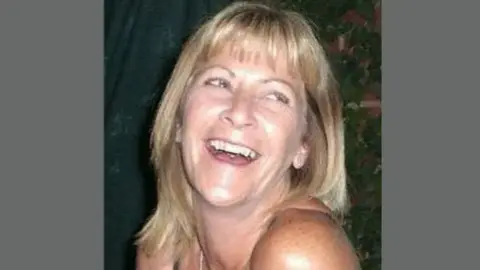 Justice for Jean
A Greek man has been found guilty of murdering a Scottish woman in Crete 17 years ago.
Jean Hanlon's body was found in water off Heraklion in March 2009.
A 54-year-old man – who under Greek law will not be named until the court process including appeals, is over - was found guilty and jailed for 10 years following a four-day trial at the Lasithi Law Courts in Neapoli.
The court recognised his diminished responsibility due to mental health conditions and he will not go to prison until his appeal is heard.
The Greek authorities initially ruled that Jean's death was accidental, but her family did not accept that and pushed for the case to be reinvestigated.
A subsequent report found she had suffered injuries consistent with a struggle.
In 2023, the family hired a private investigator who compiled a report with a named suspect and handed it over to the authorities.
The trial heard the suspect had been in a brief relationship with Jean Hanlon at the start of 2009 but he did not accept her ending it and began stalking her.
Jean, who was 53 at the time, was last seen with a man at the Marina Cafe in Heraklion.
Her body was discovered on 13 March 2009, four days after she was reported missing.
The prosecution argued the suspect was with her the night she died and that he killed her.
There was no physical evidence connecting the two that night but a jury consisting of members of the public and judges found the man guilty.
The court heard the suspect had been diagnosed with schizophrenia and bipolar disorder and was on daily medication. His sister told the court he would become aggressive if he did not take his medication.
The prosecution argued that he had not been taking medication during his relationship with Jean Hanlon.
The court recognised his diminished responsibility due to mental health conditions.

The trial heard evidence from a forensic pathologist who became involved in the case in 2019.
Elena Krantoni reviewed the post-mortem examination reports and photographic evidence but did not examine Jean's body.
Krantoni told the court Jean had died from an incomplete tear of the brain stem. She said the fatal injury was likely to have been caused by a forceful blow to the back of the neck with a blunt object.
She said the injuries were not consistent with a fall.
Krantoni said she believed Jean had been placed in the sea rather than thrown in and would have been alive when she entered the water.
The trial also heard evidence from Jean's three sons who had travelled from Dumfries to Crete for the trial.

Her eldest son, Robert Porter, told the court his mother had kept a diary in which the accused was named. He said it referred to what he described as a "steady relationship" with the man.
He said Jean ended the relationship in a "polite way", but the man had continued to "bully her."
He said the diary was his mum's "voice" and important evidence had not received sufficient attention.
Her middle son, Michael Porter, said his mum had made it clear in the diary that she was trying to end communication with the man.
He said the man kept turning up at her house and work asking for money and following her.
Jean had been living in Kato Gouves, a village about 12 miles (19km) from Heraklion, for a number of years at the time of her death.
She worked in several local bars and tavernas in the area.
