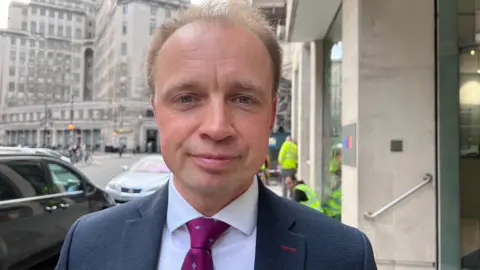
Murdered teen's father welcomes social media ban

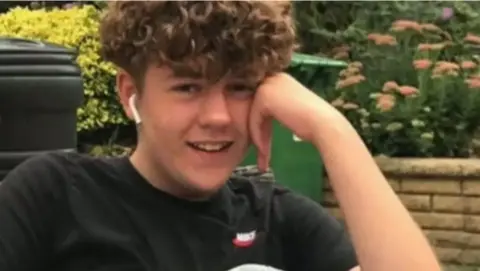 Stephens Family
The father of murdered teenager Olly Stephens has welcomed a social media ban for under 16s and says, had it been in place in 2021, his son would still be alive.
Prime Minister Sir Keir Starmer said he hoped the ban on children accessing apps such as Snapchat, TikTok and Facebook would be in place by Spring 2027.
Olly was 13 when he was stabbed to death in Emmer Green, Reading, Berkshire, on 3 January 2021, following a dispute on social media.
Stuart Stephens says he and other bereaved parents hoped to work with the government to help shape the new legislation.
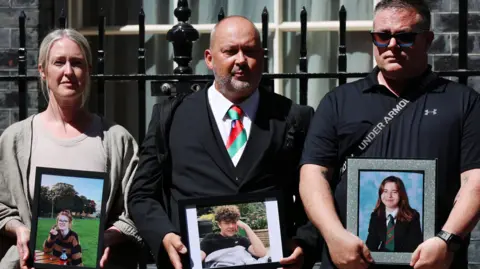 EPA
EPAHe said: "It's been a long time coming. If we had had this 10 years ago, when all of this tech was starting to surface, then a lot of us, our children would still be here.
"I'd still have my son - there's no two ways about it.
"No child should be targeted under 16 for social media - it is addictive, it is corruptive, it is corrosive and it's predatory."
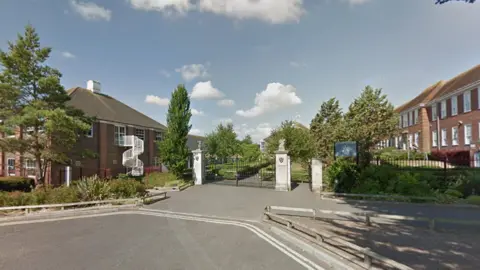 Google
Some schools in the south of England have already introduced their own mobile phone bans.
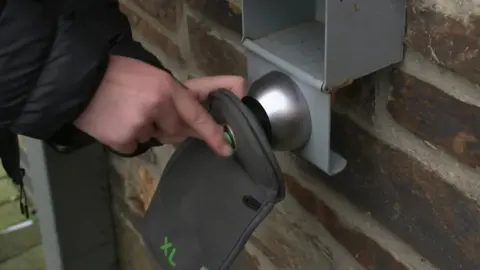
For the last three weeks, pupils at Thomas Hardye School in Dorchester, Dorset, have been putting their phones in lockable pouches when they arrive at school.
Assistant head teacher Rachel Glennie said she welcomed a social media ban.
"We have noticed the impact that smartphones have on students, particularly in terms of their concentration, not to mention the safeguarding issues that come up," she said.
Glennie said, in a parents' survey, many admitted they "felt very out of control in terms of their children's smartphone usage and their access to social media - and didn't know what they could do about it either".
She said: "There were a couple of responses saying we should be preparing students for it rather than banning them completely.
"From our perspective, allowing students to use their smartphones all day isn't necessarily preparing them for later life - it's just preparing them for a life that's consistently on their screens."
Toby, 13, and his parents, Sam and Carly, from Portland, Dorset, are less supportive of the ban.
Toby said: "Obviously, it's kind-of annoying but there are going to be ways around it and it doesn't get rid of the stuff on social media."
His dad, Sam, agrees. "I think it's the wrong action," he said.
"[Social media] does have its positive points.
"I get why they are doing it but it's not just children, it's adults. It needs a level of control that a simple blanket ban won't solve."
Carly said: "Half the problem is they are always on WhatsApp groups or PlayStation, X-box and all the rest."
Sam added: "For their generation - it's their form of communication."
Twelve-year-old Olivia from Moreton, Dorset, also disagrees with an outright ban but accepts there should be more controls.
"I'm 50/50 about it but I don't think it should be totally banned," she said.
Her mum, Connie, disagrees.
"We need to have a change and we need to protect our young people," she said.
"I think it's going to help a lot of parents to try and restrict it - because it's quite difficult.
"I think it's something all parents will struggle with. I think it will cut down the amount of time that young people will spend on their phone."
YouTube and Snapchat, and Facebook and Instagram-owner Meta, said a ban would not achieve the goal of keeping teenagers safe online and could even drive them to "less safe" platforms.
Meta said restrictions should be "underpinned by an age verification system on devices", so that people are not asked to "hand over ID to dozens of individual services".
 University of Oxford
YouTube said it was a "vital resource for young people". Snapchat said the majority of time on its platform was in private messaging between friends and family.
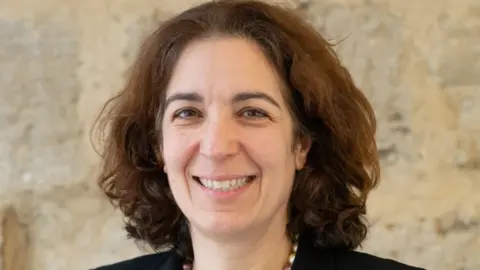
Oxford University researchers have already been looking into the effects of social media on children through its Oxwell Student Survey and will be continuing their research to assess whether the ban is having the desired effect.
The survey collected 30,000 results in 2025 across Liverpool and Oxfordshire, asking secondary school students a range of questions including the type of content they accessed, their experiences of bullying and whether they had met strangers online.
Survey lead Prof Mina Fazel said one of the questions was: In the last 12 months have you met up in person with anyone you had only met online, someone you had no mutual friends with?
 University of Oxford
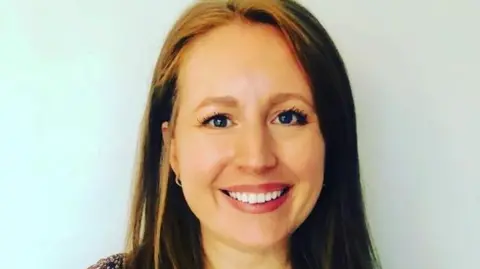
She said: "We've got 5% of young people in year 7 saying 'yes' to that question and that goes up from year 7 to year 13. These are types of behaviours that research needs to be tracking and understanding."
Postdoctoral researcher Dr Holly Bear said: "In those online places, harm and support sit side by side so social media isn't universally harmful for all young people, it can also be a source of support, information and connection."
Southampton Itchen MP Darren Paffey said the restrictions would be a "great start" but more needed to be done.
He said: "I know that there is also real concern around some of the other addictive-by-design elements seen across gaming and hybrid platforms, private messaging services and AI chatbots - all platforms which we know are increasingly widely used by children."