How is online abuse putting young people off politics?
 BBC
BBC"Hate comments, bullying, and harassment" are some of the fears being shared by young people as they consider whether to enter the world of politics for a future career.
A youth parliamentary group has warned that attitudes and abuse online, particularly on social media, were having an impact on how younger people were viewing political life.
Some members of the Tynwald Youth Committee, aged between 15 and 24, spoke about their own experiences of hostility online and how it would prevent them from pursing a career in politics.
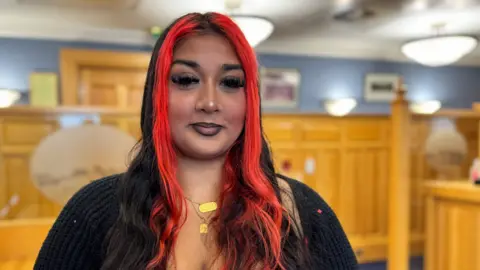
Member Riona Zaman, 19, said the "only thing" stopping her from entering politics was "the possibility of hate comments", although she was also worried about surrendering her private life.
She said the anonymity of social media had made criticism easier and often more personal.
"In person you actually have to muster up the courage to say something to someone, but online it's a lot easier without actually fearing the consequences," she said.
The youth committee gathers evidence on issues facing younger people on the Isle of Man and presents them to the Manx parliament.
'Reflects society'
The issue of online abuse was particularly acute for women, several committee members suggested.
Appearance, Riona argued, often became a focus in ways unrelated to policy or leadership.
"If you are attractive… men will automatically assume that you're where you are because of your looks," she said. But adversely "if society doesn't deem you attractive they will also receive hate for it".
She questioned why physical appearance should enter political debate at all, asking: "How does appearance relate to politics?"
She said it was not just gender that could be targeted by keyboard warriors, but also race.
Riona moved to the island at the age of 10 and has both British and Bangladeshi heritage.
"I'm always proud of my heritage it's not something they'll ever try to diminish but some people can be very judgmental of that.," she said.
She said people sometimes expected "people of colour to pick and choose" but she was "trying to show that you can do both".
Student nurse Alex Cowley, 18, said harsh commentary online was not unique to politics but reflected broader behaviour across society.
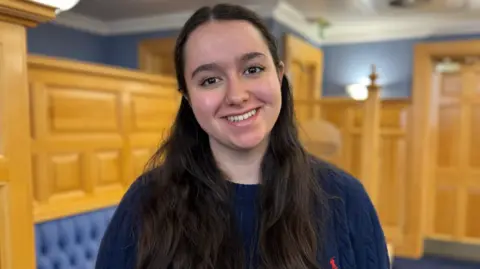
"It's a lot easier to give somebody hate speech or post something online than it is to say that to someone face-to-face," Alex said.
Because comments were sent instantly and often anonymously, people did not see "the impact that that might have on someone", she added.
However, she said criticism, even when uncomfortable, was also part of public service roles.
"You do have to be thick-skinned. You're trying to make decisions that will benefit your constituency," she added.
She also pointed to wider issues around moderation and platform responsibility.
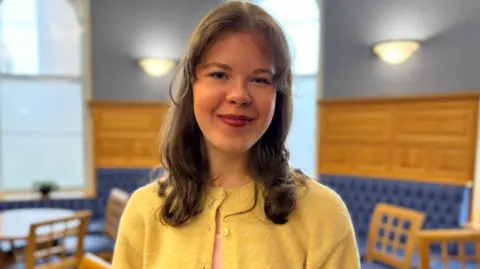
"There are so many things that are allowed to be posted on social media that should be censored," Alex said, arguing that exploitation of minorities and children online remained a broader problem.
Freya, 17, who studies politics, English literature and Spanish, said social media had fundamentally changed political communication.
While people were "way too comfortable saying more online than they would in person", she said she believed digital platforms also improved accountability and visibility.
It made people "more accessible. They seem more like people rather than just politicians", she said.
Younger committee member, Jasper, 16, agreed politicians needed an online presence to reach voters, but said he personally used social media only sparingly.
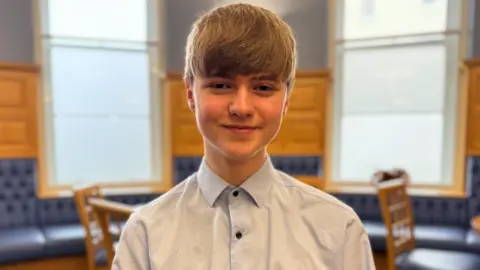
He said if he were a politician he would "rather have that presence and have more people see who I actually am".
However, he agreed that online abuse was a real problem and suggested government should consider stronger regulation or clearer guidelines.
"I feel like governments are acknowledging it's bad, but they aren't acknowledging the initial causes and how we can actually prevent hate comments, bullying, harassment online," he said.
Voters, as young as 16 on the Isle of Man, will head to the polls for the next General Election on 24 September.
Read more stories from the Isle of Man on the BBC, watch BBC North West Tonight on BBC iPlayer and follow BBC Isle of Man on Facebook and X.
