Cremated remains of Iron Age man found in south of Scotland

 Airborne Lense/Destination Tweed
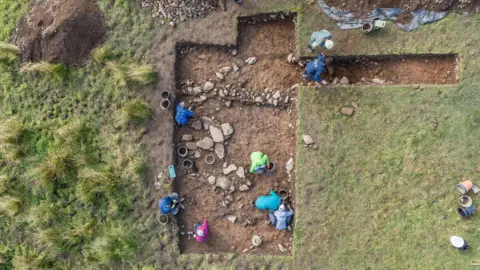
The cremated remains of an Iron Age man have been unearthed during an archaeological excavation in Dumfries and Galloway.
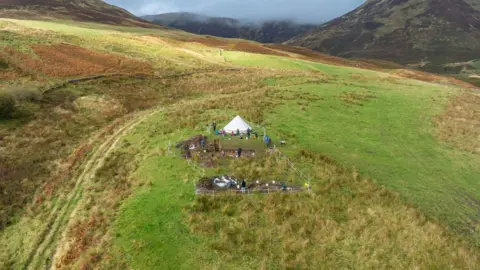
Burnt bone fragments were discovered during an initial dig of the Adie's Brae settlement at Ericstane, near Moffat, in 2024.
Specialist analysis has established that they belonged to one individual - a male over the age of 17.
Human remains have been discovered in Iron Age domestic settings elsewhere in Scotland but this find has been described as "very rare", due to its potential for helping understand funerary rituals and pyre technology from the era.
 Airborne Lense/Destination Tweed
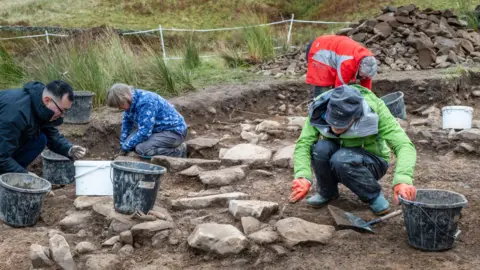
The dig, which took place in October 2024, was part of a community-based archaeology programme, Uncovering The Tweed, which investigates important sites of activity along the River Tweed.
The results from radiocarbon dating, undertaken by the Scottish Universities Environmental Research Centre laboratory, indicates that the person was cremated somewhere between the second half of the 1st century BC and the end of the 1st century AD.
Archaeologists believe the main funeral pyre was located separately from the small deposit found within the building.
The AOC Archaeology Group led the programme, which is surveying sites from Moffat to Berwick.
The group's project manager, Kathy McIver, said: ''The excavation has uncovered remains of a scooped settlement, which is a rural farm sort of settlement. Within that there's a couple of stances for houses or buildings, round houses.
''We've confirmed that there's also some cremated human remains placed after cremation into one of the buildings or as a foundation deposit for one of the buildings, and these remains were all dating to the Iron Age.''
 Airborne Lense/Destination Tweed
Scooped settlements are found exclusively in south-east and central southern Scotland and typically date to the Middle Iron Age (c.200BC-200AD).
Evidence of two roundhouses, pits and postholes, alongside everyday domestic and farming activity were also found.
Analysis of animal bone confirmed that cattle and sheep or goats were present on site, which experts believe suggests mixed livestock farming.
The dig was supported by a group of volunteers through the Destination Tweed programme.
Project officer Charlotte Douglas said she would like to encourage more volunteers to participate in upcoming excavations.
''Through Uncovering the Tweed, we're both revealing fascinating insights into how people lived and commemorated their dead thousands of years ago, and also giving local communities the chance to play a direct role in these discoveries.
''It's a wonderful way to connect people with the heritage on their doorstep and to help tell the story of the people who have lived in these landscapes across the centuries."
