What next for Upton Heath after charity buys land?

 Dorset Wildlife Trust
Restoring a section of neglected heathland habitat could take two to three years, a charity has said.
Dorset Wildlife Trust has completed the purchase of 110 acres at Upton Heath, near Poole, after a successful fundraising campaign.
CEO Brian Bleese says the first job has been to clear large amounts of litter that had accumulated and to carry out surveys to assess the health of the habitat.
Other priorities include scrub clearance and re-establishing fire breaks to prevent the spread of wildfires.
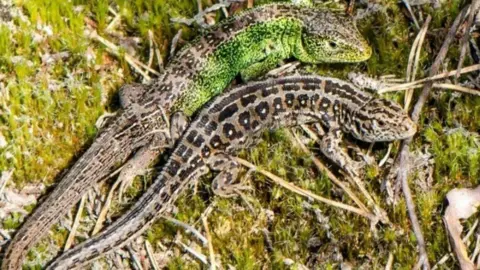
Upton Heath is an internationally important area of heathland and home to all six of Britain's native reptiles, including the rare sand lizard and smooth snake.
The 110-acre plot had previously been leased to the trust and was managed as part of the wider nature reserve but the lease was terminated "a few years ago" and the land offered for sale earlier this year with mineral extraction rights.
A community campaign raised more than £100,000 of the £300,000 to £500,000 asking price, allowing the charity to halt the planned auction and bring the land back under its management.
 Google
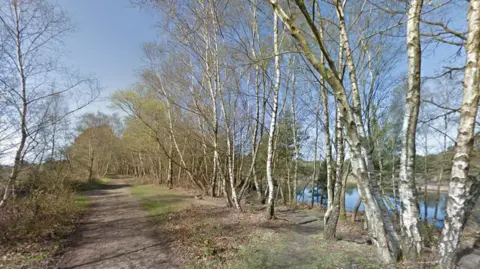
Bleese said: "It's a manmade habitat, created by human intervention over thousands of years.
"If it's left, it tends to scrub over, the heather becomes long and not good for wildlife, sandy patches will scrub over.
"It's also important to manage fire breaks to prevent the spread of wildfires and getting on top of scrub encroachment like pine trees.
"All of that improves the quality of the habitat."
Volunteers have been key to managing the wider heath, cutting gorse and heather in winter and removing pines.
"There's also a big litter problem," said Bleese.
"One of the first things we are doing is getting volunteers to pick up litter. We want to make sure it can be effectively grazed."
The improvements will be a gradual process and the land will remain accessible throughout the process.
 DWT
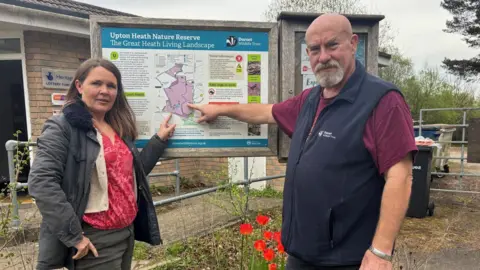
DWT"We will be looking at two or three years of consistent management to get it back into good shape," said Bleese.
"We will be doing some baseline surveys on it now but, almost certainly, [the lack of active management] would have affected some of the habitats."
As well as restoring the land, the trust is looking at ways to involve the community.
Bleese said: "The community responded hugely [to the fundraiser] and we want to make sure it continues to benefit them."
MP Vikki Slade, who was among those campaigning to save the heath, said: "Although we have successfully secured the sale, we have not yet raised everything we need to cover the full costs and the restoration of the site, which has declined in condition and is at risk from fire and anti-social behaviour.
"With that in mind, I have written to Defra seeking support from the newly announced Species Recovery Programme."
