Uni student air cadets 'challenge stereotypes'

 BBC
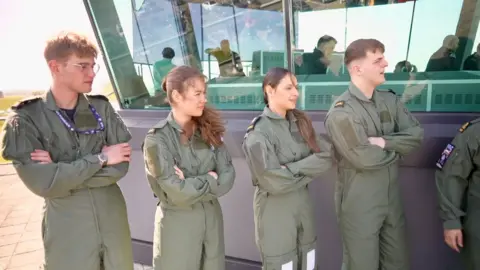
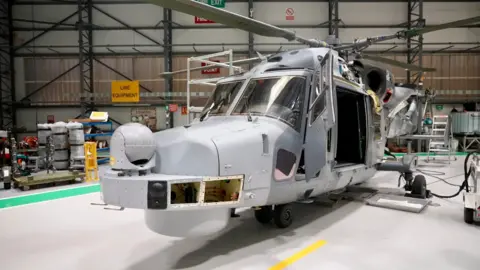
BBCUniversity students have been given the opportunity to either fly an aircraft or find out how to repair a military helicopter under a new government programme.
The project, at RNAS Yeovilton, in Somerset, is part of the 30 by 30 campaign, targeting students across the country, encouraging them to apply for a week's work experience as air cadets.
Lt Vicky Darnton-Summers, who is organising the "acquaint weeks", said the students' enthusiasm has been unparalleled. She added: "They have the best time here and have enjoyed meeting all sorts of people and learning new things."
Last year, the government allocated £70m to fund a 30% increase in the number of cadets joining by the year 2030.
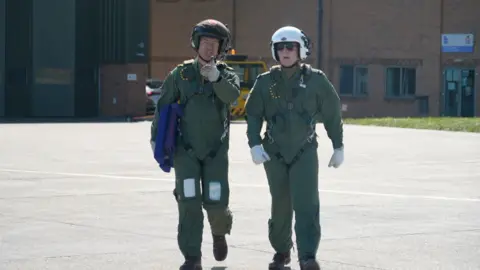
The group of 10 students at Somerset's Royal Naval Air Station, are all members of their respective University Royal Naval Units (URNUs)
Darnton-Summers said one of countless "quirky questions" asked during the week-long residential course was how the airbase stops local wildlife causing havoc to its aircraft movements.
"The depth of understanding that they gain is mirrored in the questions that they ask", she said, adding that a trained hawk is brought in periodically to deter birds and other small creatures.
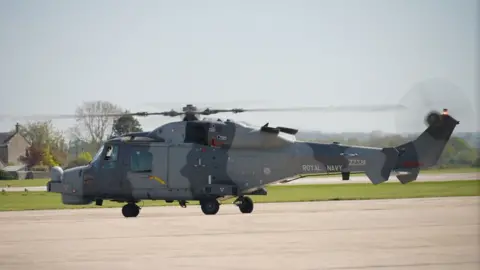
Sophie Haworth, who joined an URNU while at Imperial College, London, said she enjoyed learning about air traffic control and logistics.
"Often I have a one-track idea of who does these jobs and it's been nice to see those stereotypes challenged.
"The flying is the glamorous stuff but it's what goes on behind it that's interesting," she added.
Student Lewis Best plans to serve in the Royal Navy when he finishes university, appreciating the "idea of service, the idea of giving back, doing something productive, and building a solid foundation".
"[And] I don't see how, without a military start, I'm going to be able to afford a deposit on a house," he added.
Last year, 138,000 young people served in the cadet forces, according to the Ministry of Defence, with many attending sessions at URNUs.
The government said it wants to "break down barriers holding back Britain's young people" by encouraging another 40,000 to join cadet forces.
Minister for Veterans and People, Alistair Carns MP, said: "Every young person deserves the chance to discover their potential, regardless of their postcode or family income."
"The cadet experience doesn't just build character – it transforms futures, helping young people build confidence, develop skills and meet new people," he added.
Follow BBC Somerset on Facebook and X. Send your story ideas to us on email or via WhatsApp on 0800 313 4630.
