How are gardens coping in the hot weather?

 BBC
BBCWith a hosepipe ban covering most of south-west England and prolonged dry weather, how are official gardens coping?
James Davis, senior gardener at National Trust's Cotehele, in Cornwall, said many plants were struggling, with the estate's apples producing smaller fruits than usual, and its cut flower garden "starting to slow down".
However, he said other plants were thriving and the gardens were "constantly evolving".
South West Water said there were exceptions to the hosepipe ban that included watering plants grown or kept for sale or commercial use, and those that were part of a national plant collection.

Davis said: "One thing we are doing at the moment is noting what plants are struggling and in some small cases failing so we can over time build a picture and that can inform our plant selection going forward."
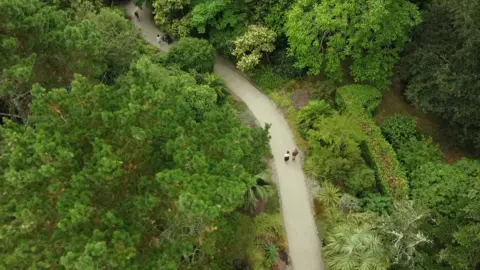
Cotehele is home to 12-acres of gardens in the Tamar Valley and is lucky to have a reservoir in the grounds of the estate.
It means it does not rely on mains water supplies for its plants - but the heat is still having an impact.
"Any plants that are shallow rooted will be struggling," Davis said.
"So for us, things like astrantia and helianthus, which are quite shallow rooted, are struggling. And also shrubs like hydrangeas, we've not lost any, but they're clearly feeling a little bit sorry for themselves."
Elsewhere, the estate's plant collections "are doing really well", he said.
"Things like irises, agapanthus, euphorbias, geraniums are all really thriving."
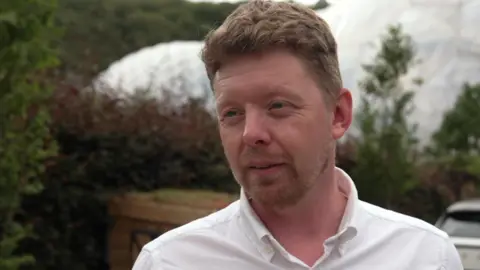
Elsewhere, Peter Jones, director of horticulture at the Eden Project, said: "While our apple trees are doing well and they've been coping well in the drought, because there's going to be less water in the ground it means some of [the fruit] will have dropped prematurely.
"It will be smaller, it will probably be a bit sweeter and hopefully it will ripen a bit quicker."
The tourist attraction has an underground drainage system that collects all the water coming on to the site, which staff use to irrigate plants.
Jones said all gardeners would see changes this year due to the heat, but many gardeners and plants were ready to adapt.
On the banks of the Helford River, Glendurgan Gardens head gardener Adam Carveth, said some plants had done "really well" in the prolonged spell of hot weather.
'Lots we can do'
He said the team were also experimenting with plants to see whether they coped.
"We are always anticipating that there could be change and we are always having to adapt."
"Rhododendrons are iconic for a Cornish woodland garden, but when they get stressed, prolonged drought, they suffer.
He added: "We also do things like we mulch. I could water a plant and then put mulch down afterwards and that traps that moisture, so it gives it a better chance of surviving a drought."
Jones added: "Nature is always finding a way of how we can cope with these changes and I think it's a really positive story that we can still plant plants that can cope with these conditions but we just need to be a bit thoughtful. So there's lots we can do."
Follow BBC Cornwall on X, Facebook and Instagram. Send your story ideas to spotlight@bbc.co.uk.
