How does hot weather impact Jersey waters?

 BBC Weather Watchers/lily
Marine conservation bosses are warning an increase in sea temperatures could have a negative impact on sea life.
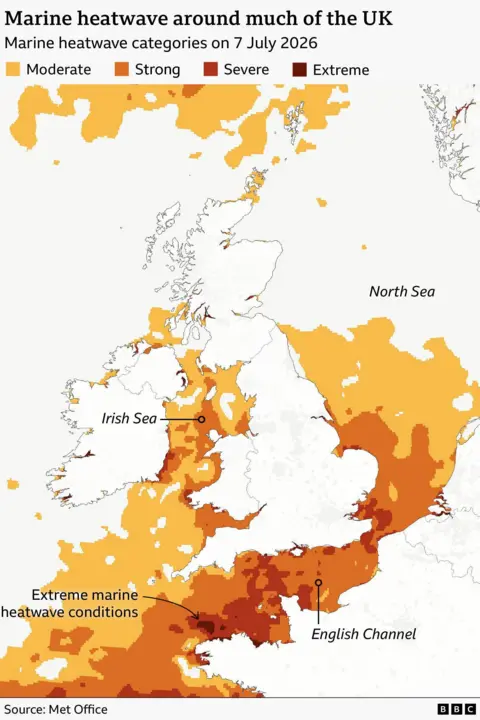
The Met Office warned on Wednesday that a marine heatwave could reach "extreme" levels around parts of the UK later this week.
It said long periods of sea heat can trigger mass die-offs among some seagrasses, shellfish and other species, as well as encouraging greater numbers of warm-water creatures including octopus.
Kevin McIlwee, Jersey Marine Conservation, said when he was diving he had noticed the temperature was one or two degrees higher that what he would normally expect and "it might not sound very much but just one or two degrees does have an impact".
McIlwee said there was both an overall increase in temperatures and temperature spikes and both were having an impact.
He added: "In the past of course these things have happened ... much more slowly.
"With the current problems that we've got due to human impacts, those changes are happening very, very rapidly so it's making it difficult for the plants and the animals to cope with the change."
He said the current area of interest was octopus.
In January a report by the Marine Biological Association (MBA) showed octopuses are increasingly making British waters their home.
McIlwee said: "Now we are seeing the octopus moving into our waters and of course that is threatening some of our other creatures.
"So the vegetation is changing, the animals living in that environment are changing and our local species are being driven out."
McIlwee said there was a lot of research into how seagrass was being affected by the warmer weather.
"At the moment we are in the middle of the growing season ... the seaweeds are growing quite rapidly, they're spreading seeds, we've got huge numbers of juvenile fish and other creatures in our waters," he said.
He added: "If you compare our island with Guernsey, our waters are much shallower and therefore there is much more sunlight penetration.
"On one hand the sunlight is helping photosynthesis, which of course is a key part of growth, but on the other hand also the water temperatures are rising, so you've got one action working against the other. "
He added: "We have to bear in mind that long term ... we might see declines in certain species that are not able to adapt to the temperature rises as quickly."
Follow BBC Jersey on X and Facebook. Send your story ideas to channel.islands@bbc.co.uk.
