Hot weather leads to cancelled MRI appointments

 Getty Images
Hundreds of patients have had hospital appointments cancelled after MRI scanners had to be switched off during the heatwave at Norfolk's biggest hospital.
The Norfolk and Norwich University Hospitals NHS Foundation Trust declared a critical incident on Wednesday, saying the cooling systems that keep its scanners running had been affected by the hot and humid weather.
The trust said at least 362 outpatient appointments had been cancelled as a result of the disruption.
Its chief operating officer, Chris Cobb, said staff had been working to restore services, with some scanners now back in operation.
 AMANDA WHITE/BBC
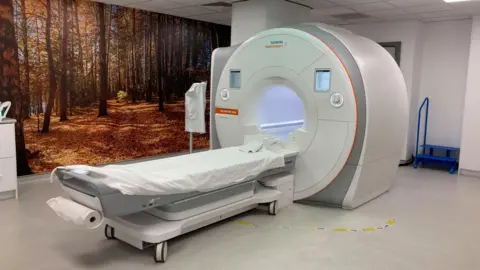
The trust has four MRI scanners across its sites. Mr Cobb said: "We have worked tirelessly in the last 24 hours to bring some of the scanners back online."
He said a mobile unit had now been brought in and added: "This morning we have received a mobile unit and we now have working scanners across the trust, including the Community Diagnostic Centre."
The hospital said it was prioritising inpatients and those on suspected cancer two‑week wait pathways.
Mr Cobb said affected patients were being contacted directly and appointments would be rearranged based on clinical urgency. He added that the emergency department was not affected.
Magnetic resonance imaging – or MRI – scanners are used to produce detailed images of the inside of the body, particularly soft tissues, and are often used to diagnose conditions affecting the brain, spine and joints.
The machines generate a significant amount of heat when in use, so rely on cooling systems to keep them within safe operating temperatures.
The trust said the situation may not be fully resolved until temperatures fall. The Met Office has forecast temperatures in Norfolk could reach 37°C (98.6F) on Friday.
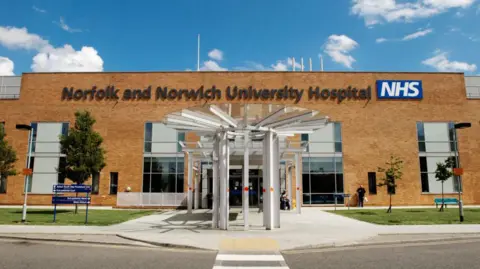
 Norfolk and Norwich University Hospital
Mr Cobb said the trust had reached out to other hospitals for support.
"We would like to apologise to everyone affected by this incident. We recognise the distress this has caused and will endeavour to get everyone rebooked as soon as possible."
If patients have not been contacted, they have been advised to attend appointments as normal.
The disruption comes as other hospitals reported similar problems during the heatwave.
The Norwich Spire Hospital also took an MRI scanner offline because of a similar cooling issue, while Ipswich Hospital said one of its mobile units was temporarily out of action on Wednesday evening.
Queen Alexandra Hospital in Portsmouth also declared a critical incident after several of its chiller units failed, leading to increased temperatures across parts of the hospital and affecting services including scanning and IT.
The incidents underline the pressure extreme heat can place on hospital infrastructure, with cooling system failures at multiple sites linked to the high temperatures.
Some experts have warned that many NHS buildings are not well adapted to cope with prolonged heat.
A report published in 2025 by the UK Health Alliance on Climate Change found that 90% of hospital buildings are vulnerable to overheating.
Have you been affected by this? Contact us below.
Follow Norfolk news on BBC Sounds, Facebook, Instagram and X.
