Tale of royal dog aboard sinking ship to be told

 Wikimedia Commons
The tale of a royal dog said to have fought valiantly with a physician to scramble on to driftwood while their ship sank is to be told at a festival.
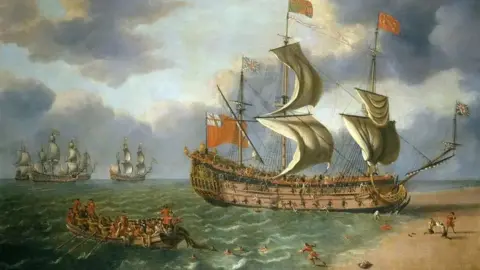
Mumper, a mixed-breed dog, was said to have been aboard the sinking of the Gloucester in 1682 off the coast of Great Yarmouth, Norfolk.
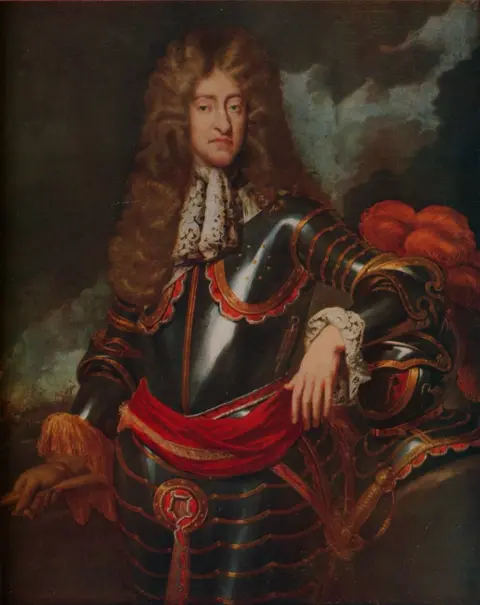
More than 130 people are believed to have died in one of the most significant shipwrecks in British history. The Duke of York, who survived, later became King James II of England.
Mumper was claimed to have competed with Sir Charles Scarborough for safety but ultimately succumbed to the sea, said University of East Anglia (UEA) professor Claire Jowitt, who is presenting research at Norwich History Festival.
 Norfolk Historic Shipwrecks
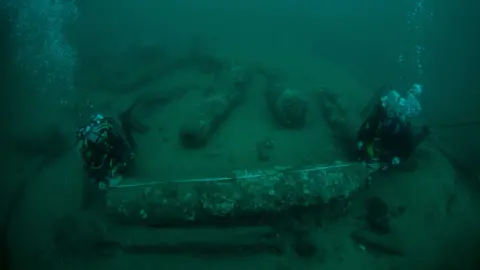
The Gloucester's whereabouts were a mystery until it was found in 2007, half-buried in the seabed 28 miles (45km) out in the ocean.
The discovery was not revealed until 2022 for security reasons.
The then Duke of York fled the sinking ship, and later became the Catholic heir to the Protestant throne.
Mumper was already well known at the royal court before boarding the Gloucester, said Jowitt.
Accounts from the period described the mixed-breed dog as looking "as much like a cub as a dog", she said.
It is claimed he enjoyed privileges like sitting beside King Charles II at dinner and regularly stealing food from the monarch's plate.
Mumper was said to be aboard the Gloucester when it struck a sandbank.
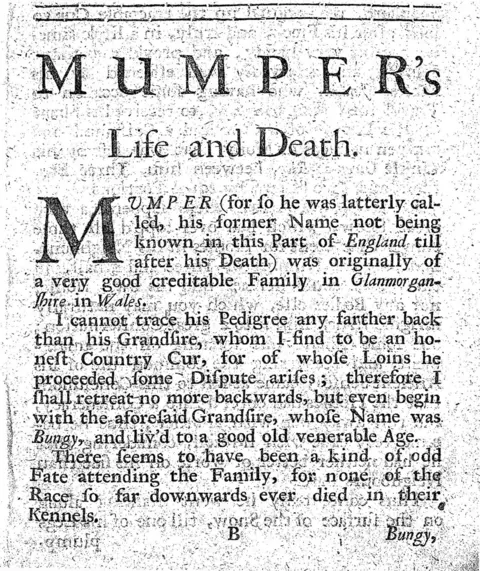
The story comes from "The comical history of the life and death of Mumper, generalissimo of King Charles II", published in 1704.
It claims that as the ship sank, the King's physician, Sir Charles, found himself competing with the dog for space on a piece of floating wreckage, although unverified.
 Gale Library Resources
Prof Jowitt's research suggests Mumper's story grew long after the disaster.
Eighteenth Century writers turned the dog into the central character in satirical pamphlets and political attacks, using him to debate the actions of the future James II and the events surrounding the shipwreck.
Prof Jowitt said in a huge clamber for driftwood, it was claimed Mumper went down fighting.
"He fought for possession of the plank of wood but it is thought that only Scarborough made it on to the boat, and it is alleged that Mumper drowned.
"This became a political football in the years after the wreck, in the memorialisation of James II, who was deposed in 1688."
She continued: "The story says Mumper was a generalissimo of Charles's dogs. He went on the Gloucester with James to Edinburgh, as he went to pick up his pregnant partner.
"He was a very brave dog. Although he drowned, he did leave a big bite on the people he fought."
 Getty Images
Jowitt emphasised the importance of dogs in royal history, with King James being associated with the Italian greyhound, while Charles is associated with spaniels.
"When James left the sinking Gloucester, protestant history alleges he thought more about saving his dogs and his priest, than the sailors and the people on board.
"The story of Mumper is a response to that. It is showing the drowning of the dog isn't as important as the people."
The research will be heard at the festival, taking place until 24 July, as part of the UEA's wider Gloucester project searching into the history of the shipwreck.
Do you have a story suggestion for Norfolk? Contact us below.
Follow Norfolk news on BBC Sounds, Facebook, Instagram and X.
