Animal movement restricted as bluetongue spreads in south Scotland

 Getty Images
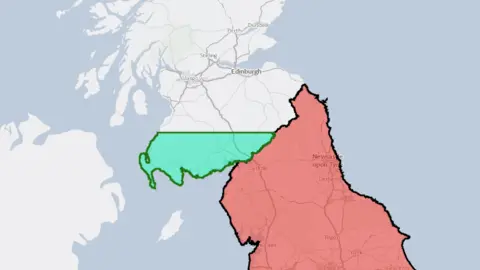
Temporary restrictions are being introduced on the movement of animals in Dumfries and Galloway to prevent the spread of the potentially deadly bluetongue virus.
Five farms, including one in Lockerbie, have recorded cases after a lamb 54 miles (87km) away in Creetown became the first case in Scotland earlier this month.
Experts believe strong winds blew a plume of virus-spreading midges into Scotland from England.
The restrictions mean that all movement of animals susceptible to the virus - predominantly sheep, cattle and goats - can only take place under licence. There will also be more surveillance and testing of animals nearby.
In addition, susceptible animals travelling from anywhere in Scotland to the restriction zone in place across the rest of the UK must return to Scotland on the same day to minimise the risk of the disease spreading.
This replaces the current rule allowing up to four days away.
Also from 10 September, susceptible livestock that are being moved from elsewhere in the UK into Scotland will need to be vaccinated - apart from livestock returning under the same-day rule.
Bluetongue serotype 3 (BTV3) does not affect people or food safety but it causes a high rate of death in infected sheep and fertility problems in infected cattle.
Symptoms include nasal discharge, redness and swelling of the lips, nose and muzzle, lameness or reluctance to stand, a decrease in milk production and diarrhoea in cattle.
Cases must be reported to the UK government's Animal and Plant Health agency, which publishes daily updates.
However the number of cases is different to the number of animals affected. In Scotland, 7 sheep and 13 cattle have been affected, according to the Scottish government.
Some animals that have caught the virus in Scotland have been euthanised on welfare grounds.
There are currently 496 cases in England and 15 in Wales.
 Animal and Plant Health Agency
The Scottish government said it continued to work closely with the livestock industry.
Agriculture minister Jim Fairlie said the restrictions would have a significant impact on farmers and on the wider industry.
He said: "I do not underestimate the pressure this places on those affected. I am very grateful for their continued constructive engagement as we work together to introduce an effective control strategy while minimising restrictions on businesses as far as possible.
"We will ensure that control measures are proportionate. This is a dynamic situation while further investigations are carried out, and we will continue to monitor it closely, considering further control measures as necessary in partnership with industry."
Since the first Scottish case was detected, vets have reported running out of bluetongue vaccines due to the sudden high demand.
Fairlie added: "Vaccination remains our best long-term defence, and I would strongly encourage all farmers to discuss this with their vets and place vaccine orders now to ensure access to supplies.
"We continue to work with other UK nations, manufacturers and distributors to ensure timely access to vaccine, with more doses being brought in from continental Europe and additional supplies now in production."
