Victorian station set for £600k restoration

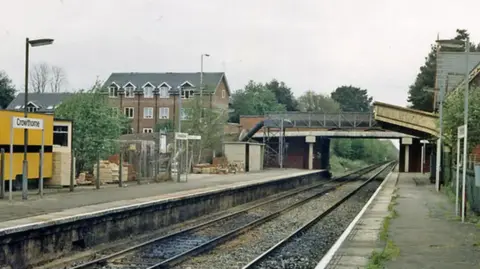 Ben Brooksbank
A Victorian railway station building is set to benefit from a £600,000 restoration project.
Built in 1859, Crowthorne station in Berkshire serves hundreds of thousands of passengers annually on the Great Western Railway North Downs Line.
The money will fund repairs to the structure, the surrounding forecourt, and create a new commercial space.
Chief executive of the building's owner, The Arch Company, Craig McWilliam, said the investment would "secure its long-term future".
"This project will bring a long-vacant building back into productive use, creating space for local businesses to thrive while preserving an important part of the area's railway heritage," he added.
The station was founded as Wellington College for Crowthorne station in 1861 with funding from the college. It was renamed Crowthorne in 1928.
It originally had accommodation upstairs for a station master and his family.
The building was reroofed following closure of the booking office and conversion for commercial letting but has been unoccupied for the last eight years during which Crowthorne Parish Council said it had deteriorated both internally and externally.
The refurbished building is expected to provide accommodation for two or three businesses.
The Arch Company said it was part of its wider investment of more than £100m since 2019 across the UK, which was bringing hundreds of underused spaces and derelict arches back into productive use.
