How do you give a giant otter a health check?

 BBC
BBCStaff at Jersey Zoo have explained the complicated process required to give one of its animals a health check.
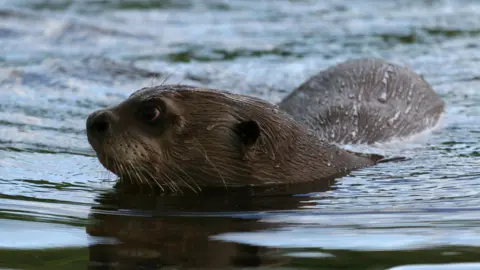
Durrell Wildlife Conservation Trust said giant otter Alex had turned 13 and entered her geriatric years. That meant staff had to figure out how to give a comprehensive health check to a 6ft (1.8m) long mammal, weighing 20kg (44lbs).
The trust said Alex had to be trained to go into a specially designed create she could fit into and would remain inside.
Staff then used a low-pressure dart fired at close rang to administer an anaesthetic so Alex could be taken to a veterinary clinic for a health and dental check.
 Durrell Wildlife Conservation Trust
A spokesman for the trust said a training programme was necessary to ensure Alex would happily enter the crate.
"Our training mainly focused on building Alex's confidence in entering the crate, with the sliding door only closed on the day of her health check.
"Because of her considerable size, each training session required two keepers, with one positioned at the head end and the other managing the slide," they said.
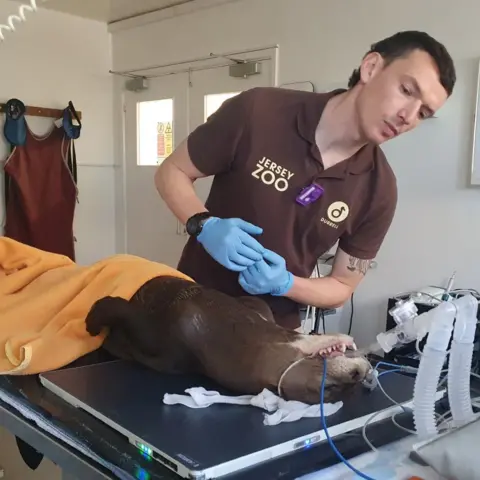
The trust said Alex was given a comprehensive health assessment at the clinic, which included blood sampling, x-rays, and a dental examination.
Staff also performed a scale and polish to remove tartar build-up around the otter's teeth and the team were also able to examine her hind feet.
The trust said once Alex was ready for recovery, the vet team administered an anaesthetic reversal and transported Alex back to her enclosure.
She remained drowsy for a couple of hours as the effects gradually wore off but was soon fully recovered and "enjoying a well-earned trout".
Follow BBC Jersey on X and Facebook. Send your story ideas to channel.islands@bbc.co.uk.
